A National Sleep Foundation report released Oct. 29 estimates that 61% of U.S. adult drivers have driven while too sleepy to stay alert, underscoring how often drowsiness enters road safety.
NSF estimates this represents more than 145 million people. Another 15%, nearly 35 million adults, drive drowsy monthly or more, the report says.
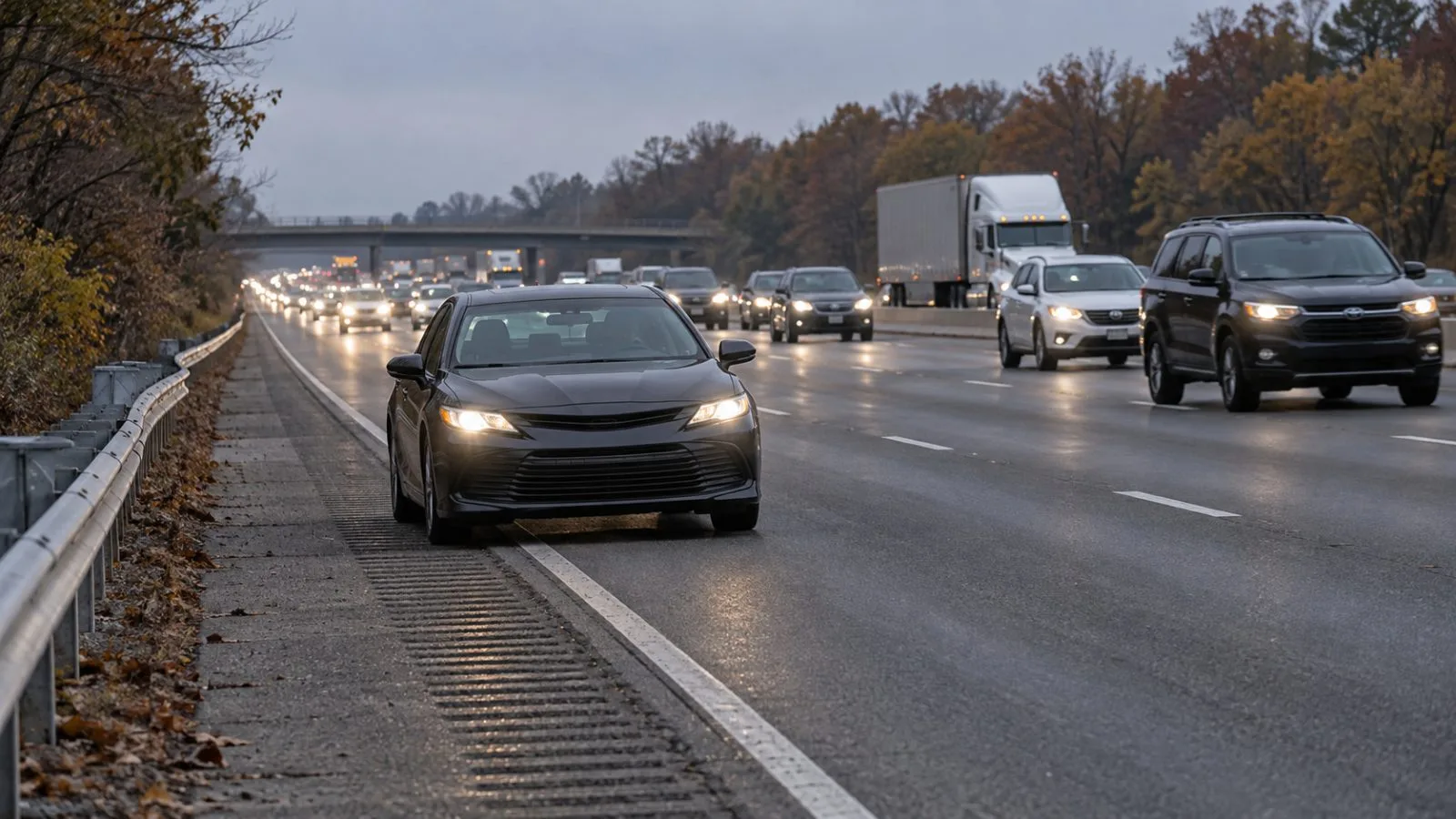
About 60% of respondents identified each of five warning signs individually: trouble focusing, repeated yawning, heavy eyelids or frequent blinking, nodding off, and drifting from a lane or touching a rumble strip. That means roughly 40% failed to identify each cue; the figures do not mean the same respondents missed all five.
The methods appendix identifies Ipsos KnowledgePanel surveys fielded in 2024 and 2025, with no 2026 survey listed. One surveyed 1,372 adults Sept. 19-30, 2024, with a margin of sampling error of ±2.9 percentage points. The other surveyed 2,145 adults Sept. 17-Oct. 5, 2025, with a margin of ±2.7 points. Both samples were weighted to U.S. Census Bureau Current Population Survey benchmarks.
Views on proposed measures were mixed. The report found 34% support for requiring alertness-monitoring systems in new vehicles, 27% opposition and 38% uncertainty. For requiring sleep education for driver licensing, 34% supported the proposal, 34% opposed it and 32% were unsure. While 58% said they were familiar with alertness-monitoring technology and 31% had used it, 62% worried about privacy and 18% said they would pay more for a vehicle equipped with it.
NSF said 39% favored making drowsy driving illegal outright. When asked whether it should be illegal if it resulted in serious injury or a fatal crash, about 62% supported making it illegal in at least some circumstances. “Drowsy driving is common, it's under-recognized, and the public is ready for solutions,” said Joseph Dzierzewski, the foundation’s senior vice president of research and scientific affairs.
The AAA Foundation for Traffic Safety estimated that 17.6% of fatal crashes from 2017 to 2021 involved a drowsy driver, using a model developed from in-depth crash investigations. The National Highway Traffic Safety Administration (NHTSA) says precise counts are difficult because investigators may not find conclusive evidence of drowsiness. NSF’s Drowsy Driving Prevention Week is scheduled for Nov. 1-7.