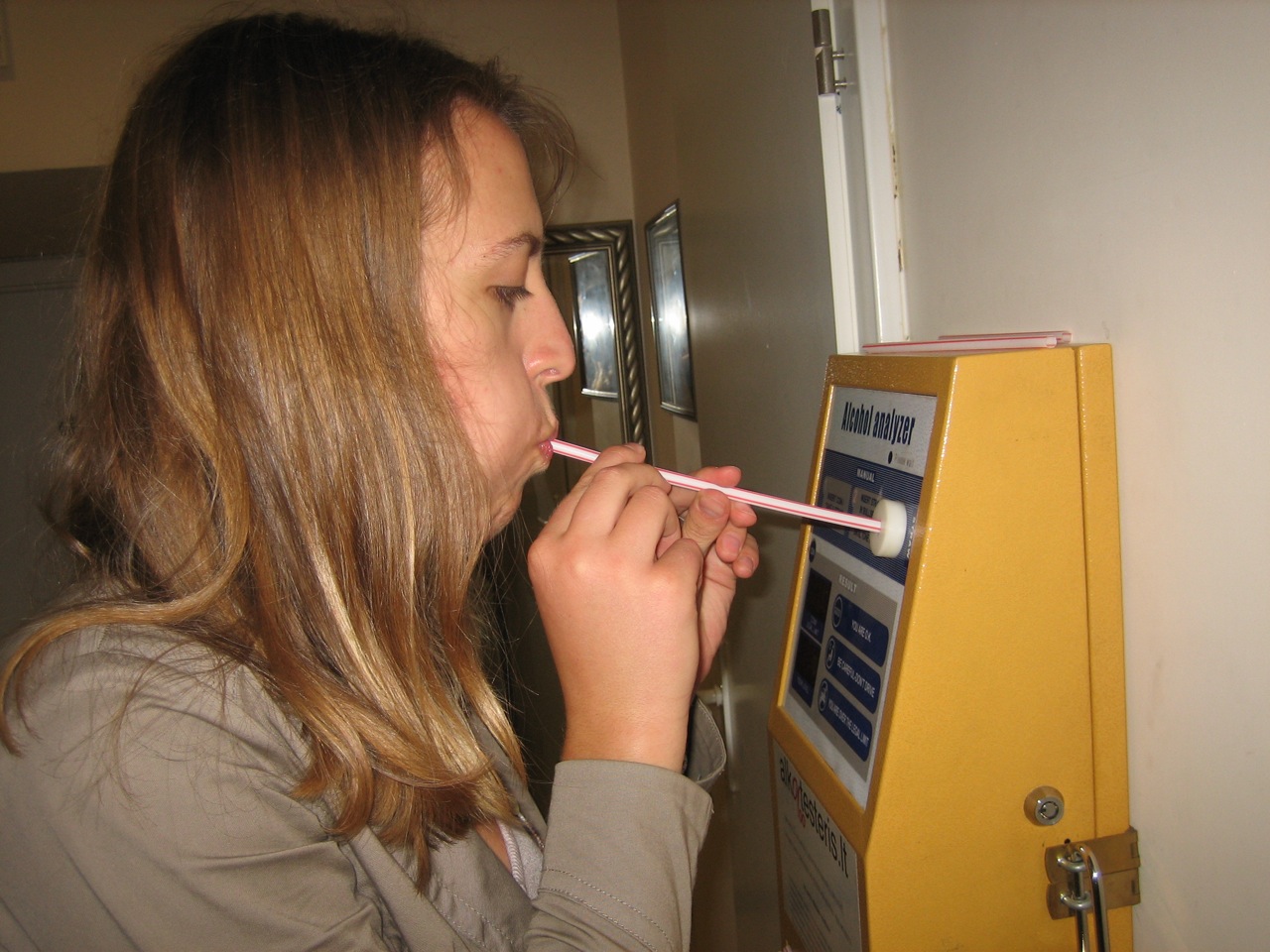
Diagnosing diseases is still a job best done by health professionals, but doctors might just become obsolete in the near future if devices like a newly-developed Breathalyzer keep popping up. By simply breathing into the device, up to 17 types of illnesses can be diagnosed with up to 86 percent accuracy.
Called the “Na-Nose,” the device is basically a nanoarray that’s powered by artificial intelligence. The researchers published the results of their study in ACS Nano detailing how the device can detect everything from certain types of cancer to irritable bowel syndrome.
“We report on an artificially intelligent nanoarray-based on molecularly modified gold nanoparticles and a random network of single-walled carbon nanotubes for noninvasive diagnosis and classification of a number of diseases from exhaled breath,” the paper reads. “The performance of this artificially intelligent nanoarray was clinically assessed on breath samples collected from 1404 subjects having one of 17 different disease conditions included in the study or having no evidence of any disease (healthy controls).”
The researchers also released a video, which explains how the device worked. Hossam Haick from the Technion-Israel Institute of Technology revealed that the whole point of the creation of the device was to catch diseases while the subject is still feeling healthy, Futurism reports.
This is certainly quite a step up in terms of early diagnosis of one of the 17 and hopefully, additional diseases in the future compared to how things are setup now. Most people don’t like going to the doctor for anything, especially male patients who would prefer waiting things out. By providing such people with a way to check if they have an illness without needing to deal with crowded clinics or unnecessary probing, catching serious health issues could become a lot easier.
On that note, such a future is still a long way off since an 86 percent diagnosis accuracy is still too low, USA Today reports. The device would need to be significantly more reliable before it can be used by the public.