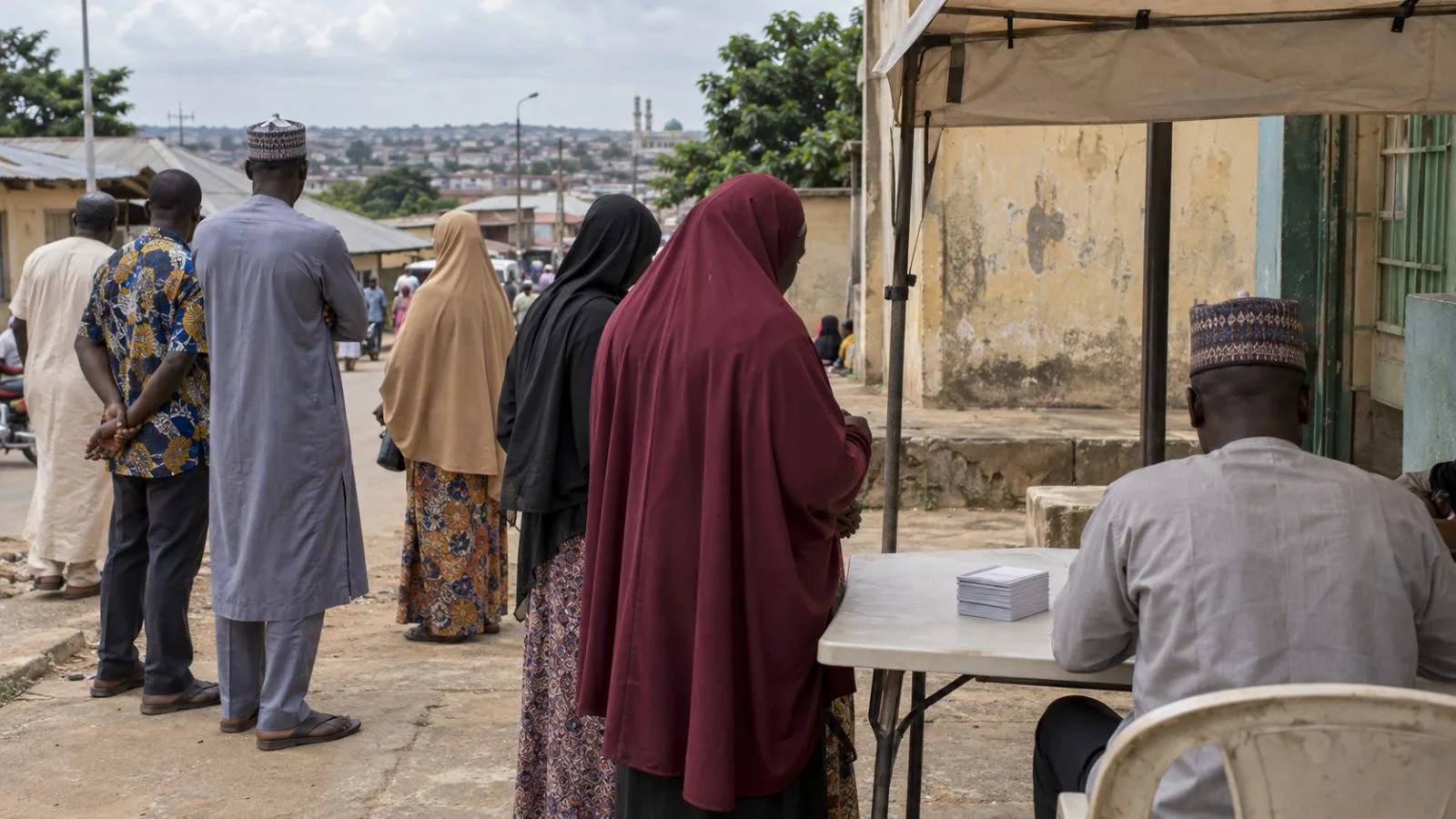
BusinessDay columnist Osa Victor Obayagbona’s call for Nigeria’s Independent National Electoral Commission (INEC) to adopt electronic ballot casting highlights how voting devices and electronic reporting are treated separately under the law.
Obayagbona cited the approved 2023 election budget and INEC’s reported proposal for the 2027 polls in making his case. The commission’s 2023 report describes its Bimodal Voter Accreditation System (BVAS) as a way to check voter eligibility and upload polling results. Those duties are separate from casting ballots electronically.
At a Feb. 12, 2026, hearing of the National Assembly Joint Committee on Electoral Matters, INEC Chairman Joash Ojo Amupitan proposed ₦873.78 billion for the 2027 general elections, including ₦209.21 billion for election technology, Channels Television and Premium Times reported.
INEC’s 2023 report lists ₦355.30 billion as the approved Election Project Plan budget. It records ₦313.48 billion in releases through September 2023 and ₦41.82 billion outstanding. The table documents budget authorization and transfers, without giving a final spending total. The report also says the Federal Government is responsible for funding INEC.
Sections 41 and 50 of the Electoral Act 2026 allow INEC to provide electronic voting machines or other devices and set election procedures; the law also describes a paper-ballot method. Section 60 separately requires polling-unit results to be sent electronically to the INEC Result Viewing Portal (IReV). If a communication failure makes it impossible to transmit a result on the signed and stamped Form EC8A, that paper form serves as the primary basis for collation and declaration.
Brazil’s Superior Electoral Court reported that 99.99% of voting machines had been included in the first-round count by Oct. 5, 2026. The court reported Flávio Bolsonaro received 47.03% of valid votes and Luiz Inácio Lula da Silva 45.16%. It says printed polling-section tally sheets can be checked against online totals.
INEC’s calendar schedules Nigeria’s presidential and National Assembly elections for Jan. 16, 2027.