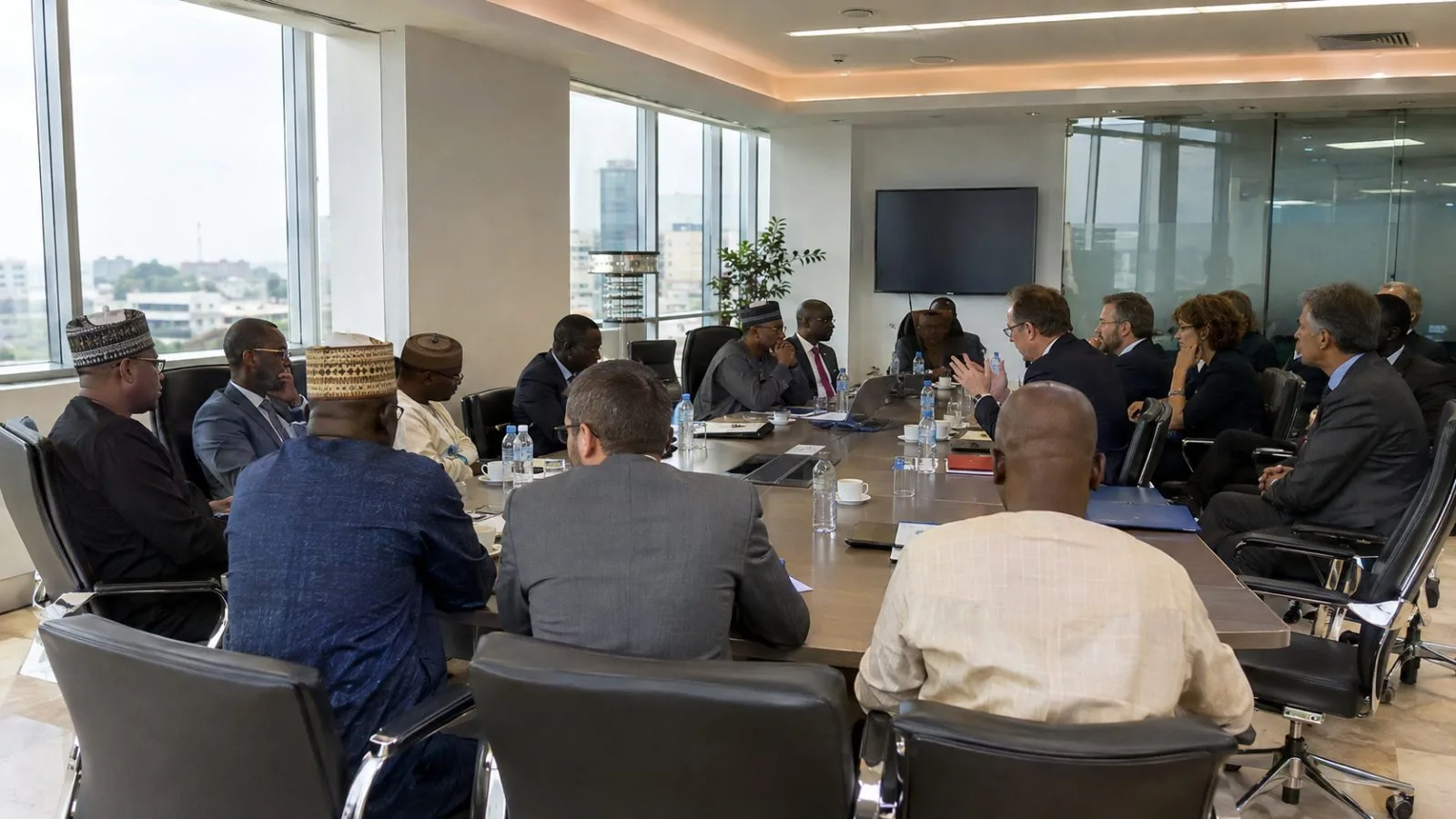
French and Nigerian energy representatives discussed investment conditions for gas projects at an inaugural Lagos roundtable, while participants cited infrastructure gaps and policy uncertainty as barriers, InsightWire reported.
The session took place Monday, Nov. 2, during French Week 2026. The Franco-Nigerian Chamber of Commerce & Industry and TotalEnergies organized it. France’s Consul General Laurent Favier said the aim was “moving from principles to bankable projects.” Favier named energy transition, gas infrastructure and local content among the themes; the chamber also listed technology transfer.
Nigeria’s total 2P associated and non-associated gas reserves stood at 215.19 trillion cubic feet as of Jan. 1, the Nigerian Upstream Petroleum Regulatory Commission (NUPRC) said.
Existing projects show the scale of planned development. Nigeria LNG Limited (NLNG) says its Train 7 project is intended to lift annual production capacity to 30 million tonnes, compared with 22 million, a 35% increase.
TotalEnergies and Nigerian partner AMNI made a final investment decision on the Ima gas field on Sept. 23. TotalEnergies operates the project and holds a 40% stake; AMNI owns 60%. Production is expected to begin in 2028, with output projected to stabilize at 350 million cubic feet per day. TotalEnergies expects Ima to provide roughly a third of the gas Train 7 will require. The company says local firms will take key contracting roles and estimates that residents of host communities will account for about 60% of the development workforce. It also cited government incentives and the Ubeta project, sanctioned in 2024, as context for non-associated gas development.
InsightWire reported that participants called for longer-term contracts and predictable fiscal policies, and identified inadequate infrastructure and a shortage of skilled workers as constraints. The outlet said they also discussed gas pricing, including the balance between attracting investment and keeping gas affordable for local consumers and industries. Participants connected development with domestic energy needs and energy security for France and Europe, InsightWire reported.
Organizers planned to send a communiqué to regulators and other stakeholders, InsightWire reported.