FATE Foundation's research arm will hold a Lagos forum Thursday, Nov. 19, on financing, energy and skills gaps as Nigeria pursues a $1 trillion economy by 2030.
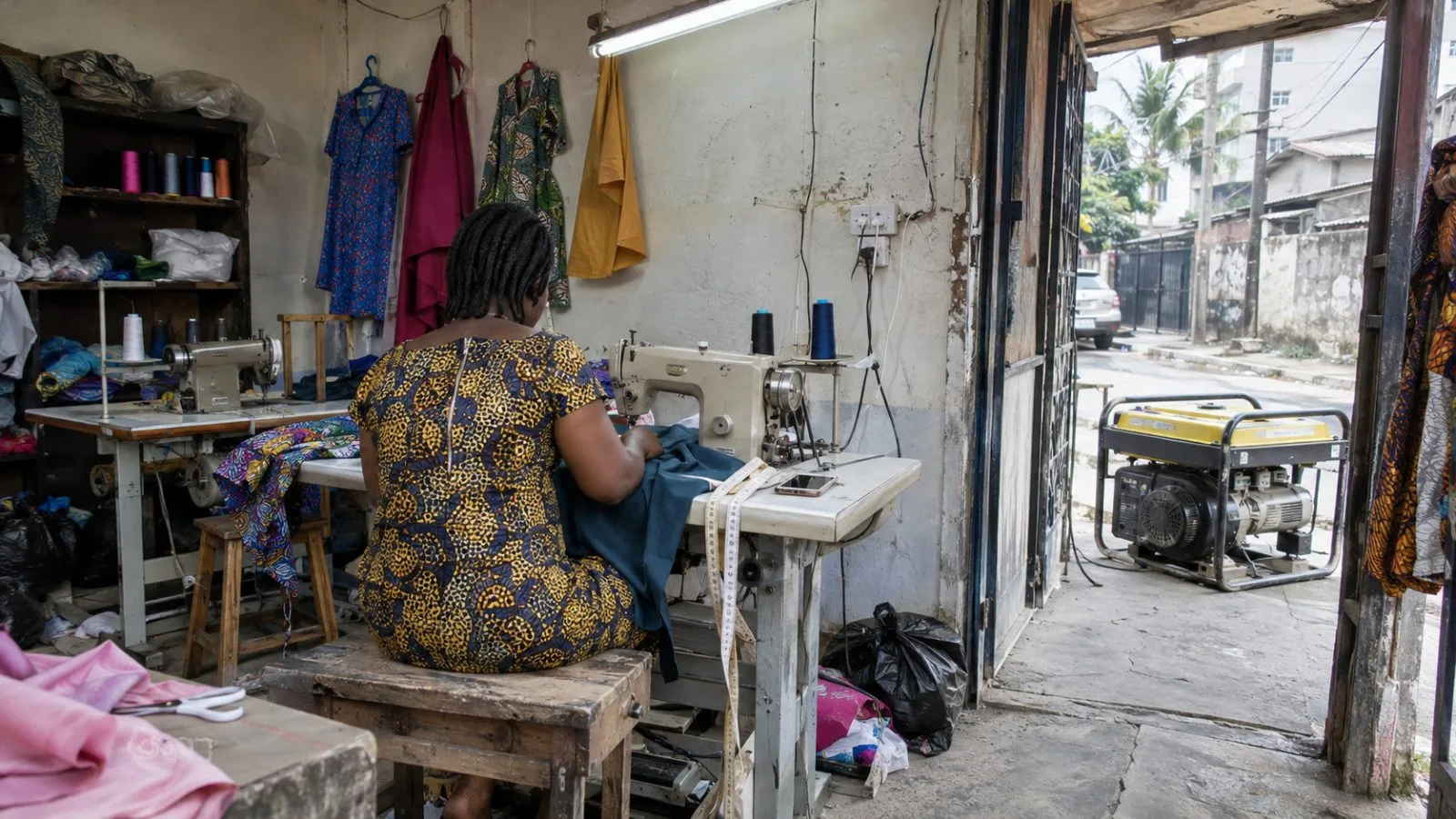
In FATE Foundation's 2024 survey of 10,595 businesses across Nigeria's 36 states and the Federal Capital Territory, limited access to finance ranked first among factors that negatively affected businesses. Poor power supply ranked second, while lack of skilled workers ranked 11th.
The sector's economic weight is reflected in a 2021 survey by Nigeria's National Bureau of Statistics (NBS) and the Small and Medium Enterprises Development Agency of Nigeria (SMEDAN). It found that micro, small and medium enterprises (MSMEs) accounted for 96.9% of businesses, 87.9% of employment and 46.31% of gross domestic product.
At a press briefing, FATE Foundation Executive Director Ayomide Akindolie-Igwe linked entrepreneurs' productivity to the government's target. BusinessDay quoted her as saying, “We can’t achieve that in Nigeria without powering entrepreneurs.”
BusinessDay also reported that Femi Egbesola, national president of the Association of Small Business Owners of Nigeria, cited a ₦48 trillion MSME financing gap at the briefing. A Central Bank of Nigeria (CBN) publication in 2020 described about ₦48 trillion ($158.13 billion) as a 2019 estimate.
A later estimate from the International Finance Corporation (IFC) put unmet MSME credit demand at about ₦13 trillion ($32.2 billion). It was based on a survey of 980 Nigerian MSMEs conducted in July 2021 and March 2022. The estimates reflect different dates and methods and should not be read as a measure of how the gap changed.
The IFC cited incomplete credit information and weak systems for resolving debt and recovering loans as obstacles to lending. It also said lenders may consider small firms costly and risky to serve. Nigeria's Bank of Industry has separately set a 2027 annual lending goal of ₦1.85 trillion and plans to finance 24,000 MSMEs, as detailed in earlier coverage of the bank's lending plan.
The 12th Policy Dialogue Series on Entrepreneurship is scheduled for 3 a.m. ET (9 a.m. WAT) Thursday, Nov. 19, in Lagos. The event will also feature the launch of the 2026 State of Entrepreneurship Report.