As Nigeria approaches its 2027 elections, columnist Hani Okoroafor argues that democratic legitimacy also depends on public institutions responding to citizens and economic gains reaching more people.
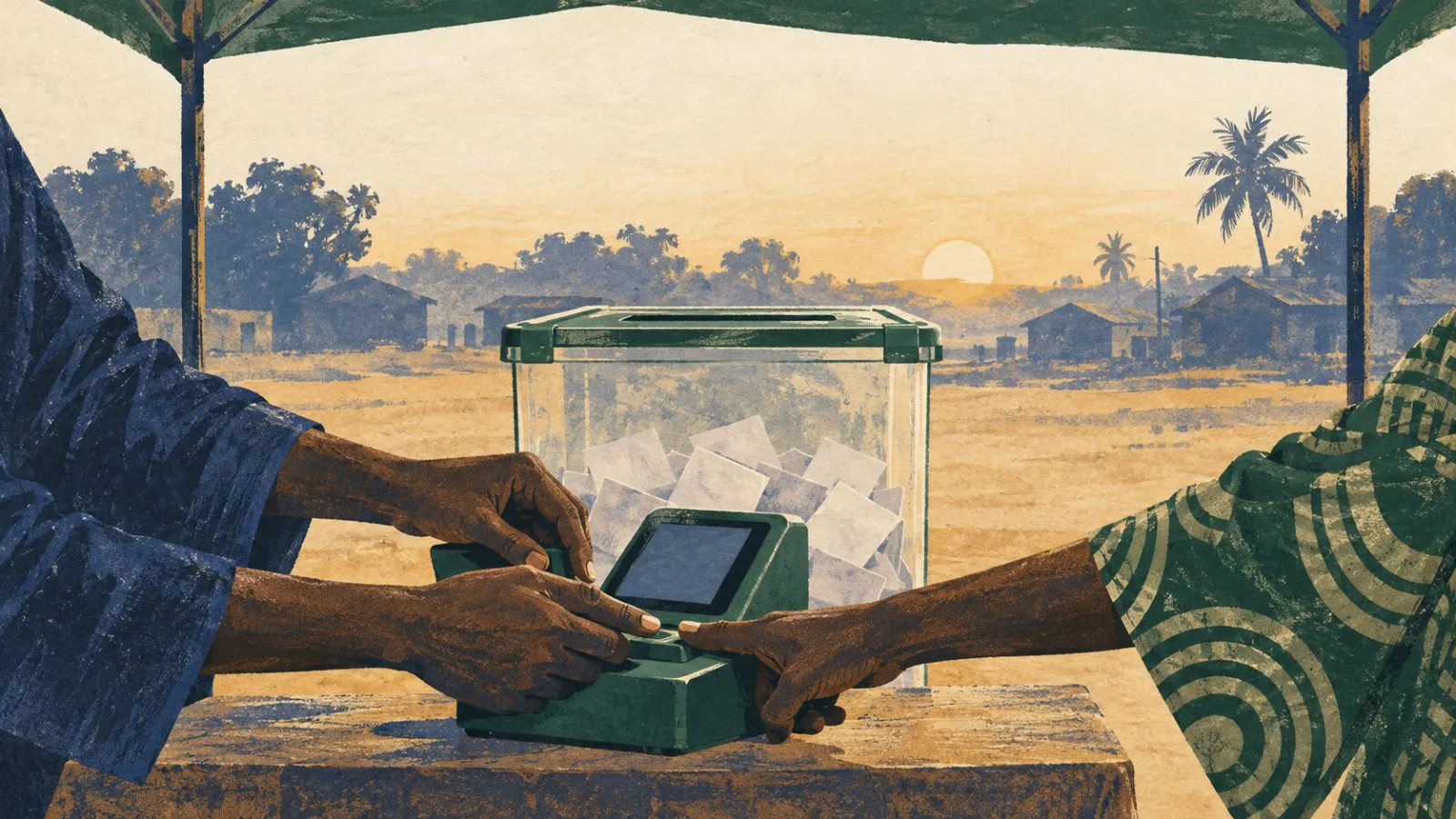
The Independent National Electoral Commission (INEC) schedules the nationwide presidential and National Assembly elections for Jan. 16, 2027. Governorship and State House of Assembly elections are set for Feb. 6, 2027.
In a Nov. 10 essay for BusinessDay, Okoroafor writes, “Every election offers a nation an opportunity to renew its democratic covenant.” He argues that a change in elected leaders does not necessarily alter how public institutions function. When people cannot rely on formal channels to address grievances, he says, they may seek help through personal connections or patrons.
Okoroafor uses economist Daron Acemoglu’s book What Happened to Liberal Democracy?, published Aug. 11, 2026, to frame his argument. Publisher Penguin Random House says the book examines how shared prosperity, democratic governance and freedom to pursue knowledge relate to liberal democracy. Okoroafor argues that Nigeria has yet to spread productive economic gains widely, while established industrial democracies are losing social arrangements that once supported prosperity.
Nigeria’s National Bureau of Statistics reported that informal employment accounted for 93.0% of employment in the second quarter of 2024. Self-employment made up 85.6% of employed people. The figures describe employment patterns; they do not measure political influence or trust in institutions.
The column points to political incentives as part of the problem, arguing that loyalty and control over public resources can take precedence over building institutions that serve citizens consistently. In Okoroafor’s account, people without dependable formal routes to redress bear the cost. Nigeria’s State House records that Olusegun Obasanjo’s Fourth Republic presidency began May 29, 1999. The next nationwide presidential and National Assembly vote is scheduled for Jan. 16, 2027, followed by state elections on Feb. 6.