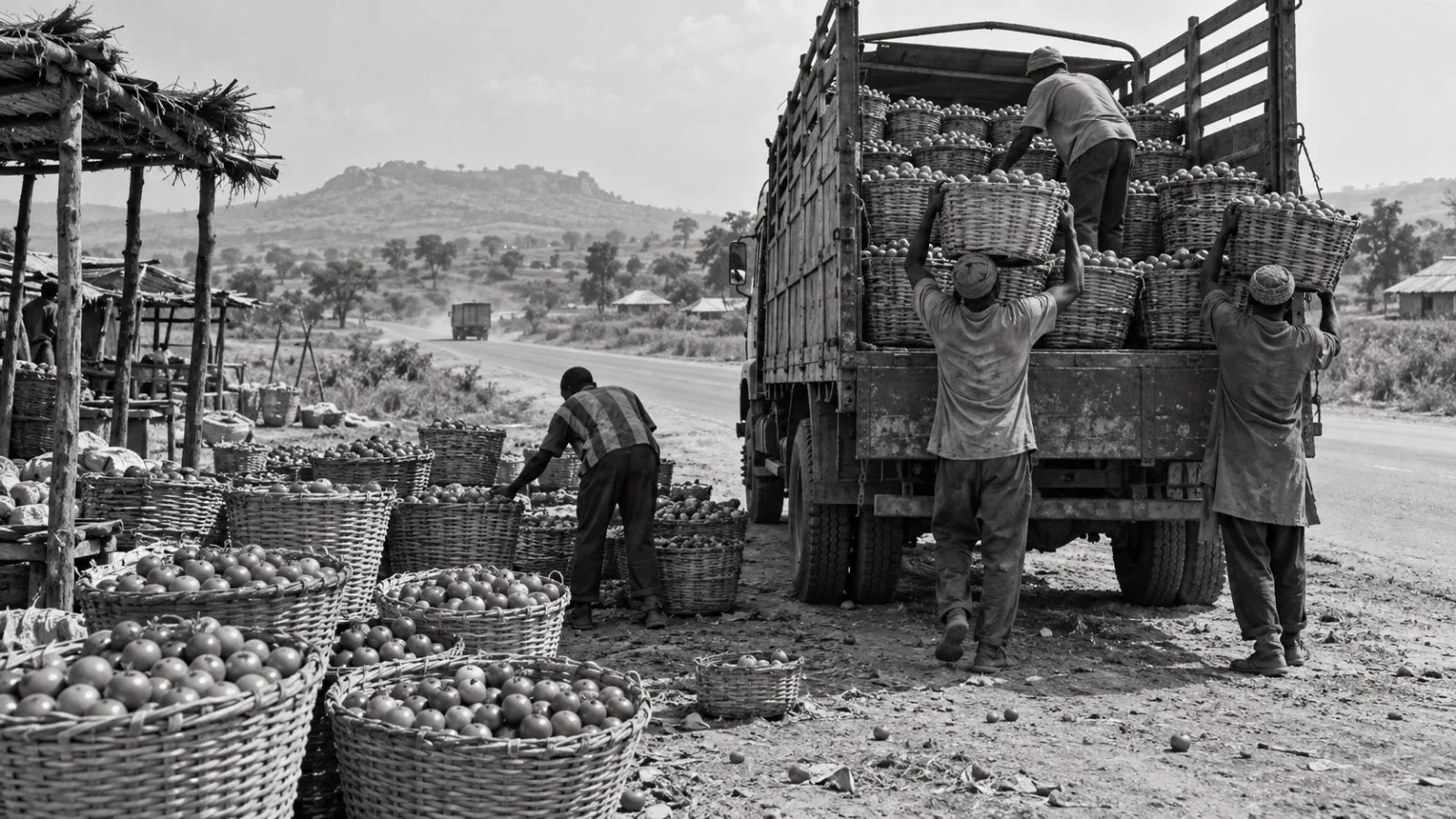
Two Nigerian farmers reported ₦1.6 million in combined losses after tomatoes and oranges were damaged on their way to Lagos, showing how inadequate cooling can reduce growers’ earnings, BusinessDay reported.
Alexander Isong, president of the Organisation for Technology Advancement of Cold Chain in West Africa (OTACCWA), estimates that poor cooling networks cost Nigeria ₦3.5 trillion to ₦5 trillion a year. OTACCWA estimates that the country operates below 4% of the cold-chain capacity it needs.
Ibrahim Idris, a 47-year-old farmer in Chikun, Kaduna State, sends tomatoes to Lagos on journeys that can take up to four days. He said about 20 of the 100 baskets he ships deteriorate before arrival, costing him roughly ₦1 million.
Terhemba Aondona, a citrus farmer in Vandeikya, Benue State, reported damage to 30 of the 150 baskets of oranges he sent to Lagos. He put his loss at ₦600,000. Aondona said revenue from the 120 undamaged baskets would have to cover that loss, which could ultimately affect what buyers pay.
The farmers’ accounts place the immediate cost of spoilage on growers, while consumers may also face higher costs or food-safety risks, BusinessDay reported. The report identified poor rural roads, heat, open trucks and insufficient cold-chain infrastructure as contributors to produce losses during transport.
BusinessDay said it sought comment from Nigeria’s Federal Ministry of Agriculture and Food Security but did not receive a response.