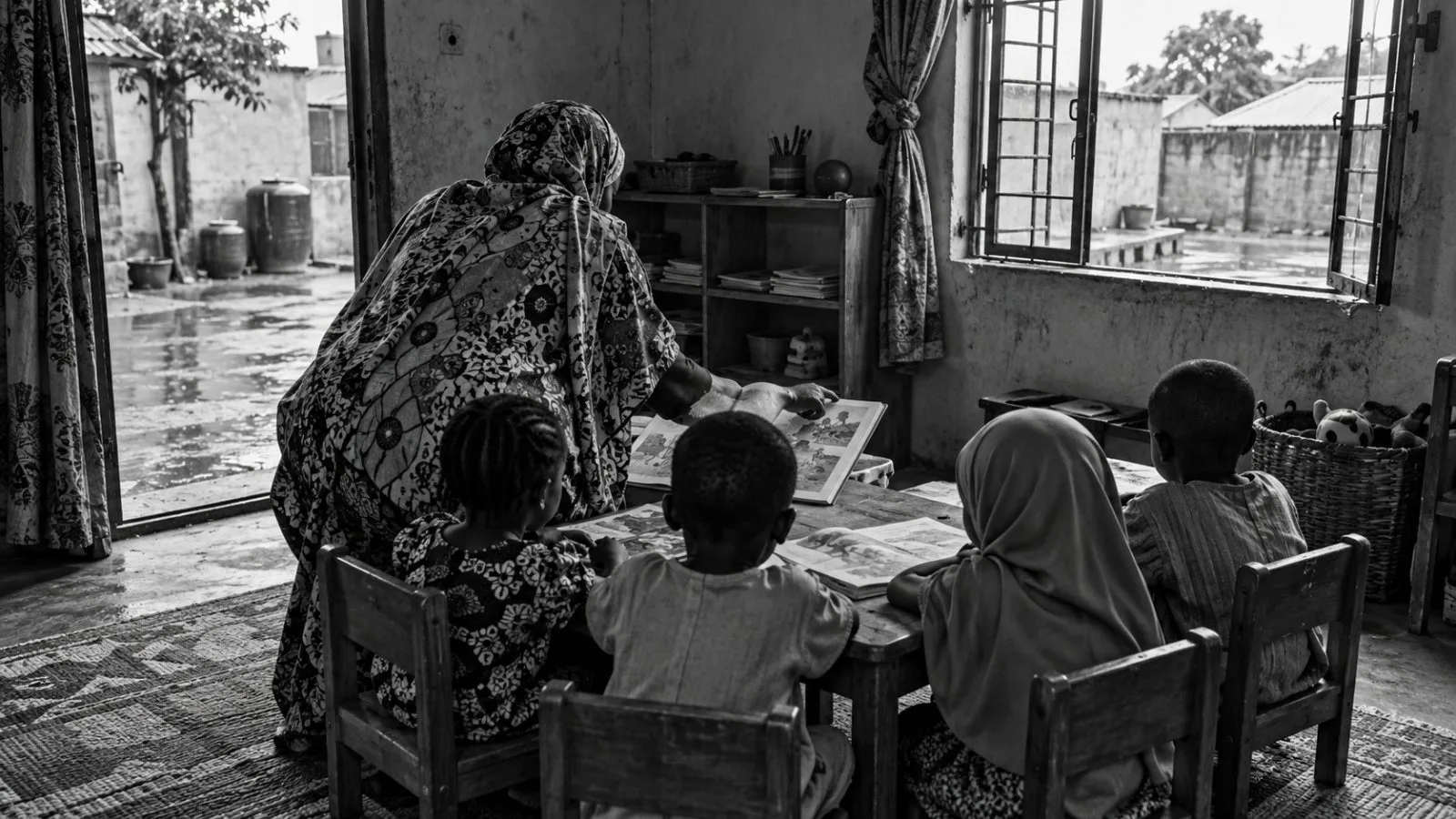
A community-based nursery initiative in Nigeria is seeking wider adoption as official survey figures show that children in rural areas and poorer households participate in early learning at much lower rates.
A 2024 analysis by Nigeria’s Federal Ministry of Budget and Economic Planning and the United Nations Children’s Fund (UNICEF), based on MICS data, puts participation in early-childhood programs among children ages 3 to 4 in 2021 at 26% in rural areas and 58% in urban areas. The report also found rates of 11% among children in the poorest households and 75% among those in the wealthiest.
National attendance rose from 35.6% in 2016/17 to 37.8% in 2021, a change the analysis described as limited. The figures describe national participation; they do not measure attendance changes at dRPC’s centers.
The development Research and Projects Centre (dRPC) says it began early-childhood care and development work in 2004, then expanded the program in Kano and Jigawa in 2018. Its project page says dRPC supported young women who left secondary school in setting up home-based centers for nursery-age children. The page lists 23 centers in Kano and 15 in Jigawa, and describes support for participants moving into teaching and entrepreneurship.
The participant totals differ across public accounts. The project page gives 40 women for the 2018 cohort; The Guardian Nigeria reported 43 young women for the initiative, while a dRPC LinkedIn update also gave 43. The accounts do not specify whether the higher figure covers a different cohort or period.
The Guardian Nigeria reported that dRPC Executive Director Judith-Ann Walker urged wider adoption at an Abuja stakeholders meeting on Monday, Oct. 26. The newspaper said Walker cited transport costs and insecurity as barriers. Walker said: “Community schools are a solution to the problem of high transportation and insecurity in schools.”