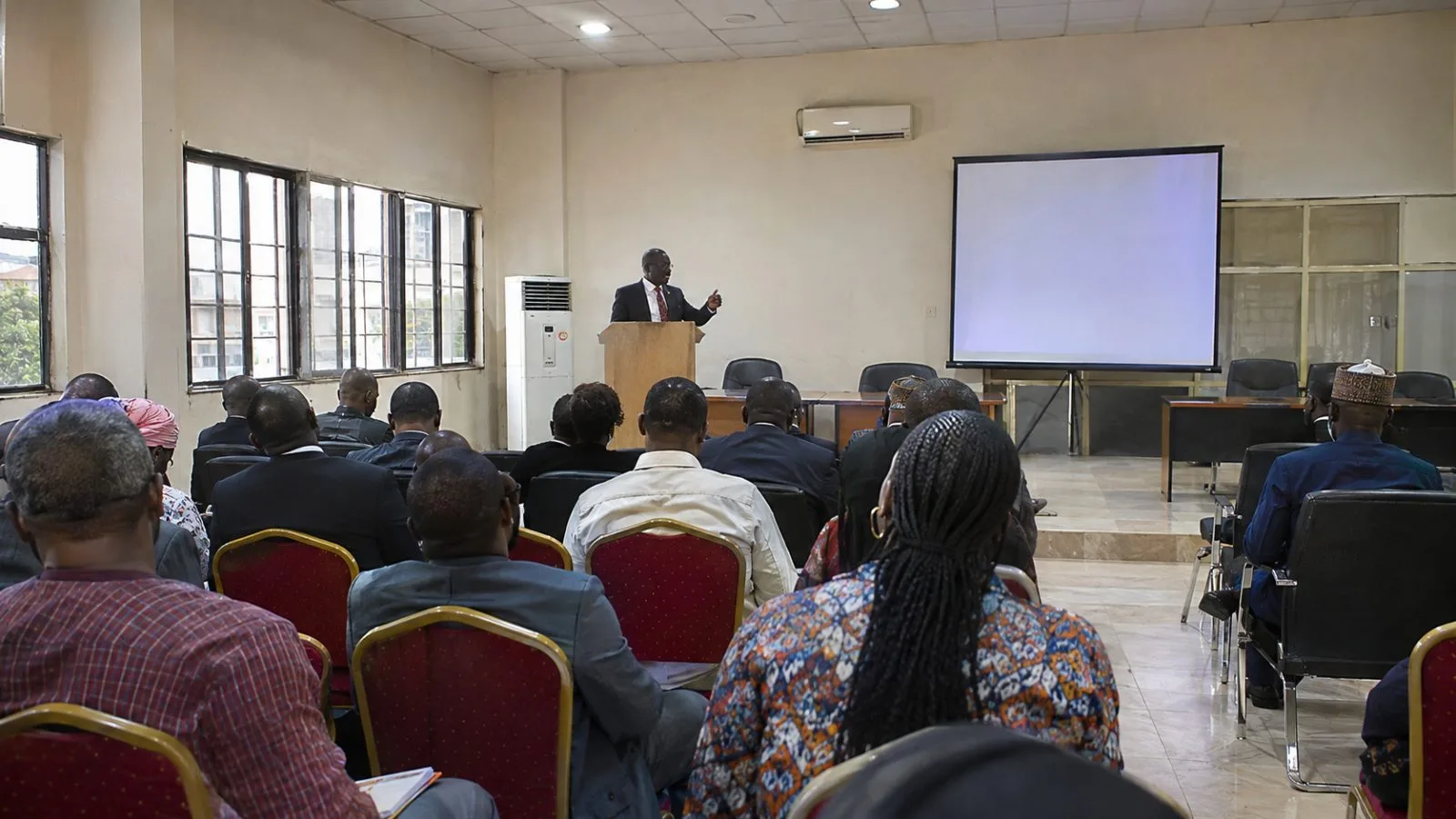
Professor Sam Egwu urged Nigerians to demand answers from elected officials between elections, linking civic participation to freedoms and accountability, Premium Times and Vanguard reported.
A report by Nigeria’s Independent National Electoral Commission (INEC) on the 2019 general election lists Egwu as Resident Electoral Commissioner for Niger State. He spoke at a Nov. 2 lecture in Abuja marking the 20th anniversary of the Resource Centre for Human Rights & Civic Education (CHRICED).
Both outlets described his appeal as a call for Nigerians to organize and take part in public affairs throughout a government’s term, rather than limiting civic action to election periods. Egwu also argued that open civic space lets people and civil society groups express views and engage in governance. Premium Times quoted him calling civic space “very important to the construction of democracy.”
The two outlets reported that he questioned whether officials had sufficiently explained exchange-rate unification, petrol-subsidy removal, a new tax regime and electricity tariff increases. Vanguard quoted him saying the policies “raise serious questions about accountability.”
Premium Times separately reported that Egwu said poverty and economic hardship can make public participation harder. The outlet also said he urged civil society groups to work without undue interference.
CHRICED said it was founded in 2006 and identified the lecture’s theme as “Reclaiming Civic Space: The Rule of Law, Democratic Accountability, and the Future of Citizen Participation in Nigeria.” The organization describes its work as advancing human rights, civic education and democratic accountability. It also announced plans to unveil a student civic-engagement manual and a collection of its public interventions as part of the anniversary program.