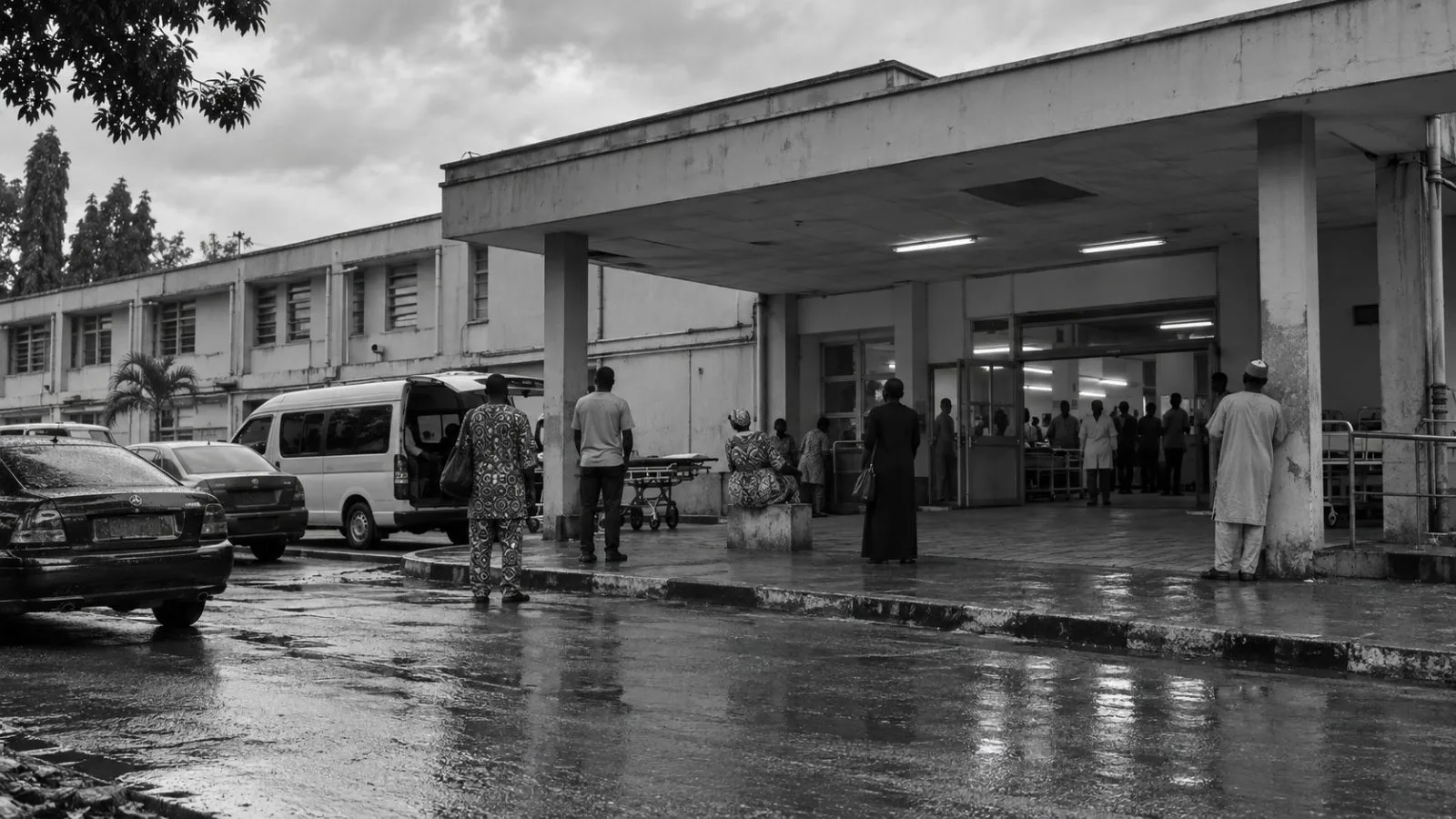
Nigeria’s emergency-care debate has sharpened after an aide said gospel singer Olayemi Bayonile Bolaji was taken to several hospitals before his death, putting access and existing funding rules in focus.
Babadunni Gbolabo said the group sought care at seven or eight hospitals in Ibadan after Bolaji collapsed early Oct. 14, 2026. He said some cited a doctors’ strike and others did not admit the singer, and added that he was not present when Bolaji collapsed. His account has not been independently verified, and the reports do not identify the hospitals.
University College Hospital spokeswoman Funmilayo Enitan said the hospital’s management had no record of Bolaji being brought there. That statement does not establish whether the hospital was among those Gbolabo described.
Nigeria’s 2014 National Health Act bars health providers, workers and facilities from refusing emergency treatment. It also requires a facility unable to provide necessary care to refer the patient to one that can. A violation of Section 20 can carry a ₦100,000 fine, up to six months’ imprisonment, or both.
The Federal Ministry of Health and Social Welfare’s June 2025 Basic Health Care Provision Fund guideline provides for reimbursement of emergency services at accredited treatment centers. Its first-48-hour support covers vulnerable beneficiaries in listed categories, including obstetric emergencies, children under five, road crashes, gunshot injuries and snakebites. Eligibility depends on insurance status at evaluation: support applies when a patient is uninsured or the status is unknown, while insured patients’ costs are billed to their insurers. The fund’s public disbursement page says Emergency Medical Treatment Committee payments go directly to providers; operational funding goes to states fully onboarded on the payment gateway. The rules set eligibility conditions rather than guaranteeing coverage for every emergency.
Officials of the Nigerian Medical Association told PUNCH that facilities unable to treat a patient should refer them to one that can, and that patients or relatives may view a referral as rejection. Their general comments do not establish what happened in Bolaji’s case.
The Federal Road Safety Corps’ 2024 annual report recorded 9,570 road crashes, 5,421 deaths and 31,154 people injured in Nigeria that year.
Premium Times opinion writer Adewale Adeyemo compared the debate with a Sept. 15, 2026, emergency involving Bruno in Park City, Utah. He proposed urgent-care centers, real-time information about emergency-unit capacity and a National Emergency Healthcare Authority. Those are Adeyemo’s recommendations.
Bolaji’s family has not publicly disclosed his cause of death. The available accounts do not establish whether any hospital refused emergency treatment or whether earlier care would have changed the outcome.