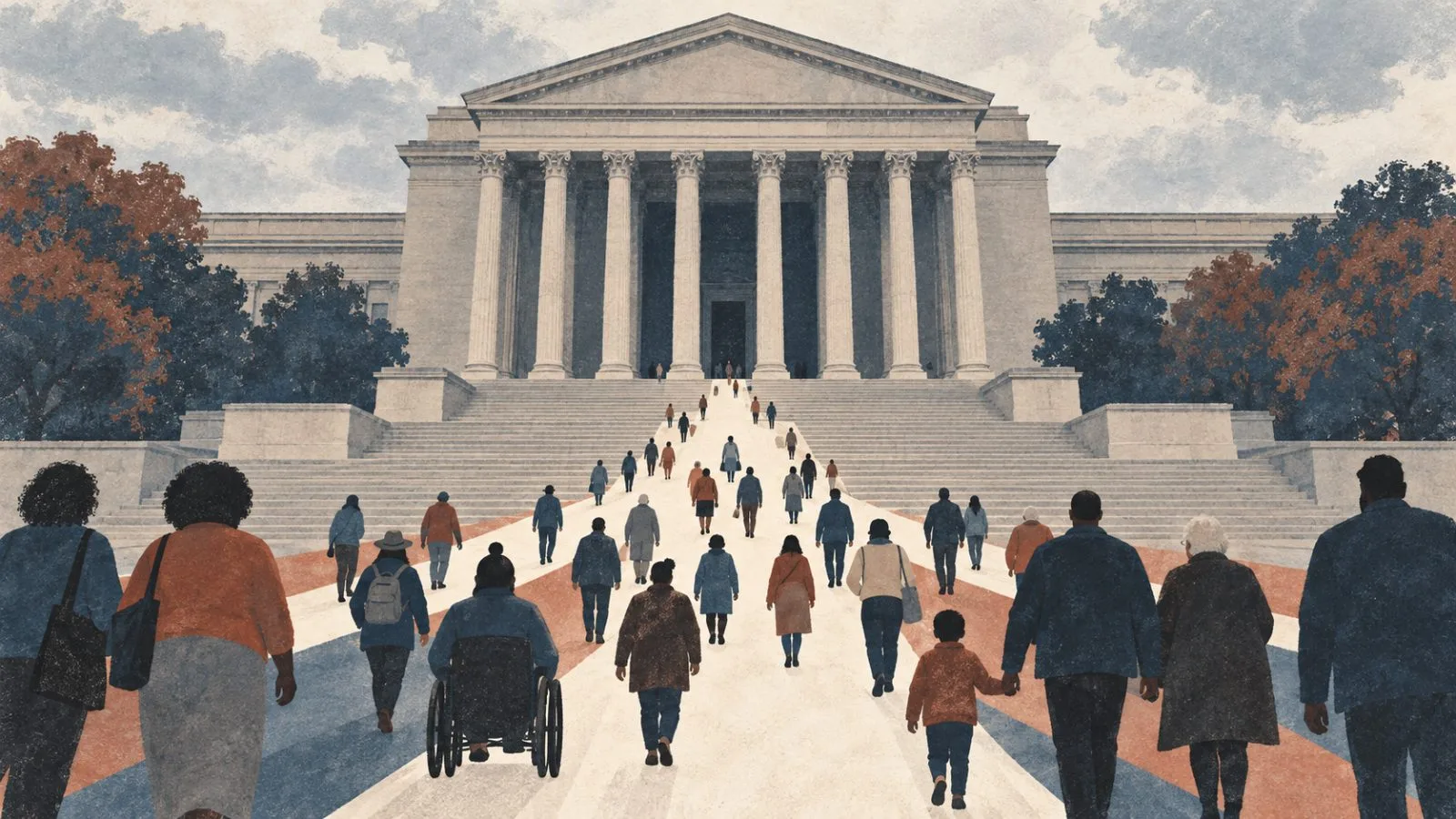
Writer Noah Smith argues that a shared civic identity could help sustain U.S. public services, linking national belonging to tax contributions as a 2025 poll found legal commitments ranked highly.
In a May 29, 2026, essay on Noahpinion, Smith calls the approach “liberal nationalism,” a political identity grounded in shared civic principles. He argues that belonging should not depend on ancestry and that people from different racial, religious and ethnic backgrounds can share national commitments. Smith presents the idea as a way to connect patriotism with pluralism, rather than as a detailed government program.
A YouGov survey published July 23, 2025, asked 1,100 U.S. adult citizens to compare 21 possible markers of being American in randomized matchups. Obeying U.S. laws led, chosen over other traits in 71% of comparisons, followed by support for the Constitution at 70%, citizenship at 69% and belief in the principles of the Declaration of Independence at 68%. YouGov reported an overall margin of error of about 4%. The poll measured preferences among the listed traits, not support for Smith’s broader argument.
Smith ties civic identity to the question of who pays for public services. He argues that people may be more willing to fund roads, schools, policing and a social safety net when they see themselves as part of a shared community. He also says cross-border mobility can complicate efforts to tax wealth and companies. Smith argues that affluent individuals and firms that benefit from public institutions should contribute, but gives no tax plan or estimate of the costs.
Smith points to the Roosevelt era as a precedent for civic nation-building. President Franklin D. Roosevelt designated May 19, 1940, as “I Am An American Day,” recognizing citizens who had reached adulthood or been naturalized during the preceding year. The National Archives says Executive Order 9066, signed by Roosevelt on Feb. 19, 1942, authorized military authorities to exclude people from designated areas and led to the incarceration of Japanese Americans.
The Indian Reorganization Act, enacted in 1934, listed developing Indian lands and granting certain home-rule rights among its aims. The National Archives says it brought major changes to tribal land ownership and self-government, while critics argued it failed to account for differences among Indigenous cultures and governing traditions.