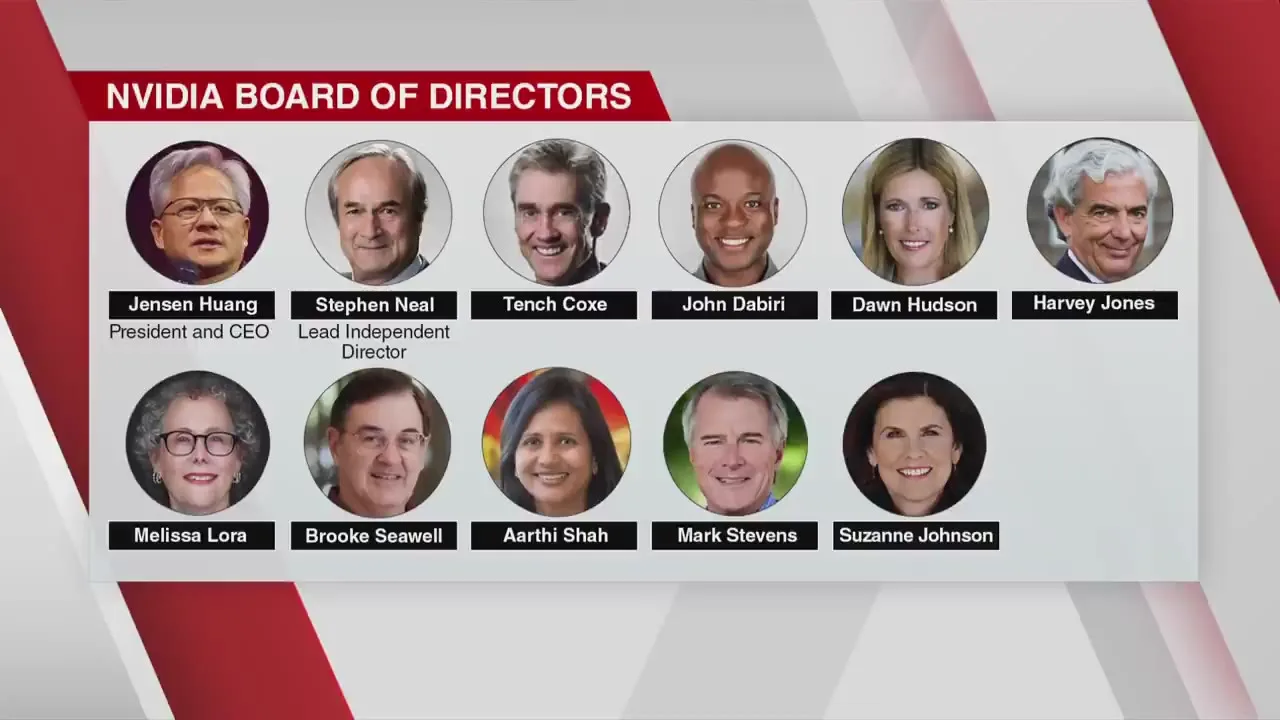
Nvidia would struggle to replace Jensen Huang if he were forced out because its management depends on him, Jay Goldberg, senior semiconductor analyst at Seaport Research Partners, said.
Goldberg said the company has no obvious successor and that Huang's departure could disrupt the decision-making structure that has helped Nvidia move quickly. He did not think the board had reached the point of having to remove him.
Speaking on CNA's Asia First, published Nov. 11, Goldberg said uncertainty over Huang's future and possible US government action could overshadow Nvidia's earnings. CNA put the results date at Nov. 17.
Goldberg expected a good quarter and outlook, but said investors were more concerned about what would happen to Huang. He said the uncertainty made it difficult to take a position on the stock.
Huang has 60 or 70 direct reports, Goldberg said, describing a structure that reduces bureaucracy but concentrates responsibility at the top. Nvidia has deliberately made its founder the company's public face, while he also participates in all major decisions.
“There's no ready alternative,” Goldberg said. He said that dependence would make a leadership change particularly difficult, even though Nvidia has other executives.
Goldberg said further disclosures could make Huang's position untenable and leave the board with little choice. He questioned whether Mega Speed had shipped units into China, while saying the company had previously been investigated and cleared.
He supplied no evidence of wrongdoing and said he had no inside information. His concern reflected the scrutiny surrounding Huang, including conversations with journalists during the previous 48 hours, rather than knowledge of an impending disclosure.
Goldberg identified AMD and Broadcom in the United States, and Huawei and other Chinese chipmakers, as potential beneficiaries. Further restrictions on Nvidia's sales to China, or potentially Southeast Asia, could help Chinese suppliers, he said.
He expected companies to tighten security training for employees travelling to China. He said many US companies already give visiting executives temporary phones and computers instead of allowing personal devices.
Goldberg also said business leaders' closeness to political figures carries risks. He described Huang's public appearances with President Donald Trump as an association that could bring immediate benefits but also carry a later cost.
Demand for Nvidia chips remained strong, Goldberg said. Customers had already committed to purchases and would still want deliveries, supporting the company's near-term business. He offered no point at which the share price might stop falling.
Returning to competitors, Goldberg said AMD and Broadcom generated little artificial intelligence chip revenue from China. Broadcom mainly serves large cloud computing companies designing their own chips, and those products do not go to China, he said.
AMD had faced restrictions similar to Nvidia's for three or four years, Goldberg said. Its opportunity centred on US buyers, with sales efforts focused on three or four major customers. He was uncertain about its sales to Southeast Asian data centres near China.
Goldberg said broader US restrictions would therefore matter less to those two companies. The interview left unresolved whether further disclosures would emerge, whether Huang would leave and what additional sales restrictions Washington might impose.