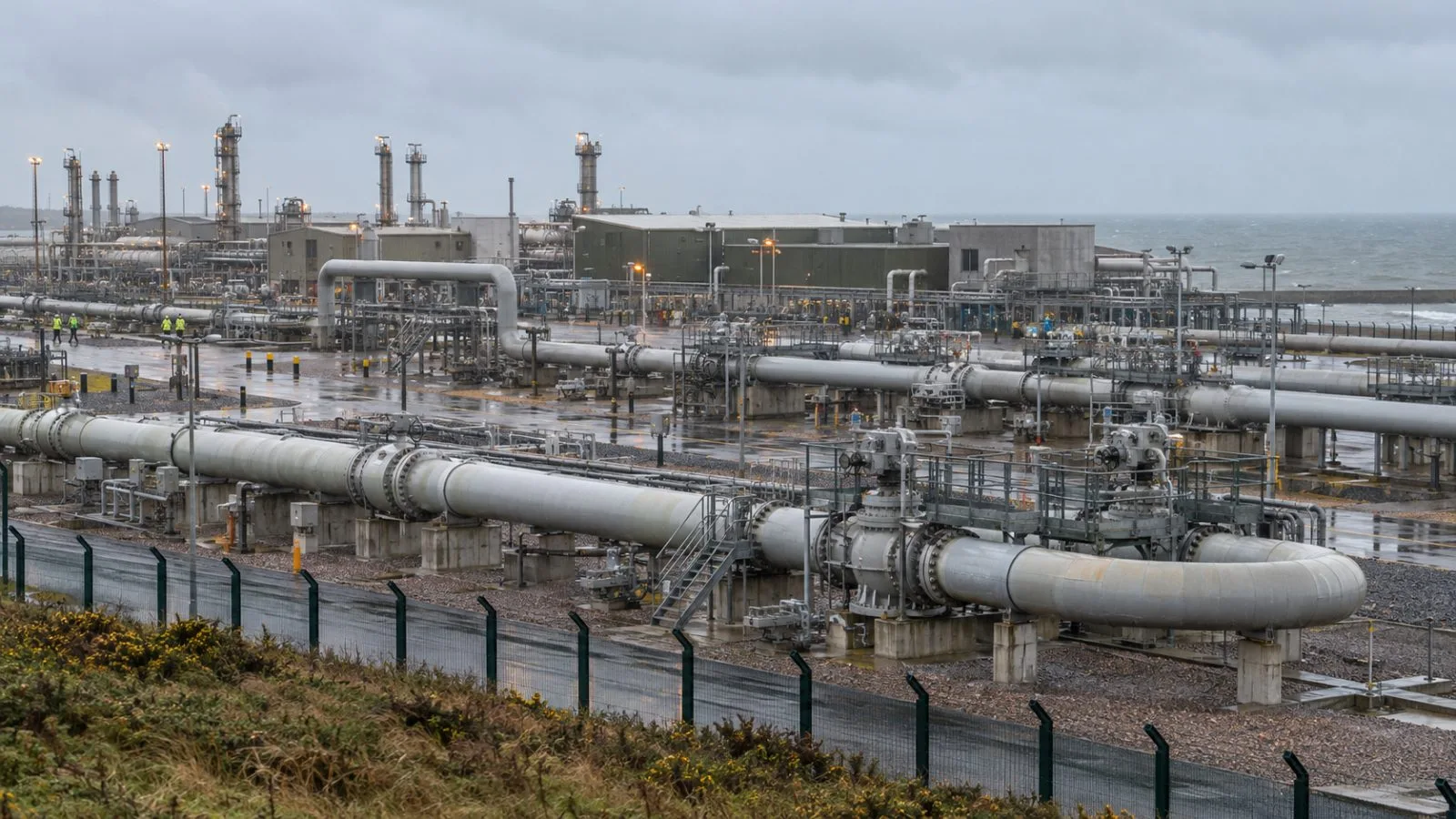
The Office of Gas and Electricity Markets (Ofgem) approved a five-year deal preserving capacity on Britain’s Belgium gas link, keeping an import option available as domestic output falls and winter stress remains a concern.
The agreement between National Gas Transmission plc and Interconnector Limited (INT), which operates the link, retains about 61 million cubic meters per day (mcm/d). When implemented, 36 mcm/d will be firm capacity and 25 mcm/d interruptible. INT is expected to provide a larger firm share where possible over the agreement. With the Netherlands link’s 22 mcm/d, continental interconnector capacity totals 83 mcm/d.
INT had already reduced capacity by about eight million cubic meters per day in November 2025 and planned a further 25 mcm/d cut in October 2026. Without the agreement, Ofgem said, the link’s import capacity would have fallen to about 36 mcm/d.
Before the agreement, Ofgem modeled a possible shortfall of five million cubic meters per day in winter 2026-27 if exceptionally high demand coincided with the loss of the largest gas infrastructure element. Ofgem said most anticipated conditions would still allow the system to meet demand. National Gas’s winter outlook forecasts peak demand of 493 mcm/d and supply capability of 592 mcm/d. The estimates use different methods, and Ofgem’s shortfall scenario included the planned capacity reduction.
Provisional government figures show Britain imported 463,692 gigawatt-hours of gas in 2025 and produced 332,444 GWh domestically. Imports represented 58.2% of their combined total, a calculation from those figures, rather than the share consumed in Britain. The government says pipeline mixing makes it impossible to determine exactly how much locally produced gas is used domestically. Government data also show production fell 3.4% in 2025 to its lowest level since 1973; imports and exports rose, while net imports fell from 2024.
Ofgem linked pressure on interconnector revenue to shifts after Russia’s February 2022 invasion of Ukraine: Europe relied more on gas from Britain as Russian deliveries were curtailed, reducing imports into Britain. The links supplied about 0.2% of Britain’s gas in winter 2025-26, but can provide extra gas quickly during high demand or system stress. Actual flows depend on market incentives and available supply in Europe.
The government said Jackdaw gas could begin flowing as early as the end of October 2026. At peak production by 2027-28, the field could add up to four million cubic meters per day, about 6% of UK Continental Shelf supply. Across its life, its estimated contribution on a peak-demand day is below 1% of available gas, according to the government’s estimate of Jackdaw’s peak-day contribution. The assessment says the field would not materially change Britain’s import dependence.
Ofgem estimates the capacity measure would cost domestic gas customers less than 10 pence per month over five years. Its proposed cost-recovery rules remain under consultation until Nov. 20, 2026, with a final decision expected in late 2026 or early 2027.