


 Oil Prices Rise as U.S.-Iran Fighting Fuels Supply Fears
  Canada Backs €100B Global Defence Bank as G7 Support Lags
  Gold Prices Rebound as Fed Rate Hike Bets Rise
  Australia Current Account Deficit Widens to A$27.2 Billion
  US Treasury Plans Weekly Iran Sanctions Push
  US Stock Futures Fall as Iran Strikes, Fed Rate Fears Rise
  Ukraine Seeks Early EU Funds to Cover $27B Defence Gap
  German Retail Sales Drop 3.4% in July
  Citi Sees Signs of Shift in Global Currency Policy
  Bessent Urges Japan on Fiscal Discipline, BOJ Rate Hikes
  South Korea Unveils Record $597 Billion 2027 Budget to Boost AI and Chips
  Canada Backs €100 Billion Global Defence Bank
  Bessent Urges G20 to Rethink China Trade Ties
  Ukraine Sanctions Chief Heads to Washington to Push Russia Bill
  Brazil, US Resume Tariff Talks as Trade Tensions Persist
  China Manufacturing PMI Contracts Again as Recovery Remains Fragile
  Asian Stocks Fall as Fed Rate Hike Bets and Iran Conflict Rattle Markets


 Add as a preferred source on Google

Think about oil and gas companies and climate change and chances are you’ll think dark thoughts. It’s true Exxon Mobil had remarkably detailed knowledge of global warming in the 1970s. Some seeded doubt by funding climate denier organisations and scientists and invented greenwashing. The current energy crisis has handed them windfall profits. In fact, BP hit profits of A$40 billion last year, while scaling back its green ambitions.
But these companies are not just going to disappear. Even after we stop burning oil in engines, we will need oil and gas as raw materials for plastics, glues, solvents, industrial chemicals and fertilisers. Eventually, we’ll find greener alternatives. But that will take decades.
Are they the enemy? They’ve certainly done a lot to slow down the shift to clean energy. But this will – and is – changing. Inside some of these companies, people know change will have to come. The companies which embrace their role as broader energy and chemical companies will make the transition first.
We’ll also need their expertise and ability to handle uncertainty, risk and large projects to make green hydrogen and green chemicals a reality.
Oil and gas over coal?
If you’ve been following climate change discussion, you’ll have noticed plans to phase out coal crop up a lot more often than plans to phase out oil and gas.
That’s because – for now – we’re much more reliant on these hydrocarbons. Firmed solar and wind can now take up the slack as ageing coal plants retire. But we’re still a way off being able to avoid burning oil or gas for transport or in industrial processes.
That means these companies will be with us for decades yet. But over time, they will think of themselves less as fossil fuel extractors and more as energy and chemical conglomerates, where oil and gas is a smaller part of what they do.
You’re right to be sceptical. But there are legitimate signs of change.
Shell just bought into a green hydrogen megaproject in Oman, for instance, where it will be the lead operator. Late last year, BP bought a controlling stake in Australia’s largest renewable project, the Asian Renewable Energy Hub. If built in its entirety, this project would generate the equivalent of a third of Australia’s 2020 electricity production.

The planned Pilbara renewable megaproject would power mining operations and export green hydrogen. Shutterstock
Oil and gas majors are well placed to make green hydrogen and green chemicals
Hydrogen is tricky. The lightest element can diffuse through many materials and escape. That makes storage and transport difficult.
But oil and gas companies are experienced in handling hydrogen. That’s because it’s widely used in oil refineries to scrub sulphur out of oil and to help crack heavy oil into lighter grades. In fact, it’s so useful that most of the world’s hydrogen is used in oil production. At present, hydrogen is usually made by breaking up natural gas, which means it contributes to global heating.
But if we can figure out how to cheaply extract hydrogen from seawater, this green hydrogen could sub in for fossil gas. For this to happen, we’ll need oil and gas majors on board. The realities of green hydrogen would be daunting for most companies. Pipelines to transport it. Ways of storing it. Tankers to ship it across the sea. Heavy engineering projects with a high capital expenditure.

Oil and gas companies are expert in heavy engineering projects, scale and handling uncertainty. Shutterstock
Oil and gas companies have had to pioneer a great deal of new technology to keep the fuel coming, given how much oil and gas has already been tapped, shipped and burned. Take fracking, which was invented out of necessity. Or the ability to drill for oil underneath kilometres of seawater in places like the North Sea.
To have a chance of getting to net zero by 2050, we’ll need scale. If green hydrogen or ammonia is to actually be useful, we need lots of it.
How could oil and gas companies reinvent themselves?
Not all oil companies are the same. Some will keep drilling for oil as long as there is demand. And state-owned oil companies such as Saudi Arabia’s Aramco are the main source of their country’s wealth. It’s hard to see them changing.
But some will move to grasp the future. Many people inside these companies can see very clearly where the world is going – and the risk of going extinct if they do not reinvent themselves. The first movers are likely to benefit the most, if they use their advantages to help the transition.
At present, oil and gas companies make money by drilling, processing and selling oil and gas to burn in engines. But as the clean energy transition gathers pace, there will be new opportunities.
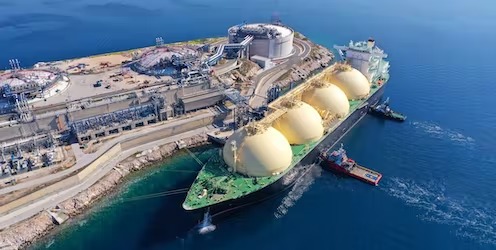
If one major oil company figures out how to do green hydrogen at scale, they could take advantage of their integrated corporate network, from production to transport to service stations or other consumer points. Others might move into synthetic aviation fuel, or specialise in swapping LNG tankers for hydrogen vessels.
Even after you displace dirty fuels from transport and power sectors, there are many areas left over, such as chemical manufacturing.
Without fertilisers, we would have much lower yields from our farms. It’s estimated the equivalent of half the world’s population relies on food made possible by synthetic fertilisers. These come from natural (fossil) gas.
Similarly, paints, varnishes, glues and plastics currently need hydrocarbons as a feedstock. To replace these means changing the whole chain.
Oil and gas don’t exist in a vacuum
Just last week, the European Union hit the symbolic target of EU€100 (A$157) per tonne of carbon.
As carbon prices rise, it makes fossil fuel projects less attractive – and will make the economics of many marginal projects in renewables, green chemicals and hydrogen work.
You and I and most people alive have benefited from the intense energy stored in fossil fuels. They’ve underpinned the huge advances in our economies and technologies for over a century. But now the costs are plain. So let’s use all the tools we have available – even those wielded by climate villains like oil and gas companies.







