Memory and storage could absorb more than half of cloud data-center capital expenditure by 2027, with high-bandwidth memory excluded, in a forecast the Shenzhen Memory Industry Association attributed to Morgan Stanley Executive Director Daniel Yen.
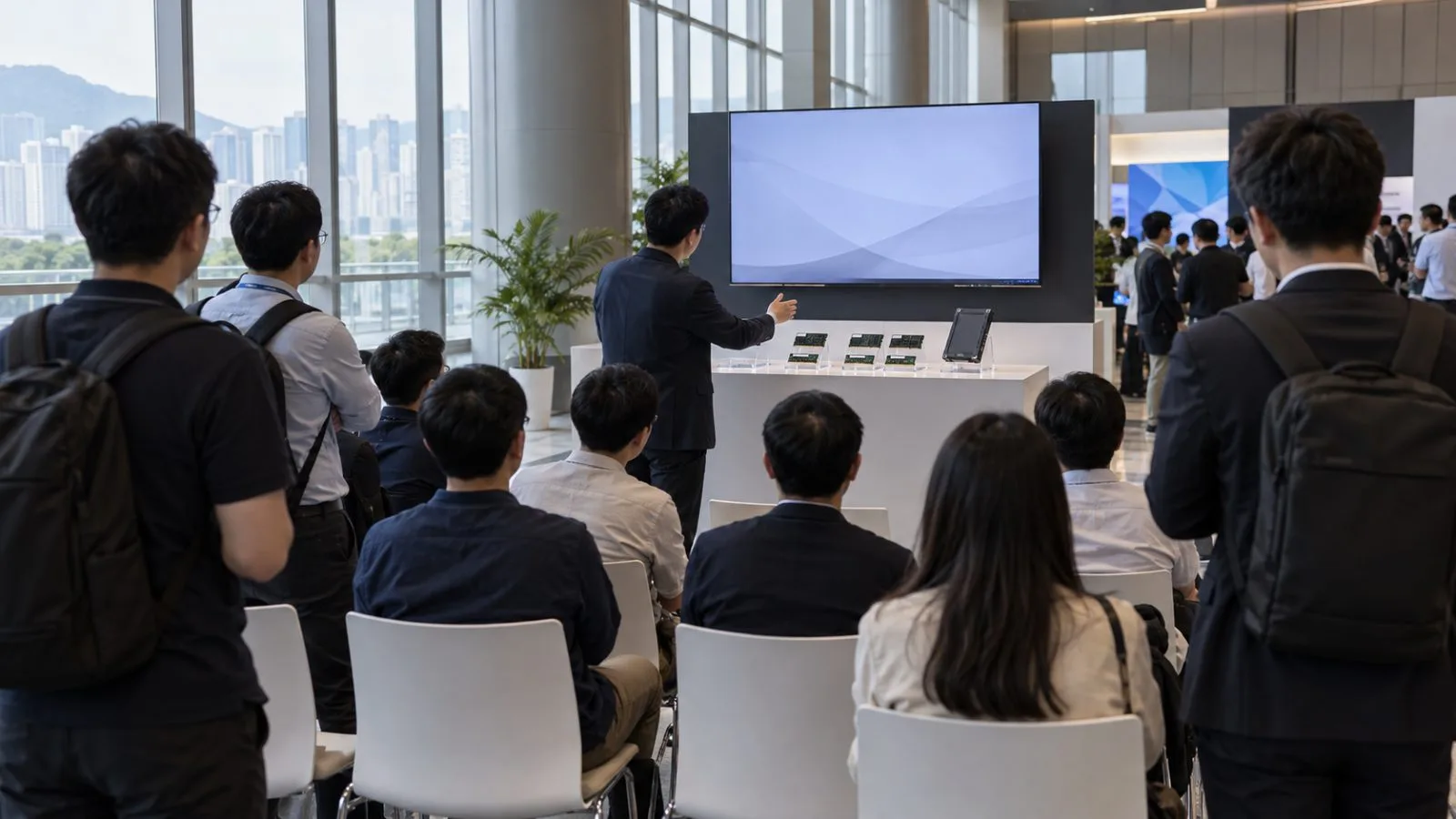
The fifth Global Memory Innovation Forum (GMIF2026) brought industry speakers to Shenzhen for sessions on Sept. 22-23, its official website says. The site names the association and Peking University’s School of Integrated Circuits as co-hosts; an organizer recap records the event’s close on Sept. 23.
In the association’s account, Yen described the “memory wall” and listed six possible responses: move to newer process technologies, revise chip designs, use advanced packaging, improve memory peripherals, process or compute within memory, and develop new materials.
The association connected demand for memory and storage to the expansion of large-scale AI inference. It said these workloads need quick responses, support for many simultaneous requests and steady throughput. Bandwidth, capacity and energy efficiency affect overall system efficiency and cost, while data movement adds a broader system-design concern.
Yimao Cai, dean of Peking University’s School of Integrated Circuits, said HBM remains important for high-end AI computing, but yield, expense and heat constrain wider adoption. The association described high-bandwidth flash and mixed-media architectures as research paths for balancing performance, capacity and cost.
Samsung Memory China CVP and CTO Kevin Yoon linked AI agents to growing key-value (KV) cache demand. He discussed Samsung’s work on Z-NAND, PCIe Gen6 solid-state drives (SSDs) and high-capacity data-center SSDs.
Lenovo ISG China Server Division General Manager Tao Zhou described a “token factory” model combining data governance, computing optimization and security management. It would also pool training and inference resources and coordinate hardware with software.