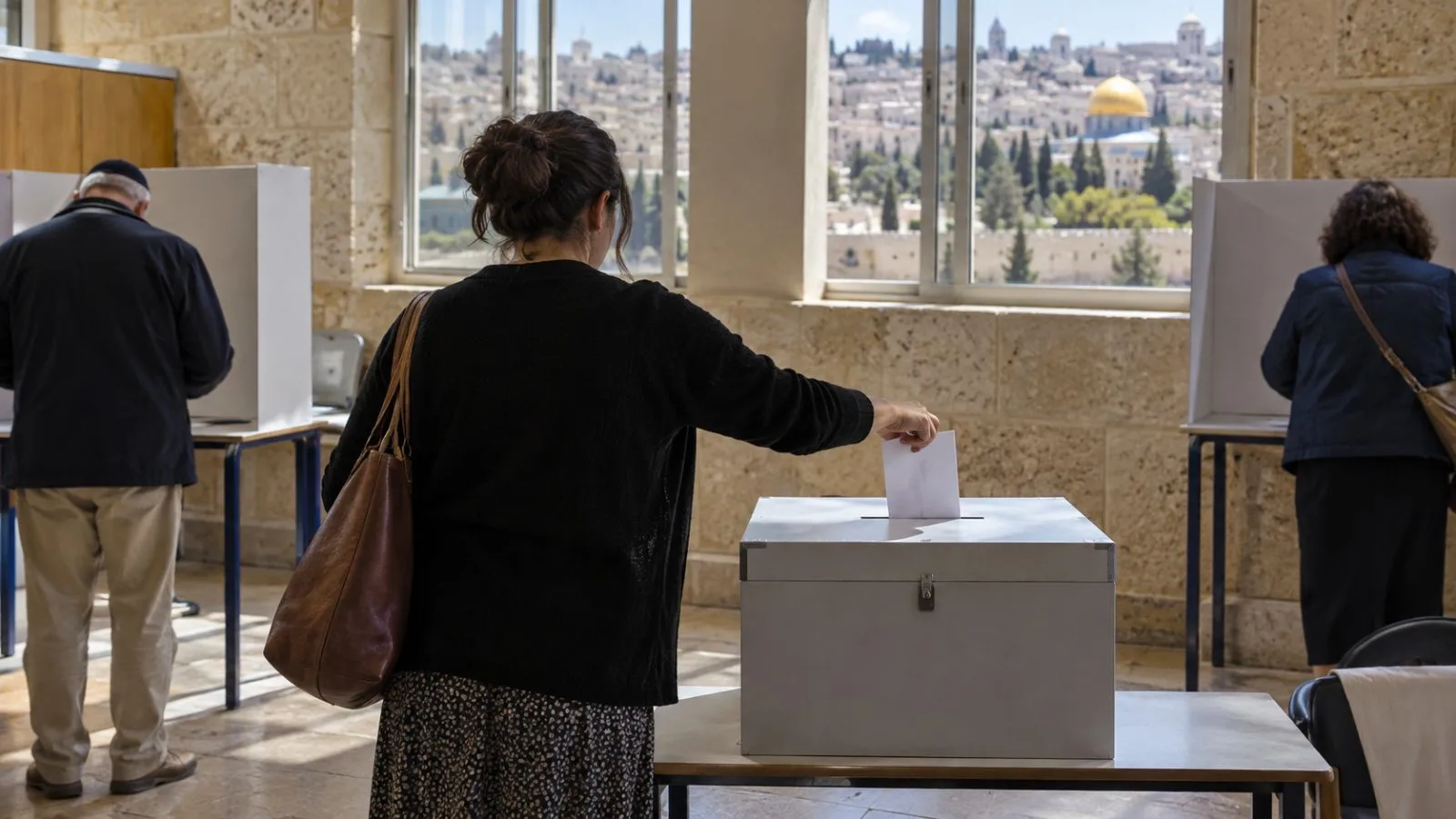
Some Israeli citizens living abroad spent thousands of dollars to vote in Tuesday’s election. Most overseas citizens had to cast ballots in person, adding an expensive travel hurdle to participation.
Israel’s Central Elections Committee says exceptions allow certain state and national institution employees working abroad, along with qualifying relatives, to vote at Israeli diplomatic missions. AID Coalition, the U.S.-based nonprofit that operates Fly&Vote, says participants pay their own travel costs and describes the initiative as nonpartisan.
AID Coalition estimated that as many as 67,000 Israelis abroad were planning trips for the vote. CBS News reported that the estimate drew on surveys of expatriates and Fly&Vote registration data. The estimate put the U.S. share at about half, with other prospective travelers in Europe, Canada, Australia and New Zealand. EconoTimes’ earlier coverage of the estimate described it as prospective travel, not a verified count of arrivals.
Ronnie Teram Gil-Ad, who moved to the United States with her family a year ago, told CBS News she paid about $3,000 for the trip. She was expected to stay in Israel for 36 hours before flying back to Boston Tuesday night. Gil-Ad said she still considered Israel her home and called voting “my civic duty.”
The Associated Press reported that Yael Natra spent thousands of dollars traveling from Toronto. After living in Canada for two decades, Natra said this was the first Israeli election she felt compelled to attend, citing concerns about democracy and divisions in society.
Offir Gutelzon helped organize flights with UnXeptable, whose stated goal is to unseat Netanyahu. But the travel does not establish the overall balance of political preferences among overseas voters. American-Israeli political analyst Dahlia Scheindlin told the AP some expatriates were coming to vote for the pro-Netanyahu side, while the broader voting intentions remained unclear. Scheindlin also described this year’s mobilization as notable compared with past elections, without giving a numerical comparison.
Parties were expected to negotiate after polls closed to assemble a stable government.