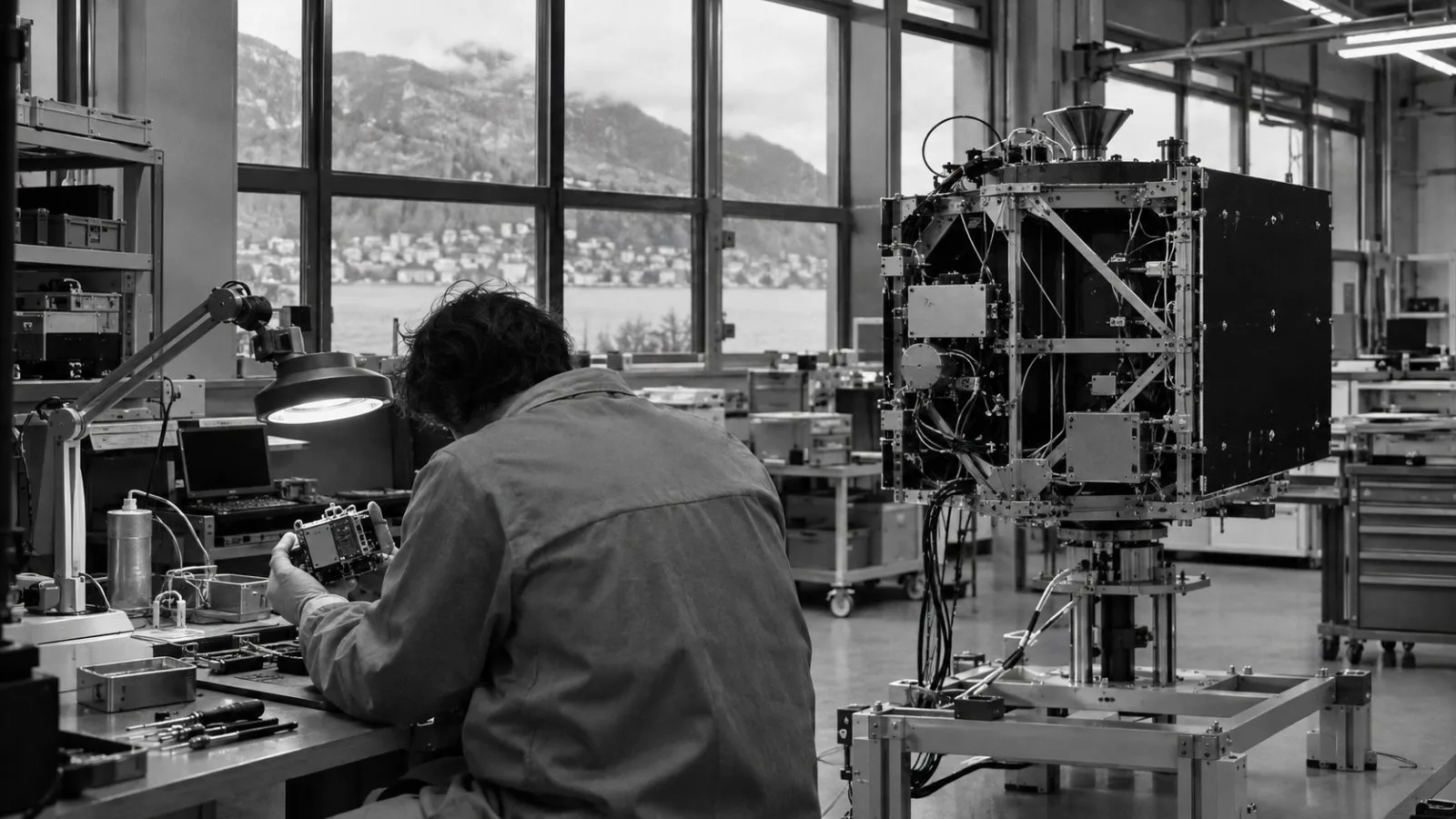
Three European efforts to improve satellite security are moving through different stages, including a Swiss startup’s planned spacecraft test in 2028, a U.K. defense contract and an EU-funded capture-technology study.
In an update dated Nov. 4, PAVE Space said its first IBEX demonstrator cleared a preliminary design review in October. The company is targeting a launch to low Earth orbit as soon as February 2028, with the flight intended to test components for a future operational spacecraft.
PAVE describes IBEX as a maneuverable platform for reconnaissance, inspection, escort and close-proximity operations. Its specifications give the vehicle a maximum payload of 300 kilograms and a standard-configuration delta-v of 782 meters per second with a 100-kilogram payload. The company lists co-orbital denial and capture among possible missions that would rely on equipment carried aboard.
PAVE’s GRAZE avionics demonstration reached orbit on Oct. 1 aboard a SpaceX Falcon 9 rideshare. The company says GRAZE is testing its onboard computer and avionics architecture. CEO and co-founder Julie Böhning said the flight experience would inform the company’s next development steps.
Astroscale said its U.K. subsidiary, Astroscale Ltd., received a £15 million contract from the U.K. Ministry of Defence to lead the LEDA defense program. BAE Systems and Open Cosmos are supporting partners, the company said.
The European Commission identifies OSMOS X as the coordinator of TAC, a 30-month project to design a spacecraft-servicing vehicle. The project aims for a craft that can inspect and capture spacecraft, then attach to them through a welding process. The Commission estimates TAC’s total cost at €3,999,732.99, with EU funding capped at €3,999,732.82.
PAVE’s schedule lists a second IBEX mission for the fourth quarter of 2028 and a first LYOBA mission for 2029.