


 Bitmine to Stop Ethereum Buying After Reaching 5% ETH Supply
  Kazakhstan and Tether Explore Tenge Stablecoin and RWA Tokenization
  Solana User Growth Jumps 33%, Outpacing Ethereum and Chainlink
  Litecoin Marks 15 Years as Grayscale Backs LTC ETF Push
  Bitcoin Bull Cycle Still Early as XRP, NEAR Consolidate
  JPMorgan CEO Jamie Dimon Warns Mythos AI Raises Cyber Risk Tenfold
  U.S. Government Moves Over $100M in Bitcoin and BNB
  Cardano Price Surges 10% as ADA Targets $0.30
  Cardano Price Eyes $0.30 as ADA Whale Activity Surges
  China Shuts 670 Banks as Bitcoin Eyes Financial Risks
  BofA Raises Coinbase Stock Target to $203 on Stablecoin Growth
  Zcash Privacy Demand Rises as AI Exposes Bitcoin Transactions
  Fairshake Backs 32 Pro-Crypto House Candidates
  DogecoinVM Makes DOGE Transactions 300x Faster


 Add as a preferred source on Google
China stepped up its efforts further overnight to stop the CNY and CNH depreciation. On Monday, the central bank announced a new move to impose the reserve requirement ratio on some foreign banks from January 25, which would add costs for speculators on short-selling the yuan. The measure will drain an estimated CNY220bn, according to estimates cited by Bloomberg.
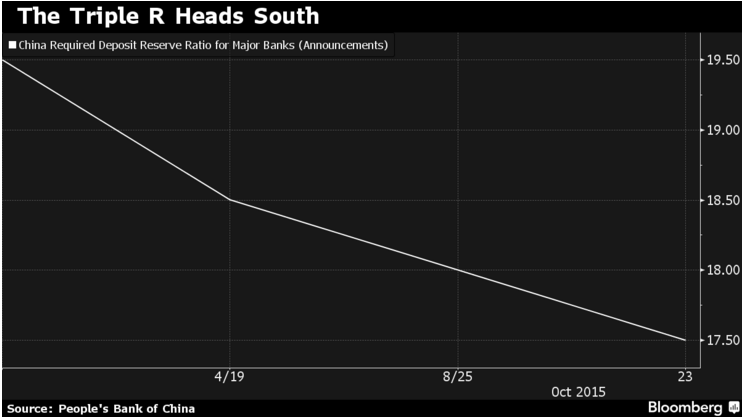
The required reserve ratio varies for Chinese lenders, and PBOC started to include mainland yuan deposits of offshore participant banks in reserve requirements last year. It was decided in December 2014, but that the ratio was set at zero temporarily to allow for preparation. It is no coincidence that the PBoC is 'normalising' the RRR now. Previously used to moderate market liquidity, RRR rate is now a tool to enforce financial stability. The RRR rate will this year fall to 15 percent from 17.5 percent for major banks, according to the median estimate in a Bloomberg survey.
"The RRR that China intends to impose on offshore CNY bank accounts will probably deter speculation against the offshore yuan (CNH) for now. Moreover, the weighted RMB index is around the floor of its stable band. This suggests that both the onshore CNY and offshore CNH have scope to remain stable even if the basket of currencies depreciates," notes DBS in a report.
Pressure on the currency, stocks, capital outflows and growth is intensifying as the PBoC struggles with the transition towards a greater role for markets. Compounding the challenge, are an overhaul of the central bank's tool kit as monetary policy shifts to a price-based mechanism and the main liquidity lever is set to be used to enforce financial stability instead.
The PBoC earlier today set the yuan's mid-point fix against the US dollar at 6.5596, 6 basis points weaker than Monday. The spot market opened at 6.5775 per dollar and was trading at 6.5796 at midday. The offshore yuan weakened 100 pips during the morning to 6.5960, nearly 0.3 percent drifting from the onshore rate.

- News

- Economy

- Central Banks
- Investing
- Research
- Roundups
- Digital Currency
- Insights
- Technical Analysis
- Technology
- Business
- Law
- Health
- Nature
- Fintech
- Science
- Topic
- Opinions
- ©Econometrics LLC . All Rights Reserved.
PBoC determined to stop further CNY and CNH depreciation, RRR no likely coincidence
Tuesday, January 19, 2016 11:53 AM UTC
Editor's Picks



- Market Data
Most Popular




