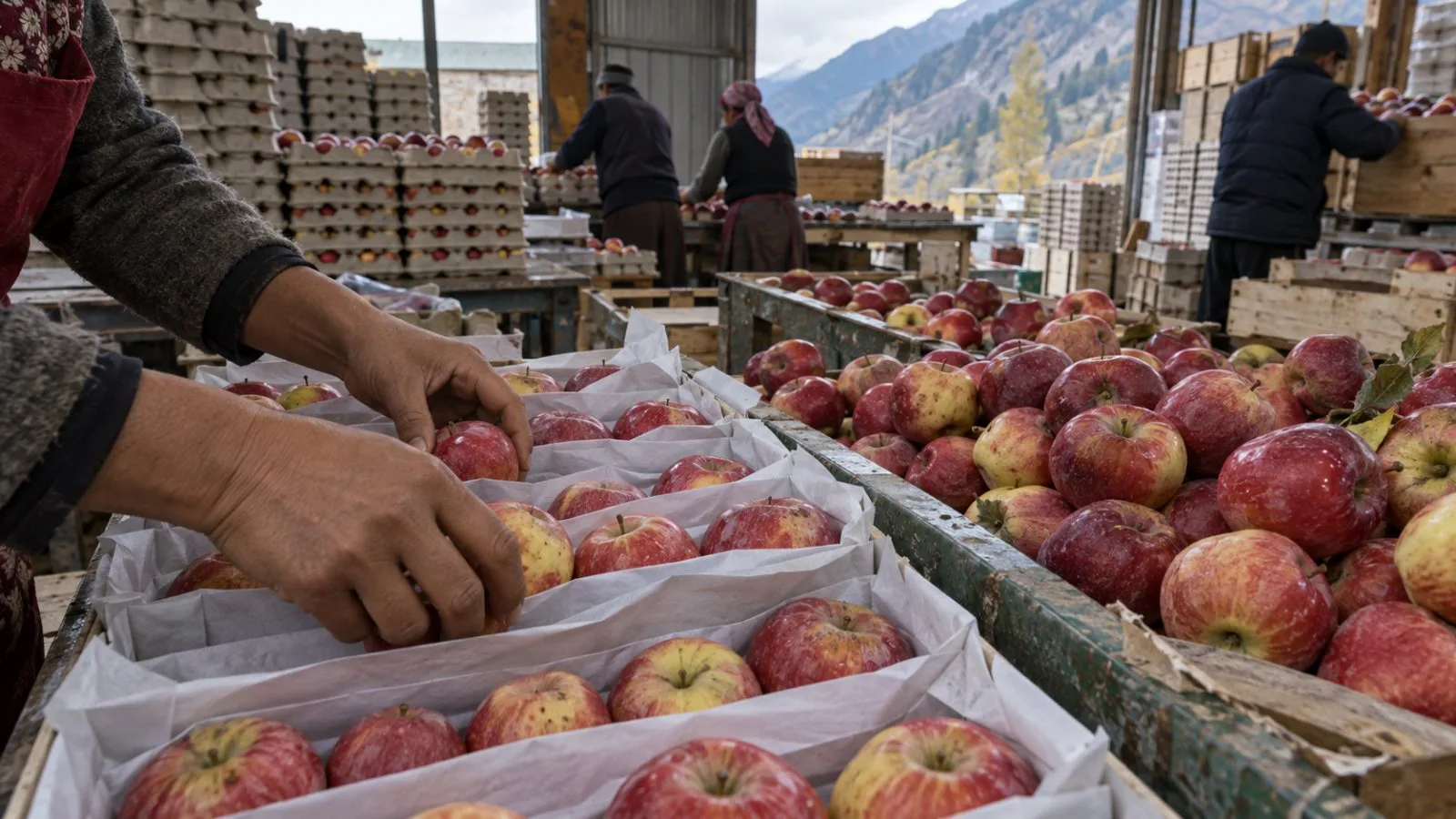
Anand Sankar's Oct. 28 account of one apple shipment does not establish whether its waxy coating was fruit bloom or a postharvest treatment, a distinction that matters to consumers asking what is on their food.
In an Oct. 28 post on X, Sankar recounted a customer's concern about apples he said were harvested in Kinnaur and shipped to Hyderabad through Dehradun and Delhi. He attributed the film to temperature changes and rubbing against paper trays, saying scraped bloom would form again. NDTV Profit identified Sankar as a farmer and founder of Sayb Apples.
Apple bloom is a natural wax layer. Rob Crassweller of Penn State University says cells in the fruit's outer skin produce wax in minute scales, which help reduce moisture loss; the amount can differ by apple variety and environmental conditions. Packers typically wash and brush fruit, which strips away the bloom. Penn State's extension resource confirms natural bloom but does not verify Sankar's explanation for this shipment.
Sankar cited nighttime temperatures of 1–2°C in Kinnaur during the prior week, 5–7°C in a warehouse and a later peak close to 35°C. His post described a 20°C change but did not specify the readings being compared; the listed figures do not directly align with that difference. The account provides no temperature records or exact timing.
Natural bloom is separate from coatings applied after harvest. India's Ministry of Health and Family Welfare (MoHFW) says fresh fruit may be treated with white or yellow beeswax, carnauba wax or shellac under good manufacturing practices, with the coating disclosed on the label. The rules describe permitted treatments, but the post cites no test or shipment records identifying what was on these apples.
Sankar told the customer to rinse the fruit in cool water, wipe it with a soft cloth and refrigerate it.