
Poland’s dispute over control of its Constitutional Tribunal sharpened Saturday as Prime Minister Donald Tusk pledged state support for judges elected by parliament, while President Karol Nawrocki defended a rival leadership claim.
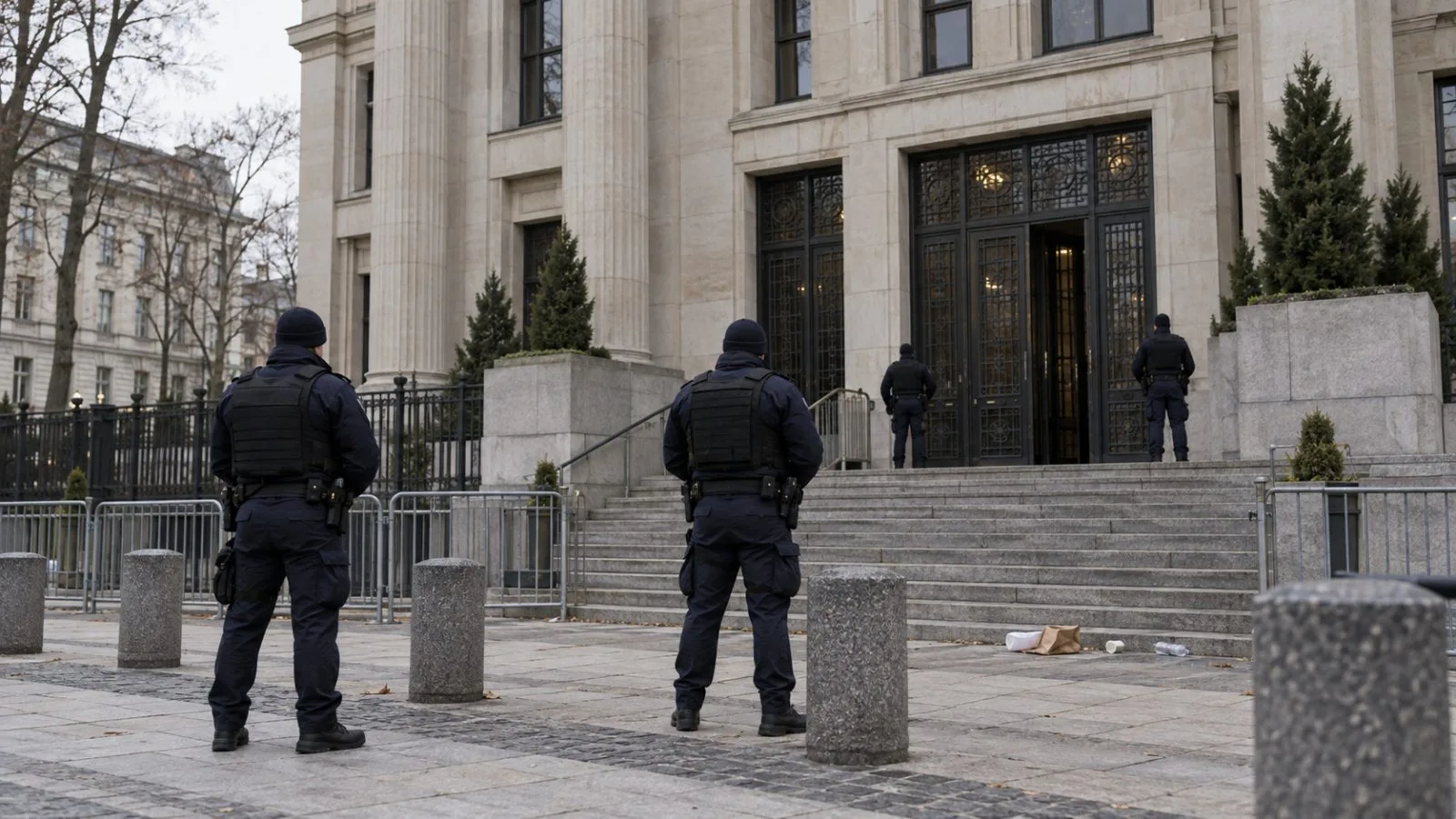
The competing accounts deepen an earlier dispute over the Tribunal’s leadership. In an Oct. 31 address, Tusk said, in an English translation, “In certain matters, there can be no compromise.” He said his government would ensure the court had security and suitable working conditions.
Tusk described the judges elected by the Sejm, Poland’s lower house of parliament, as legally chosen and said they had been blocked from working. He said the judges had taken their oaths, but Nawrocki had not received them. Nawrocki said the constitutional order had been violated and a state body taken over by force; he described Sochański as the lawfully serving vice president and said he had enabled him to enter the Tribunal. The legal effect of the unreceived oaths and the competing claims is disputed.
The Tribunal’s website posted information about orders under Article 130 of the Law on the System of Common Courts concerning a break in the official duties of Tribunal President Bogdan Święczkowski and Sochański. The orders’ legal effect is disputed. An Oct. 30 order signed by Judge Anna Korwin-Piotrowska, who identified herself as substituting for the Tribunal president, calls a General Assembly of Tribunal judges for Tuesday, Nov. 3, to consider the court’s proposed 2027 revenue and expenditure plan. The authority behind the order is also disputed.
Jacek Chlebny, president of Poland’s Supreme Administrative Court, said police presence around the Tribunal and preventing its president and vice president from entering raised rule-of-law concerns. He urged compromise and said doubts over the Tribunal’s composition and leadership, along with unpublished rulings, weaken public trust in the state. The Associated Press reported that police said they detained three people on Oct. 30 after some protesters threw objects at officers or tried to breach the Tribunal’s security fence.
Poland’s Constitution gives the Sejm authority to select the Tribunal’s 15 judges individually for nine-year terms. A 2016 law requires a judge-elect to take an oath before the president. On Dec. 18, 2025, the Court of Justice of the European Union ruled that appointment irregularities involving three judges and the Tribunal’s president meant the court did not meet the requirements of an independent and impartial tribunal. That ruling did not decide the legal effect of the October orders.