Political strategist Valentin Bianki says Nigeria’s opposition must coordinate campaigns and mobilize voters to build a serious challenge to President Bola Tinubu in the 2027 election.
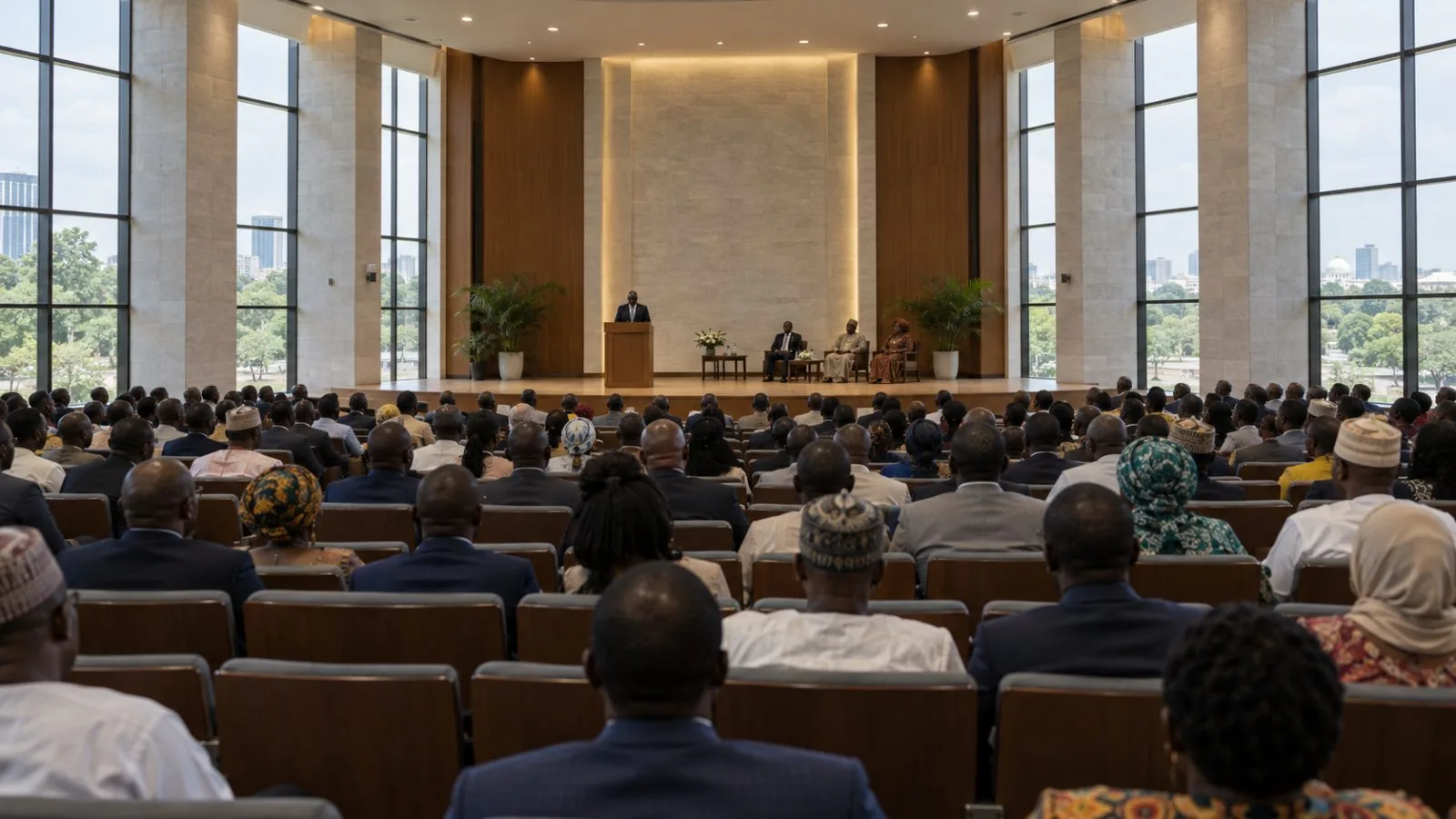
Bianki made the case at a presentation in Abuja on Monday, Oct. 19, for the English edition of Politics in Nigeria: Elites and Voters. The event was held at the Shehu Musa Yar’Adua Centre. “Dissatisfaction is real; coordination is the scarce resource,” he said.
BusinessDay also quoted Bianki saying, “Votes are individual. Mobilisation is not.” He used the contrast to stress that campaign work is needed to bring voters together, rather than assuming frustration by itself produces a shared political choice.
The Independent National Electoral Commission (INEC) reported 8,794,726 votes for Tinubu in the Feb. 25, 2023, presidential election. Atiku Abubakar won 6,984,520, Peter Obi received 6,101,533 and Rabiu Musa Kwankwaso took 1,496,687. The count records the result with separate candidates on the ballot; it cannot establish how those voters would have responded to a unified opposition nominee.
INEC’s candidate list names former Vice President Atiku Abubakar as the African Democratic Congress (ADC) candidate and Obi as the Nigeria Democratic Congress (NDC) candidate, with Kwankwaso as Obi’s running mate. EconoTimes has previously covered the opposition’s separate tickets.
BusinessDay and Guardian Nigeria reported that Bianki’s research examined 5.9 million Twitter accounts and 2.3 million tweets from the 2023 campaign. They said his analysis found that online attention to Obi was not matched by the highest vote total.
Guardian Nigeria reported Bianki’s view that opposition division could work in Tinubu’s favor, while incumbency alone would not ensure re-election. The All Progressives Congress (APC) says opposition groups came together to form it in 2013. Its candidate, Muhammadu Buhari, defeated then-President Goodluck Jonathan in 2015, an earlier example of a coalition winning national office that does not show whether today’s opposition voters would unite behind one candidate.
INEC’s current calendar sets the presidential and National Assembly elections for Jan. 16, 2027.