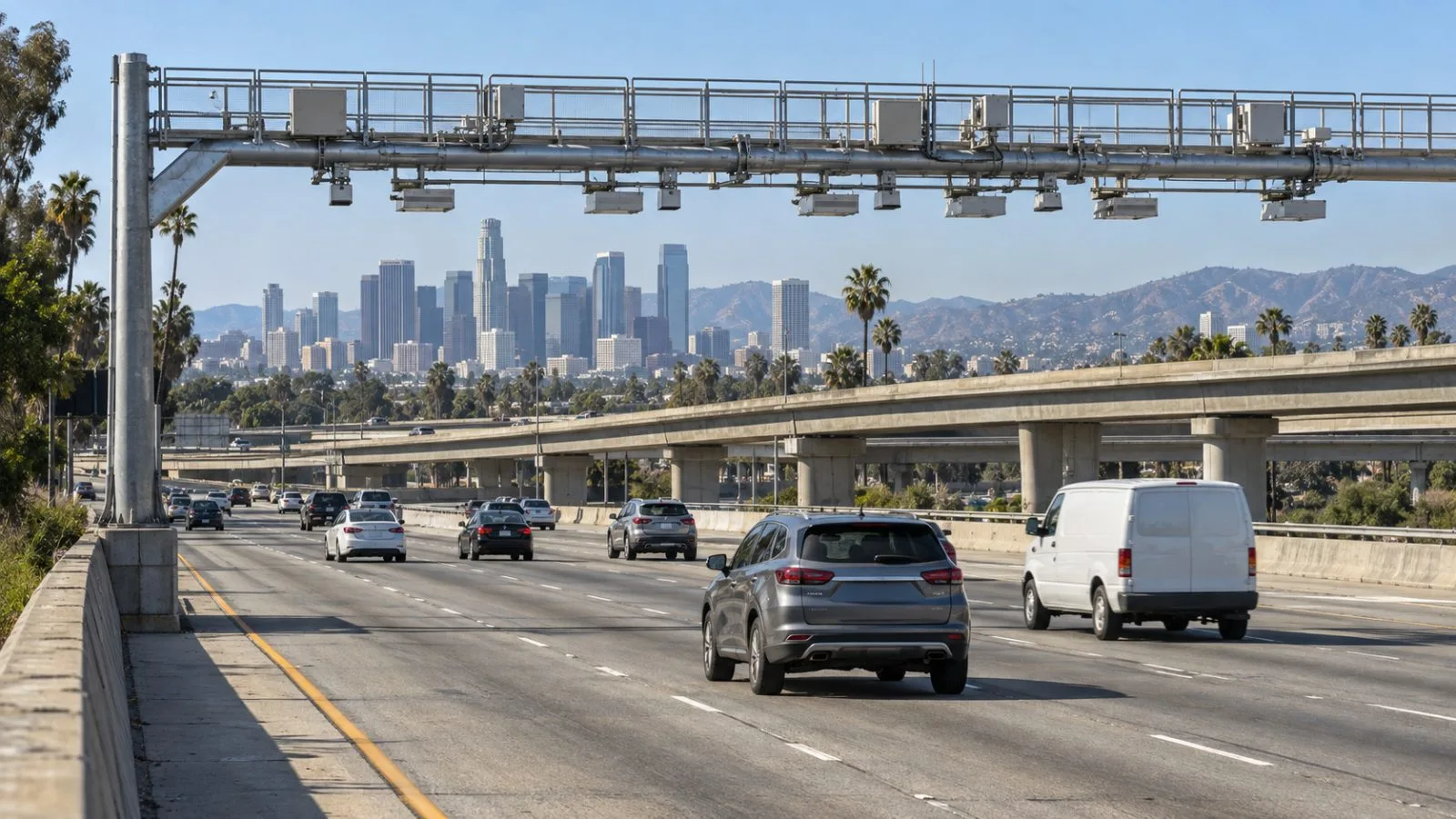
Quarterhill said it was selected for an approximately 28.2 million subcontract, with the currency unspecified, on a Los Angeles toll-system replacement as the Los Angeles County Metropolitan Transportation Authority (Metro) prepares for higher I-105 demand.
Quarterhill said it was selected as a subcontractor to BRiC-TPS, LLC. The company’s Oct. 15 announcement says the replacement system is intended to support ExpressLanes on I-10, I-110, I-105 and future corridors. The subcontract has an eight-year base term and two three-year options, which could extend it to 14 years.
Quarterhill says its responsibilities include project management, documentation and security-compliance oversight. It also expects to provide on-site help-desk staff at Metro’s Customer Service Center and connect communications applications to the back-office system.
On March 26, 2026, Metro’s board authorized its CEO to award BRiC-TPS a contract capped at $114,749,473 for the eight-year base period, excluding options, subject to resolving any properly submitted protests. Metro set a $15,583,030 ceiling for design and implementation and a $99,166,443 ceiling for operations and maintenance once implementation is complete. It does not mention Quarterhill or its subcontract.
Metro says the existing back office lacks the capacity to process the transactions expected on I-105, where volume is projected to more than double. The current system will remain in service while Metro develops its replacement; the existing contract is scheduled to end March 9, 2029. Metro aims to launch the replacement before the initial I-105 ExpressLanes segment opens ahead of the 2028 Olympics and Paralympics; it has not given a launch date.
Toll revenue from the I-10 and I-110 ExpressLanes will fund the prime contract, Metro says. The agency forecasts faster transaction processing and says printing and postage costs could fall by 25%, with a possible reduction in Pay As You Go fees. Metro also says the proposed solution has operated at other California toll agencies.
Metro’s report lists execution of the prime contract as the next step after the board’s authorization. It gives no date for execution.