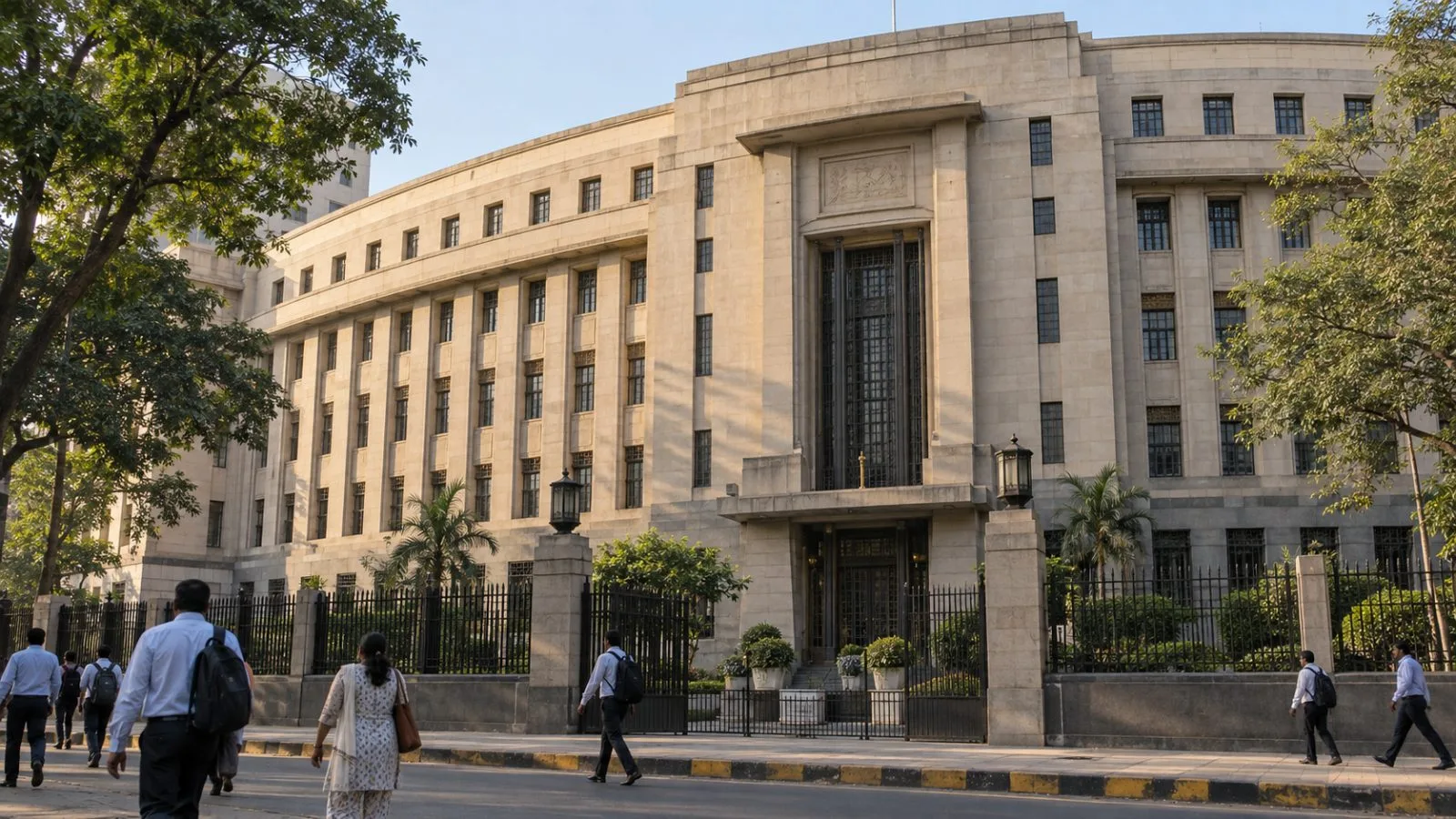
The Economic Times reported Oct. 27 that informal feelers from the Reserve Bank of India (RBI) led some large lenders to abandon planned trades or exit existing ones linking the program’s rupee liquidity to U.S. Treasury bills.
The paper cited three people and said it could not officially confirm the contacts. It also said an RBI spokesperson had not responded by publication. The report did not identify the banks or disclose trade volumes.
In the trades described by the newspaper, banks used rupees to buy dollars in the spot market, agreed to sell dollars forward and invested them in U.S. Treasury bills. The Economic Times also linked high forward premiums in part to the RBI’s own dollar sell-buy swaps, which it said were used to manage rupee liquidity.
The RBI introduced its deposit-swap facility on June 8 for fresh Foreign Currency Non-Resident (Bank) (FCNR(B)) deposits with terms of three to five years. Banks exchanged dollars from those deposits for rupees and agreed to buy back the same dollar principal at the Financial Benchmarks India Private Limited (FBIL) reference rate. An RBI FAQ issued June 23 said the swap covered principal, not deposit interest.
RBI data show banks had mobilized $132.980 billion in FCNR(B) deposits by Aug. 31. Total inflows under the facility reached $143.596 billion by Sept. 18, including $5.320 billion from overseas foreign-currency borrowings and $5.296 billion from external commercial borrowings.
A banker quoted by The Economic Times estimated gross returns near 9%. The paper said the one-year dollar-rupee forward premium had exceeded 4.5% before falling Monday, while Treasury bill yields were around 4.4%. U.S. Treasury data show the coupon-equivalent rate on a 52-week bill was 4.45% on Oct. 26, compared with 4.12% on July 27. The newspaper did not specify which bill maturities the banks used.
A senior private-sector bank official told the paper that forward dollar sales could lower premiums and reduce importers’ hedging costs. The official said the RBI might be more open to funds used for trade finance or held overseas briefly.