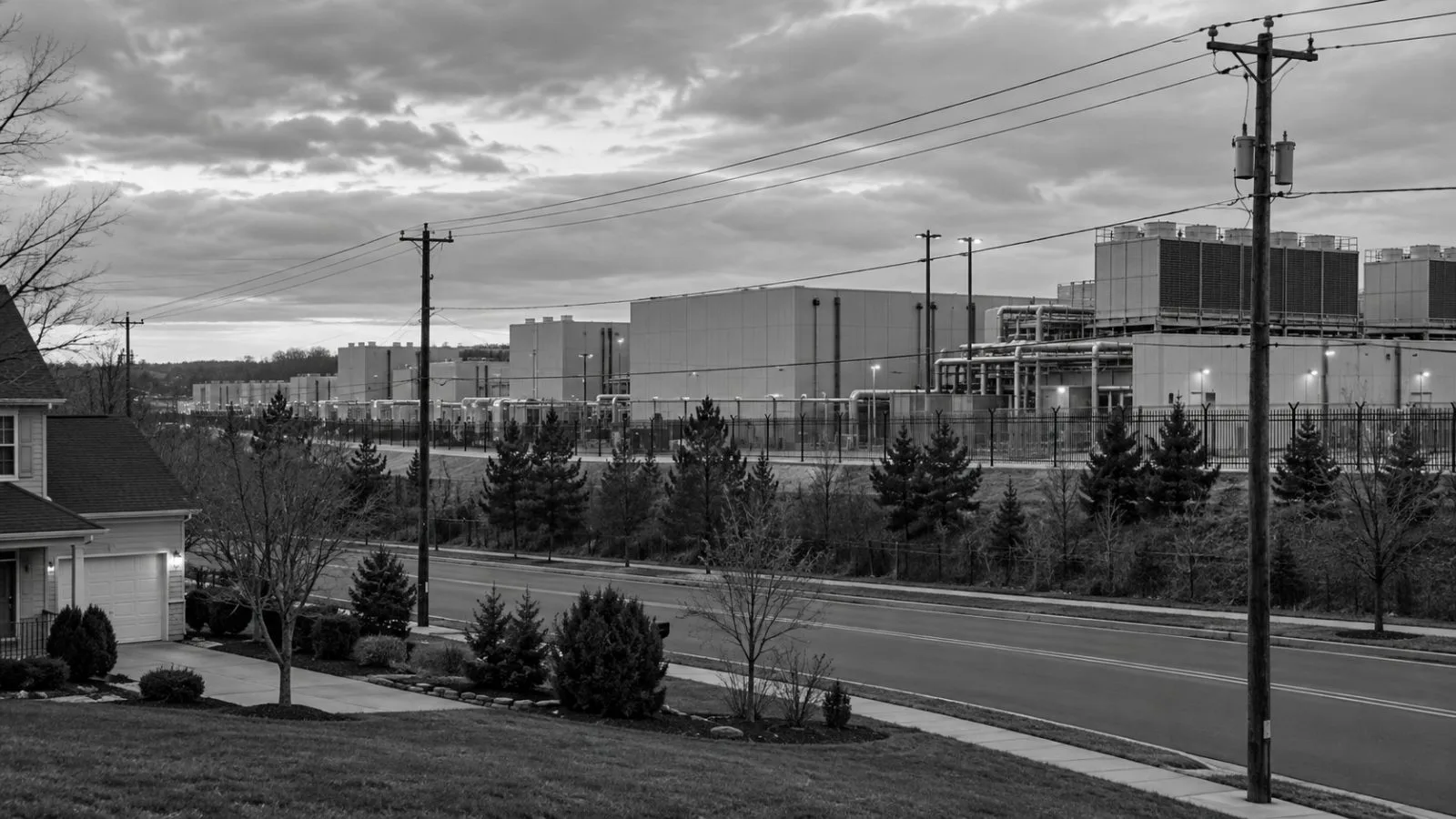
A CNBC survey found most registered U.S. voters oppose an artificial intelligence data center within 10 miles of home, suggesting a local political challenge for President Donald Trump’s expansion agenda ahead of U.S. midterm elections.
The White House’s July 2025 America’s AI Action Plan called for streamlining permits for data centers and related energy infrastructure and making federal land available for data center and power-generation projects. The administration has described domestic construction as serving U.S. economic and national-security interests.
CNBC reported that Hart Research Associates and Public Opinion Strategies conducted its Oct. 14-18 survey among 1,000 registered voters. The overall margin of error was 3.1 percentage points; about 500 respondents received the data-center question, which had a 4.38-percentage-point margin of error.
CNBC said 63% opposed a data center within 10 miles of home and 13% supported one. Among MAGA supporters, 40% opposed a nearby facility and 29% supported it.
Answers on AI development came from a separate question. CNBC reported that 55% of MAGA supporters favored continuing advanced AI development while Congress considers regulations, while 27% favored pausing it. Among all respondents, 52% preferred a pause until Congress passed safety regulations; 32% favored moving ahead to keep pace with China.
CNBC also reported that 18% of voters named weak regulation of AI and data centers as a top concern if Republicans retain Congress. Among voters who wanted Republicans to keep control, 17% cited weak oversight, second only to bringing down prices.
A March 4, 2026, White House proclamation said seven technology companies had accepted the Ratepayer Protection Pledge. It says participating companies will “build, bring or buy” new generation resources and electricity for data centers, pay for required power-delivery upgrades and negotiate separate utility rates. In the proclamation, Trump said “the development of large-scale data center infrastructure and AI must occur here at home.”
Other polls found similar local opposition, though they asked different questions. A University of Massachusetts Amherst poll conducted Aug. 21-26 found 65% opposed building an AI data center in their local community and 11% supported it. Among respondents identifying as very much MAGA, 42% opposed a local facility and 25% supported one. Respondents cited utility costs, land use, local disruption and environmental and resource impacts among their objections, according to the poll.
Annenberg Public Policy Center polling found opposition to new data centers in respondents’ areas rose from 49% in a survey ending in March 2026 to 61% in one fielded June 16-July 19.
The Associated Press reported that Amazon, Google, Meta and Microsoft projected more than $600 billion in combined spending for 2026, largely on investment projects that include U.S. data-center construction. Sen. Jon Husted, R-Ohio, said in a statement on his Ratepayer Protection Act, “Data centers should only be located where communities want them.” The findings suggest that local siting and oversight could pose a challenge for Republicans ahead of the midterms.