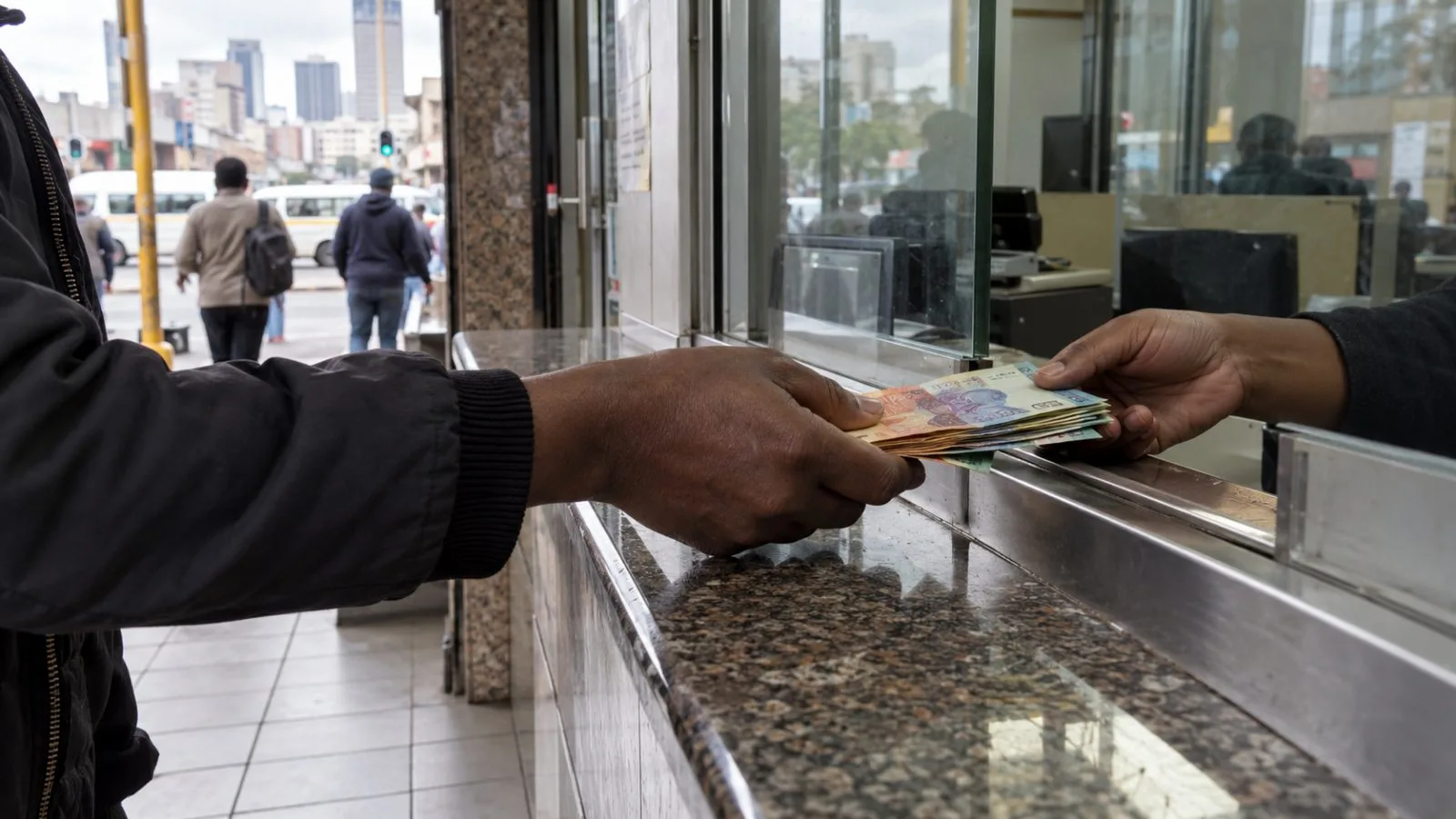
Reuters put the dollar at 16.3726 rand at 8:28 a.m. ET (12:28 UTC) on Oct. 21, while FXStreet reported a Societe Generale view placing the exchange rate near a key long-term average.
Reuters had quoted the pair at 16.4075 at 1:42 a.m. ET (05:42 UTC) that day. It described the later reading as close to the previous session’s close. A lower USD/ZAR rate means one dollar buys fewer rand.
The European Central Bank’s Oct. 21 reference rates were $1.1234 per euro and 18.3930 rand per euro. Dividing the rand rate by the dollar rate implies a cross rate of about 16.3726 rand per dollar. The ECB published euro reference rates, not a direct USD/ZAR fixing.
An FXStreet Insights item attributed the technical assessment to Societe Generale. It described USD/ZAR as having retreated toward its 200-day moving average near 16.37 after reaching an interim high near 16.75. FXStreet also said the pair had tried twice to move back above the average earlier in 2026 without staying there. The report identified 16.27 and 16.15 as potential support levels if the exchange rate fell below 16.37, but gave no time frame for those levels.
Separately, Finance Minister Enoch Godongwana announced temporary fuel-levy reductions to ease costs for households and businesses. His Oct. 21 budget speech set the initial cuts at R3 per liter for diesel and R1.50 per liter for petrol, starting Nov. 4 and running through Dec. 1. Smaller reductions are scheduled to continue until Jan. 5, 2027. The government estimated the measures would mean R10 billion in foregone revenue.
Reuters connected South Africa’s dependence on imported fuel with its sensitivity to changes in world energy markets. The next stated step for the levy measures is their start on Nov. 4.