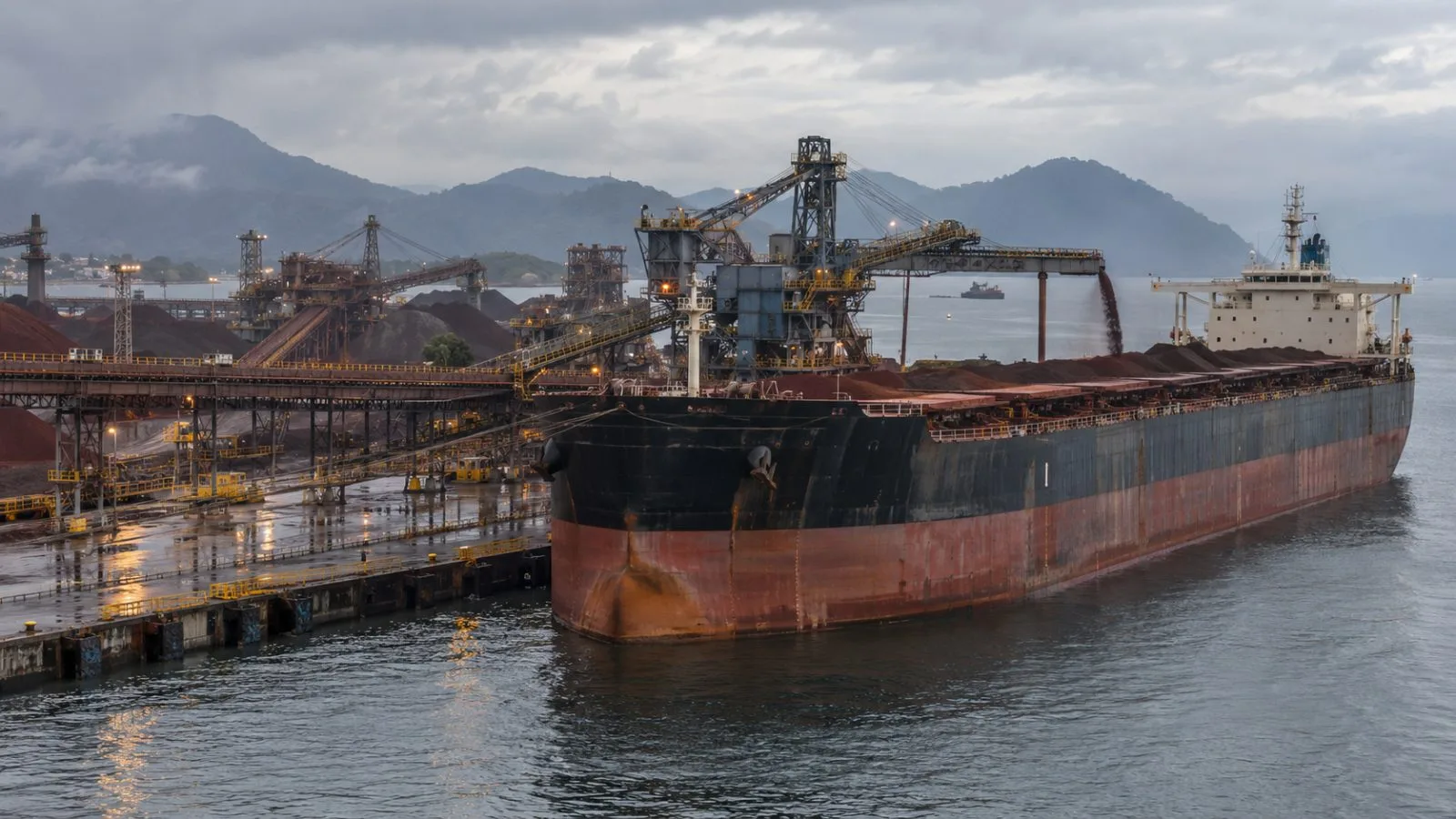
Cedro Participações says Rio de Janeiro state regulators approved the next licensing step for its planned Itaguaí ore terminal, a project the company links to expanding production and export capacity.
Rio de Janeiro’s State Environmental Control Commission (CECA) approved issuance of an Integrated Environmental License on Oct. 13, Cedro said. The terminal is planned at the Port of Itaguaí. Cedro expects to begin contracting construction work after the environmental stage and estimates a three-year build; it has not announced a start date.
Brazil’s National Waterway Transportation Agency (ANTAQ) lists R$3.58 billion in capital spending for ITG02, the site’s auction designation. Cedro estimates the project will cost R$3.6 billion. Its environmental impact report estimates about 3,000 direct and indirect jobs during construction and 256 direct jobs once the terminal is operating.
Cedro won the federal auction for ITG02 in December 2024. The lease terms set a 35-year period, with a possible extension for another 35 years. The planned terminal would sit between existing Vale and CSN terminals. Cedro says a rail connection to MRS Logística would link the port with Minas Gerais’ Iron Quadrangle.
The company says the terminal would handle its own ore and serve other miners as it pursues annual production capacity of 20 million tonnes by 2032. José Carlos Martins, chairman of Cedro Participações’ board, called it “essential to our growth plan.”
Project records list differing throughput estimates. Cedro says the initial license scope is below 15 million tonnes a year; the environmental impact report describes 15 million tonnes, while the federal government’s 2024 auction notice estimated about 20 million tonnes annually for ITG02.
The environmental report records fishing associations’ concerns about reduced fishing areas, dredging, pollution, sediment contamination and effects on livelihoods. Project hearing materials list planned water, sediment and dredging monitoring, along with support programs for fishing activity. CNN Brasil reported, in an unverified account, that the license would be issued after Cedro signs an environmental commitment term.