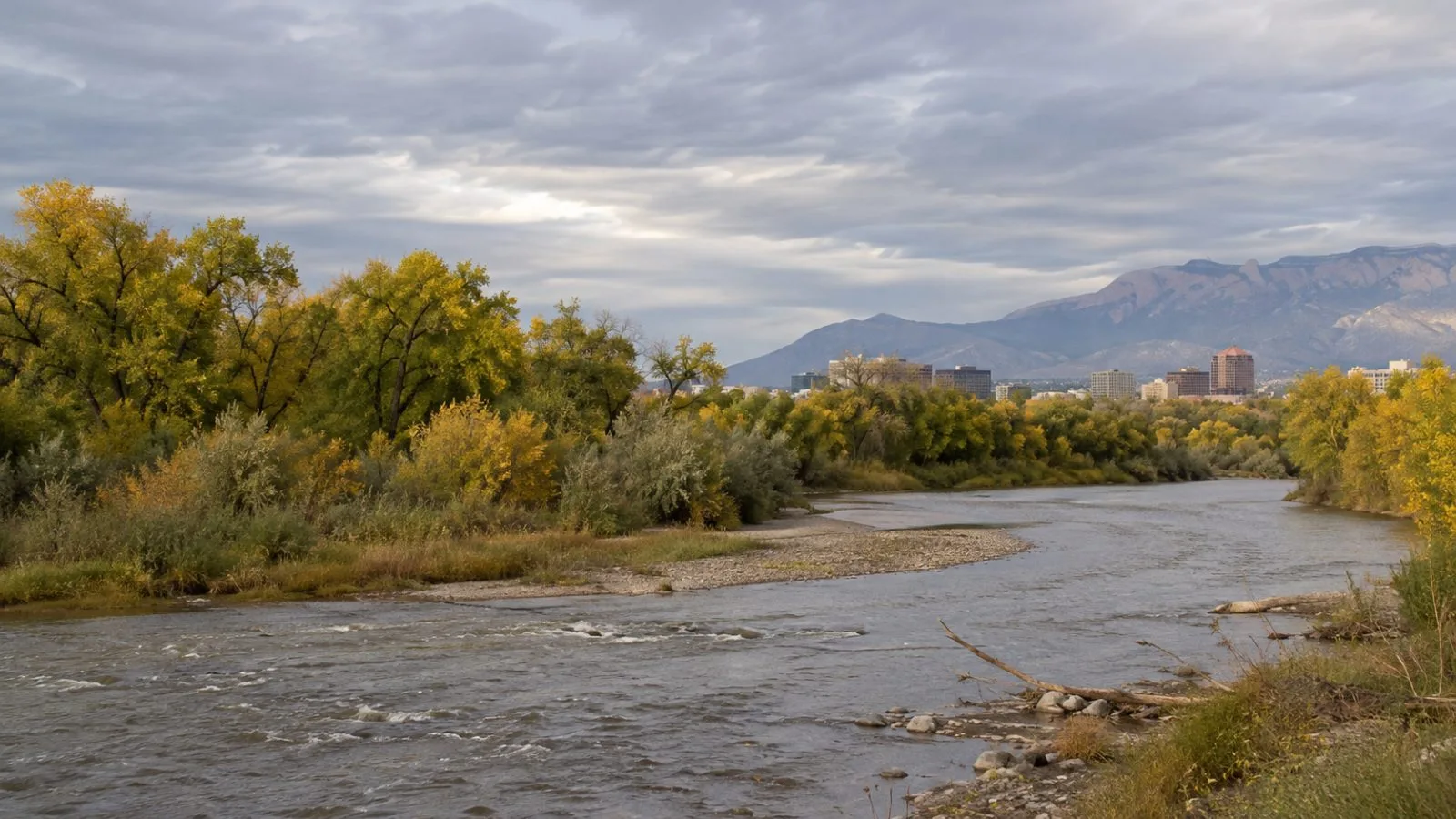
Measurements from the Rio Grande showed an 11.5-fold jump in the average sum of detected PFAS across Albuquerque, according to a 2025 U.S. Geological Survey (USGS) study.
Kimberly R. Beisner, a USGS research hydrologist, published the findings July 9, 2025, in Water Environment Research. The statewide survey used samples gathered from 2020 through 2024, examining 28 PFAS across eight major New Mexico rivers. Researchers detected 13 compounds, with measured readings ranging from below laboratory detection to 156 ng/L. Perfluorobutanesulfonic acid (PFBS) appeared most often, with concentrations between 1 and 93 ng/L; perfluorobutanoic acid and perfluoropentanoic acid ranged from 0.9 to 32 ng/L.
In the Rio Grande, the average sum of detected PFAS rose from 4 ng/L to 46 ng/L over the Albuquerque passage. The paper also recorded a 58% increase after a stormflow pulse crossed the city and added water to the river. It said wastewater contributions to surface water varied by time of day and season.
A separate USGS study used high-frequency samples collected near Albuquerque in summer 2021 and found an order-of-magnitude increase through the urban area. Samples included two river locations and wastewater treatment plant effluent between them. The study linked short, intense rainfall to PFAS mobilized from urban runoff; it associated some compounds with runoff and others with wastewater effluent. It did not calculate how much either source contributed to the 2025 increase.
An earlier USGS survey used samples gathered between August 2020 and October 2021 and found total surface-water PFAS concentrations of 1.0 to 155.4 ng/L. At Valle de Oro, a Rio Grande site downstream of Albuquerque, readings ranged from 8.7 to 155.4 ng/L. Those results come from a different period and are not directly comparable with the newer study’s averages.
The studies describe river-water measurements; they do not establish whether that water entered drinking supplies or determine human exposure or health effects.
USGS monitoring of storm-drain outfalls and Rio Grande sites began in 2024. Data collection is scheduled to conclude in 2026, and the agency anticipates an interpretive report by fall 2027.