


 Hormuz Shipping Slows as Iran Threats Lift Oil Risks
  JPMorgan Sees ECB Raising Rates to 2.75% in December
  China Boosts Gold Reserves by 650,000 Ounces as Prices Rally
  Gold Surges Past $4400 on Crude Oil Rally; Bullish Trend Dominates
  Bank of Korea Raises Rates to 3% as Inflation Stays Sticky


 Add as a preferred source on Google
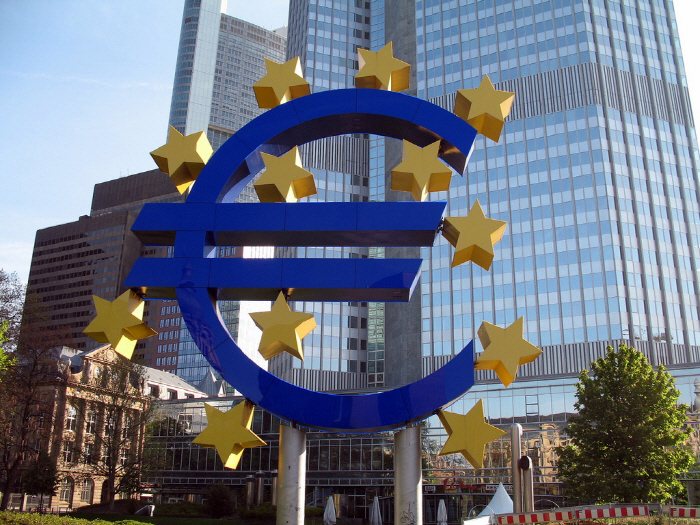
The ECB held rates at 0.05 pct in yesterday's meeting and Draghi at the post meeting press conference noted that the downside risks were increasing once again. He expressed concerns over the poor inflation outlook and signalled that more quantitative easing might be in store when the central bank meets in March. Growing concerns about the durability of the US growth outlook and major geopolitical risks around Europe, both external and internal, including the ongoing migration crisis, the Russian-Ukraine conflict, terrorist attacks/threats and rising populists and centrifugal-forces in Europe has cooled the pace of growth in euro area business activity at the start of 2016.
Data firm Markit released earlier today showed a slowdown in manufacturing and services activity in the eurozone in January. Markit manufacturing Purchasing Managers' Index hit a three-month low at 52.3, while its services PMI reached a 12-month low at 53.6. Uncertainty caused by the marked FX volatility and growth concerns coming from EM, in particular the weakness in the CNY and the uncertain growth outlook of China have shifted the balance of risks more to the downside. While China has declared that it is planning to focus on a stable NEER, implying a move in USD/CNY to 6.80 by year-end, the CNY (on NEER basis) has been depreciating rapidly recently, and if China allows, for example, a 5% fall in the CNY NEER by year-end, USD/CNY could move to as high as 7.22.
The deterioration in business sentiment in both the US and China, as well as in other large emerging markets, coupled with a large sell-off in commodities and oil shows a very modest pickup in global growth sustained by a gradual recovery in Europe. The comparatively more positive outlook for Europe is largely supported by low oil prices, ECB's ultra-loose monetary policy, and the euro below its "fair value", all of which support a relatively strong consumer demand.
Draghi at the presser also strongly defended the ECB's December's stimulus package saying that the change that has come about post its December meeting owing to sharp decline in oil price. The plunge in the oil price to below $30 per barrel means that CPI inflation could average as little as 0.2 percent this year - well below the ECB's current forecast of 1 per cent. In the current scenario, the ECB looks likely to revise down inflation projections in March from the current level of 1 per cent for 2016 and 1.6 per cent for 2017. Concerns over the poor inflation outlook have certainly increased the chances of the ECB eventually providing more policy support.
European stocks jumped Friday, extended a rally founded on the possibility the European Central Bank will enact more stimulus measures for the eurozone economy. Europe's FTSEurofirst 300 index jumped 2.1 per cent, while euro fell to a two-week low against the dollar. On the day, EURUSD was little changed around $1.0845, down around -0.3494% from Thursday's close.

- News

- Economy

- Central Banks
- Investing
- Research
- Roundups
- Digital Currency
- Insights
- Technical Analysis
- Technology
- Business
- Law
- Health
- Nature
- Fintech
- Science
- Topic
- Opinions
- ©Econometrics LLC . All Rights Reserved.
Risks skewed to the downside for Eurozone
Friday, January 22, 2016 12:39 PM UTC
Editor's Picks



- Market Data
Most Popular




