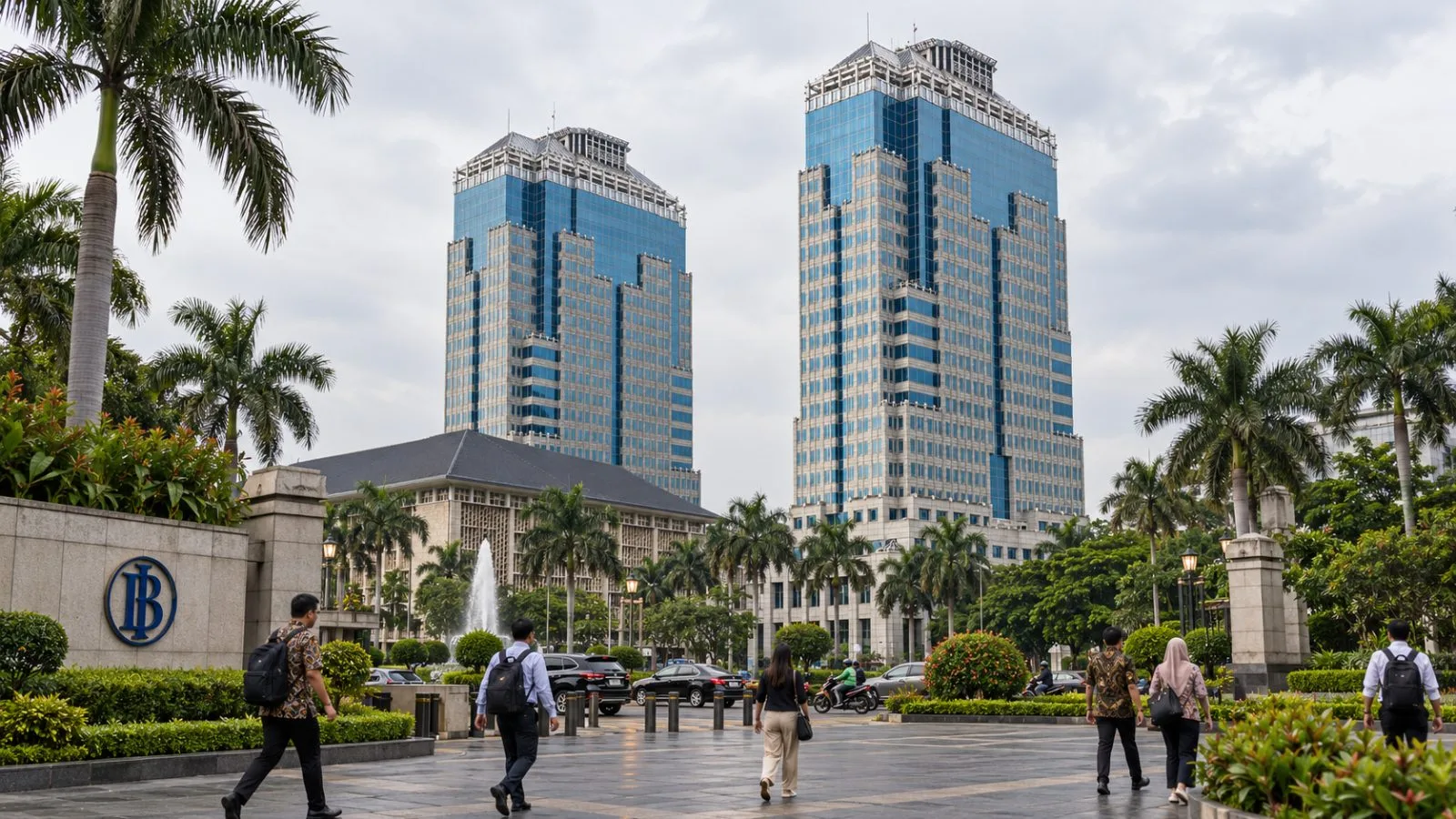
Indonesia’s rupiah strengthened in Bank Indonesia’s daily reference rate Tuesday, while official figures showed an oil-and-gas trade deficit and a budget exposed to higher energy support costs.
The Jakarta Interbank Spot Dollar Rate (JISDOR) stood at Rp18,148 per U.S. dollar on Nov. 3, compared with Rp18,161 on Nov. 2. A lower rupiah-per-dollar reading indicates a stronger rupiah. JISDOR is a transaction-weighted measure of domestic interbank spot trading, rather than a single intraday price.
The currency’s modest gain came against a wider energy imbalance. BPS-Statistics Indonesia reported a $23.60 billion oil-and-gas trade deficit for January through September 2026, even as the country recorded a $10.61 billion overall goods-trade surplus during the same period. Those figures show the trade imbalance but do not measure the effect of higher oil prices on it.
Indonesia’s Ministry of Finance reported a Rp319 trillion budget deficit through Sept. 30, equivalent to 1.24% of gross domestic product. It said budget execution was on track. The ministry also said a rise in oil prices could lift petroleum revenue while increasing the government’s spending on energy support. That support benefits households receiving subsidized energy but adds to the budget’s costs.
A joint Ministry of Finance–Bank Indonesia statement set a goal of keeping the 2026 deficit below 3% of GDP. The approved budget projected a Rp689.1 trillion deficit, or 2.68% of GDP, for the year.
Bank Indonesia held its policy rate at 5.75% on Oct. 21. In explaining rupiah pressure through Oct. 20, it cited Middle East tensions, tighter U.S. monetary policy and foreign investor sentiment toward Indonesian stocks. It discussed high oil prices separately in its global outlook and said it would continue foreign-exchange operations to support the currency. Those October pressures do not establish what drove Tuesday’s reference rate.
Bank Indonesia’s next policy meeting is scheduled for Nov. 17–18.