Russia’s war in Ukraine has disrupted some local cross-border routines in Norway’s far north, while Norwegian authorities report low border traffic and the European Union has awarded funds for stronger surveillance.
Sápmi, the Sámi homeland, spans Norway, Sweden, Finland and Russia. Norwegian Arctic policy describes it as a shared homeland across the four states, with Sámi institutions operating across national borders. Local resident Nils Boine told Al Jazeera that visits to Russia with friends had stopped. “We used to go shopping in Russia, and go there for weekends,” he said.
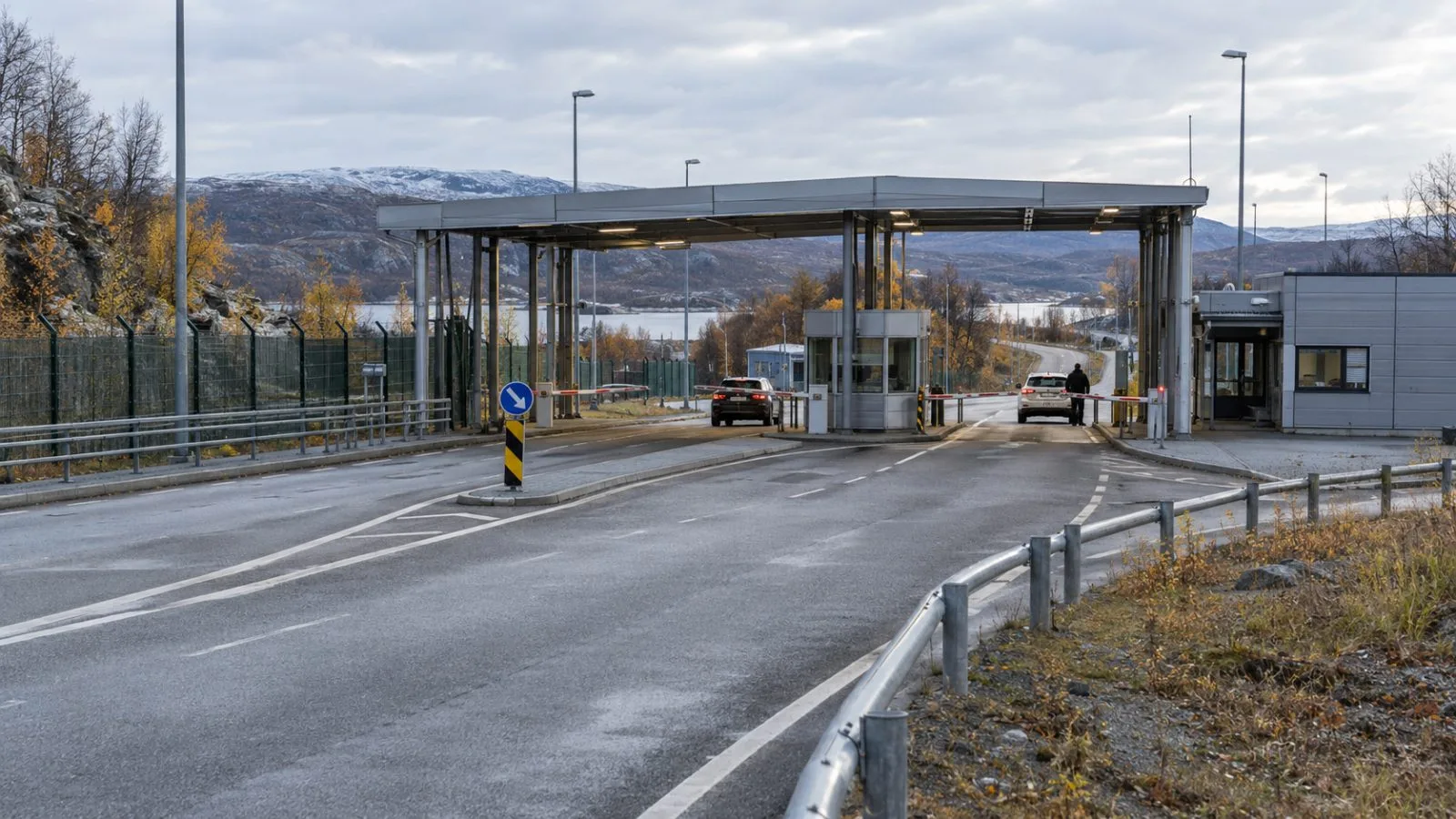
The 197.7-kilometer Norway-Russia border was established by an 1826 convention. Under a local border agreement, residents who have lived legally for at least three years in the designated area of Sør-Varanger, within 30 kilometers of the border, may apply for permits to stay in the Russian border area for up to 15 days per visit. Storskog is the legal crossing point.
Norway’s 2024-25 white paper says the European Union awarded the country €16.4 million to strengthen surveillance along the Russian border. The paper said a National Police Directorate report on possible measures was still under consideration when it was prepared.
Security concerns include disruptions to navigation signals. Finnmark Police District’s 2025 assessment says eastern Finnmark has experienced GPS jamming from the Russian side since 2017 and that Norwegian authorities detected GPS spoofing from Russia into Norwegian airspace in early 2025. A later government plan reported sporadic signal manipulation in eastern Finnmark down to 150 meters’ altitude.
In its February 2025 assessment, Finnmark Police District said border traffic was low and that travelers included people with border permits. It also reported that border authorities on both sides continued contact under a bilateral agreement. In a 2023 report, The Barents Observer quoted reindeer herder Egil Kalliainen saying he could no longer discuss cross-border issues with Russian counterparts.
Norwegian Prime Minister Jonas Gahr Støre said Norway suspended regular political contact with Russia and imposed restrictions on Russian vessels and citizens after the full-scale invasion. Al Jazeera reported that fewer Russian visitors reduced income for some local shops and led some to close. Støre said the changes had “consequences for communities and businesses in the north.”