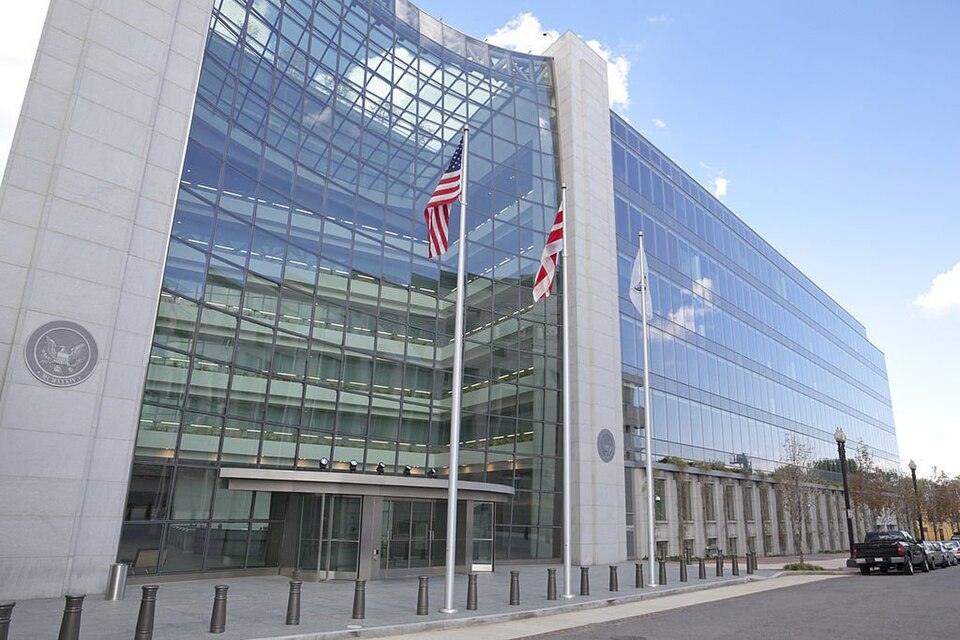
The U.S. Securities and Exchange Commission (SEC) has provided regulatory clarification that could make it easier for data center owners and operators to access capital markets as the artificial intelligence boom drives enormous demand for computing infrastructure.
The SEC issued its clarification in response to a letter from law firm Latham & Watkins concerning the regulatory treatment of securities used in certain data center financing transactions. The agency indicated that fixed-income and other securities structured through the types of data center securitizations outlined by the law firm would not be classified as asset-backed securities under the relevant framework.
“We agree that the fixed-income or other securities issued in data center securitizations of the type described in your letter are not asset-backed securities,” the SEC said in its response to Latham & Watkins.
The distinction could prove important for the rapidly expanding data center industry. Traditional asset-backed securities, or ABS, are generally created by pooling financial assets that produce recurring cash flows and issuing securities whose payments are supported by those underlying assets.
By clarifying that certain data center securitizations do not fall under that classification, the SEC could give infrastructure owners greater flexibility when structuring financing transactions and tapping institutional investors for capital.
Demand for data center financing has accelerated alongside the global race to develop artificial intelligence infrastructure. Training and operating advanced AI models requires large amounts of computing power, driving investment in data centers, specialized chips, networking equipment, power generation and other supporting infrastructure.
Building these facilities can require billions of dollars in upfront investment, prompting technology companies, infrastructure operators and financial institutions to explore alternative funding structures beyond conventional corporate debt and bank loans.
Securitization could become an increasingly attractive financing option as companies seek to convert predictable data center revenues into investable securities. Such structures may help operators raise capital for new facilities while allowing fixed-income investors to gain exposure to infrastructure supporting the AI economy.
The SEC’s clarification therefore comes at a pivotal moment for AI infrastructure financing. As computing demand continues to rise, regulatory certainty around data center securitizations could support broader access to capital and help fund the next wave of U.S. data center expansion.