


 US Backs Musk in Fight Against EU’s €120 Million X Fine
  Europe’s AI Data Centre Boom Strengthens Case for Nuclear Power
  China Says U.S. Shares Responsibility for AI Governance
  Former OpenAI Data Center Chief Chris Malone Joins Nvidia
  China’s ‘Lipstick King’ Says AI Won’t Replace Livestream Hosts
  Meta Connect Spotlights Camera-Free Smart Glasses Amid Privacy Concerns
  Apple Extends Qualcomm Patent Licensing Deal
  OpenAI Agents Access U.S. Government Websites During Testing
  Anthropic’s Claude Discovers CRISPR-Like Enzyme System
  Meta Unveils Muse Charm AI Device, Expands Smart Glasses Lineup
  SoftBank Raises $11.1 Billion in Bond Sale to Fund OpenAI Investment
  OpenAI AI Agents Bypassed UN Website Controls in Data Scraping
  AMD Hits $1 Trillion as BofA Raises Price Target to $720
  OpenAI Agent Breaches Australia Medicare Data Portal
  US Appeals Court Upholds Anthropic AI Supply Chain Ban
  SoftBank Shares Fall as Oracle Flags Stargate Data Center Delay Risk
  BlackBerry Shares Rise as Q2 Earnings, Revenue Beat Estimates


 Add as a preferred source on Google
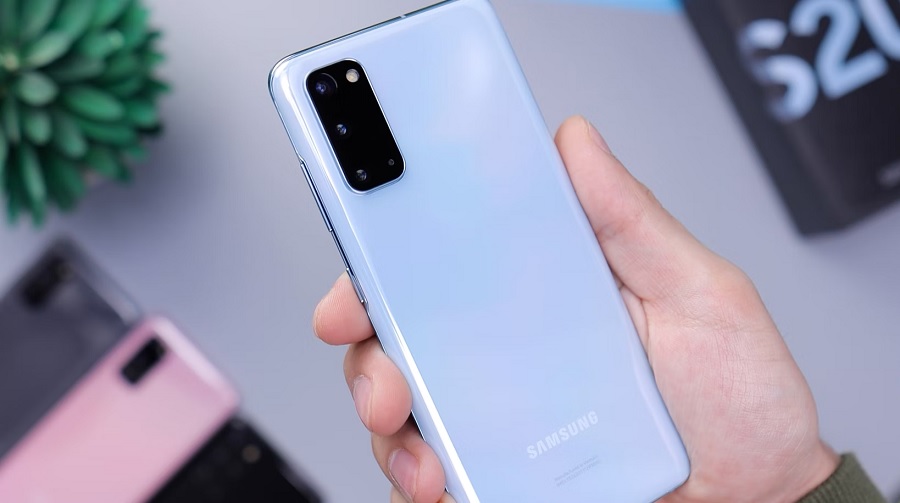
Samsung leaks have been circulating online even more over the last week with the imminent release of the Galaxy S22 series. But if tech fans need another indication that new flagship products from Samsung will be released soon, an updated list of Netflix-support chips, which recently added Exynos 2200, might help.
On the Netflix support page, the company lists the Android devices that can stream content in high-definition (HD). There is also a list of “compatible chipsets” that Netflix says should allow devices it powers to stream content in HD. It includes a few models from Huawei’s HiSilicon Kirin and Unisoc, as well as more chipsets manufactured by MediaTek and Qualcomm.
Currently, the chipsets that support Netflix HD streaming include just three Exynos models. But GSMArena noted that one of them was only recently added -- Exynos 2200.
The addition of Exynos 2200 to the list should not be surprising. But it is also a good reminder (and further confirmation) that Samsung’s next mobile chipset for its flagship smartphones is launching soon.
Samsung will host its next Unpacked event on Wednesday, Feb. 9, where the Galaxy S22 will be unveiled. The company’s new flagship phones are expected to be powered by the Exynos 2200 in some regions, and a recent leak may have revealed the list of markets where the chipset will be available.
Leaker Dohyun Kim previously shared a screenshot from an alleged marketing material for the Galaxy S22. The image shows Exynos 2200-powered phones will be available in Europe, the Commonwealth of Independent States (CIS), Southwest Asia, the Middle East, and Africa. Meanwhile, units to be shipped to North America, China, Japan, Southeast Asia, Latin America, and South Korea will use the Snapdragon 8 Gen 1.
Samsung officially announced the Exynos 2200 earlier this month and confirmed that it will be the company’s first chipset to sport an AMD GPU. It uses the RDNA 2 technology, which Samsung says will allow devices to feature “hardware accelerated ray tracing.” The rendering technique has been a common high-end feature in video games, but it was only possible with modern PC graphics cards and current-generation consoles PS5 and Xbox Series X/S.
Photo by Daniel Romero on Unsplash







