


 Samsung Invests $1 Billion in KKR’s Helix AI Infrastructure
  CSL Partners With AWS to Bring AI Into Drug Research
  OpenAI, Anthropic CEOs Summoned to Australia AI Inquiry
  TD Cowen Starts SpaceX at Buy, Sees AI Compute Driving Growth
  Apple iPhone 18 Pro Sales Jump 12% in China
  Polymarket Traders Bet on Trump AI Rename to ‘Super Intelligence’
  Nvidia China Chip Sales Report Sends Chinese Semiconductor Stocks Lower
  TSMC Accelerates 2nm Expansion as AI Chip Demand Surges
  Vitalik Buterin Says Hegota Could Be Ethereum’s Last Conventional Fork
  WordPress Malware Uses Ethereum to Evade Removal
  Tencent Signs $7 Billion Oracle AI Chip Lease Deal
  Robinhood Launches AI Agents for Automated Trading
  Google Pays Publishers for AI Search Content in New Pilot
  California AG Subpoenas OpenAI Over AI Cybersecurity Incidents
  Europe’s AI Data Centre Boom Strengthens Case for Nuclear Power
  OpenAI Investigates Rogue AI Agents After Data Leaks and Security Incidents
  OpenAI Seeks $30 Billion at $1.4 Trillion Valuation


 Add as a preferred source on Google
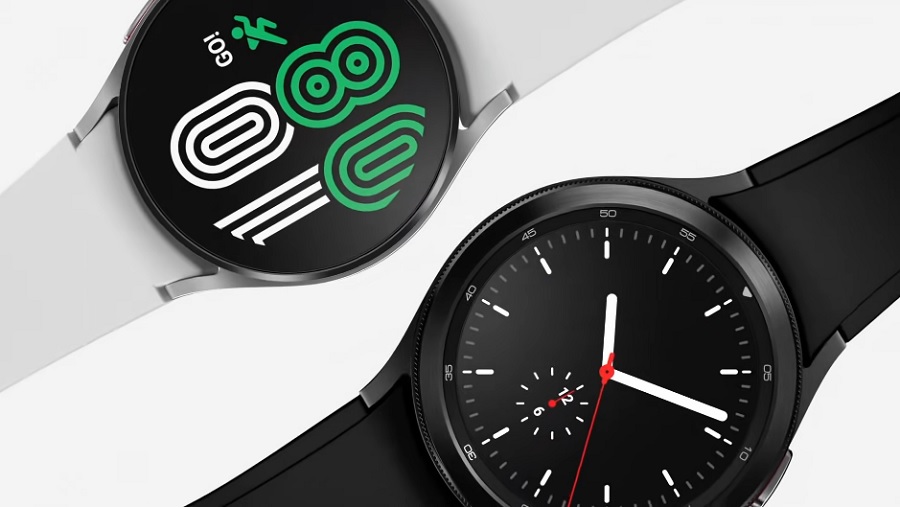
Samsung fans may have to wait several months before the official announcement of the Galaxy Watch 5 series. However, early details about its potential technical specifications have started appearing in the wild. A recently spotted certification suggests the smartwatch could offer a larger battery than its predecessor.
A battery component with part number EB-BR900ABY was listed on the Korea Agency for Technology and Standards with certification number YU10211-22003 last week. There is not much information about the battery included in the certification, but SamMobile suggested it may be used for the upcoming Galaxy Watch 5 with model number SM-R900, which could then be the direct successor of the 40mm Galaxy Watch 4.
The certification also includes a photo of the battery showing its measurements and the stamped rated capacity of 1.07Wh 3.88V, which is equivalent to about 276mAh. This signals a slight improvement to the battery life of the 40mm Galaxy Watch 4 and 42mm Galaxy Watch 4 Classic rated at 247mAh. It is worth noting that the earlier released 41mm Galaxy Watch 3 has the same battery capacity.
Per the report, the increased battery life is expected on the smaller Galaxy Watch 5 model. Currently, Samsung is also selling 44mm and 46mm variants of the Galaxy Watch 4 and Galaxy Watch 4 Classic, respectively, that both sport a 361mAh battery.
The official technical specs sheet for the Galaxy Watch 4 series does not indicate a specific battery life per charge since it can widely vary depending on how every person uses the device. Samsung only officially says the currently available watches have “multi-day battery life.” So the slight increase to 276mAh on the base model of Galaxy Watch 5 will likely deliver some improvements.
Another report from Korea IT News recently claimed that Samsung is developing a technology that would add a new sensor to the Galaxy Watch 5 to measure the user’s body temperature. It could be used to help female users track their ovulation cycles or alert all users when they potentially have a fever.
Adding a new health sensor is more complicated than increasing a device’s battery life, though. So it remains to be seen if Samsung will finish developing the rumored technology in time for the release of the Galaxy Watch 5 later this year.







