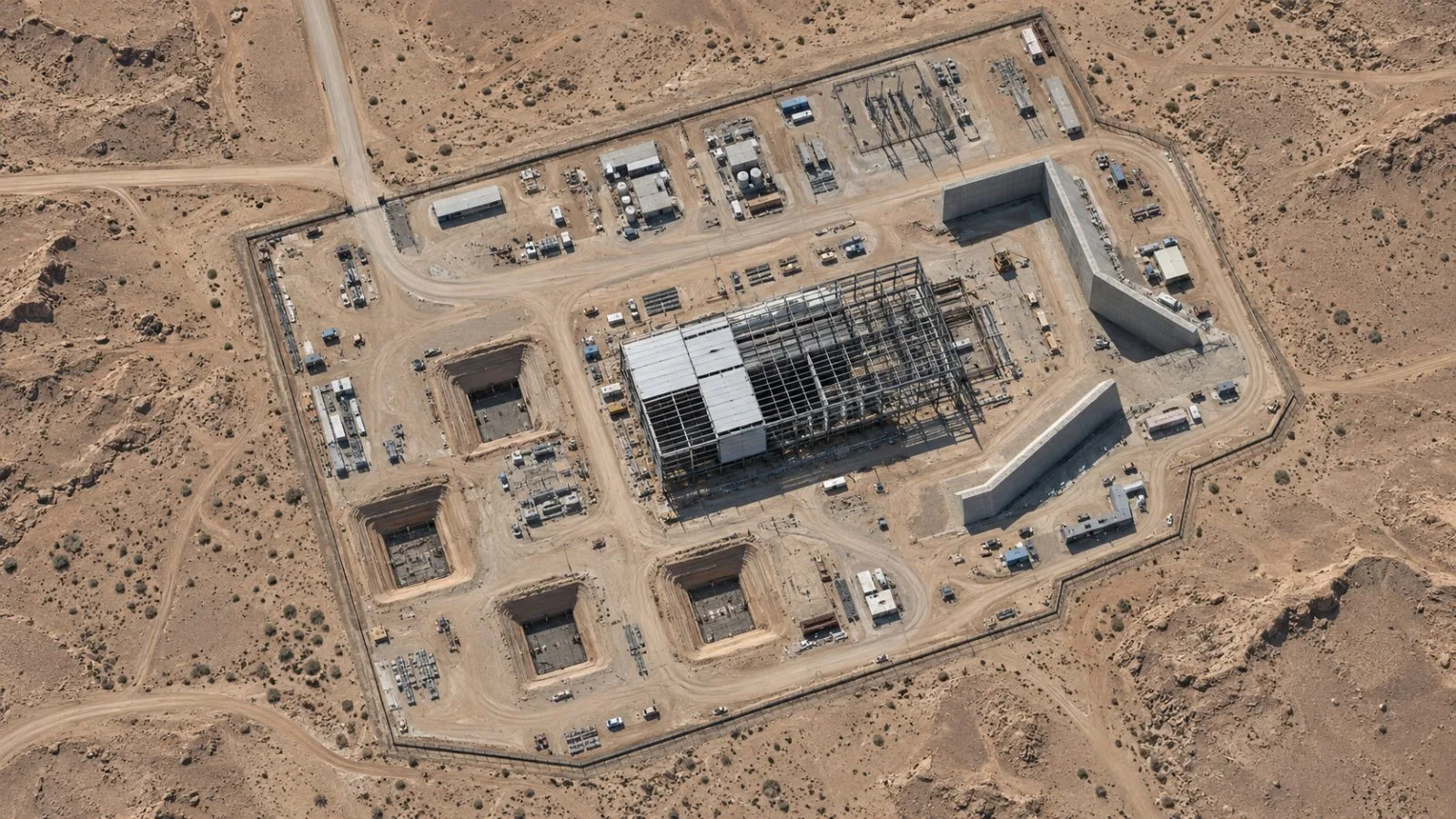
Saudi Arabia’s al-Duwadimi missile complex is nearing completion of two new buildings that could expand domestic production. FPRI researchers assess one is probably a motor-casting facility, but the imagery does not establish whether the aim is larger missiles or more motors.
The Foreign Policy Research Institute (FPRI) published the assessment Oct. 23. Researchers Sam Lair and Michael Duitsman analyzed commercial satellite imagery from Planet Labs and identified two structures. They assess one is likely a casting facility, while storage is the more plausible use for the second building; they say a manufacturing role there is possible but unlikely.
Ground clearing and excavation for the possible storage site began in April 2025, the researchers said. Work on the probable casting structure started in late April or early May. A December 2025 image showed square pits about five to six meters on each side. In an image dated Sept. 18, 2026, both buildings were nearing completion, with parts of the casting building’s roof unfinished and blast-diverting walls being installed beside it.
FPRI’s analysis indicates the new casting building is larger than other candidate casting buildings at the site. The width of a pit limits the diameter of a motor that can be cast inside, the researchers say. They also say the pits could allow several smaller motors to be cast at once, raising output. The imagery identifies no missile model and does not show which production path Saudi Arabia intends to pursue.
Saudi Arabia has produced ballistic missiles at al-Duwadimi since late 2021, according to FPRI. Researchers say more domestic production could reduce reliance on imported missiles. If the new facility supports a larger missile, FPRI says it could improve the readiness and reliability of Saudi Arabia’s regional-range missile force.
FPRI situates the expansion amid worsening regional security conditions. Reuters reported that it could increase concerns about missile proliferation in the region and strengthen opposition in the U.S. Congress to a proposed civilian nuclear agreement with Saudi Arabia.
The researchers estimate that installing casting equipment may take several months and that the upgraded facility could be ready to produce missiles as early as the end of 2026. This is a projection, not a confirmed production schedule.