Shenzhen has set a pre-November road inspection target ahead of the Nov. 18–19 Asia-Pacific Economic Cooperation (APEC) Economic Leaders’ Meeting, while new sign rules and a rebuilt Hong Kong crossing shape visitor services.
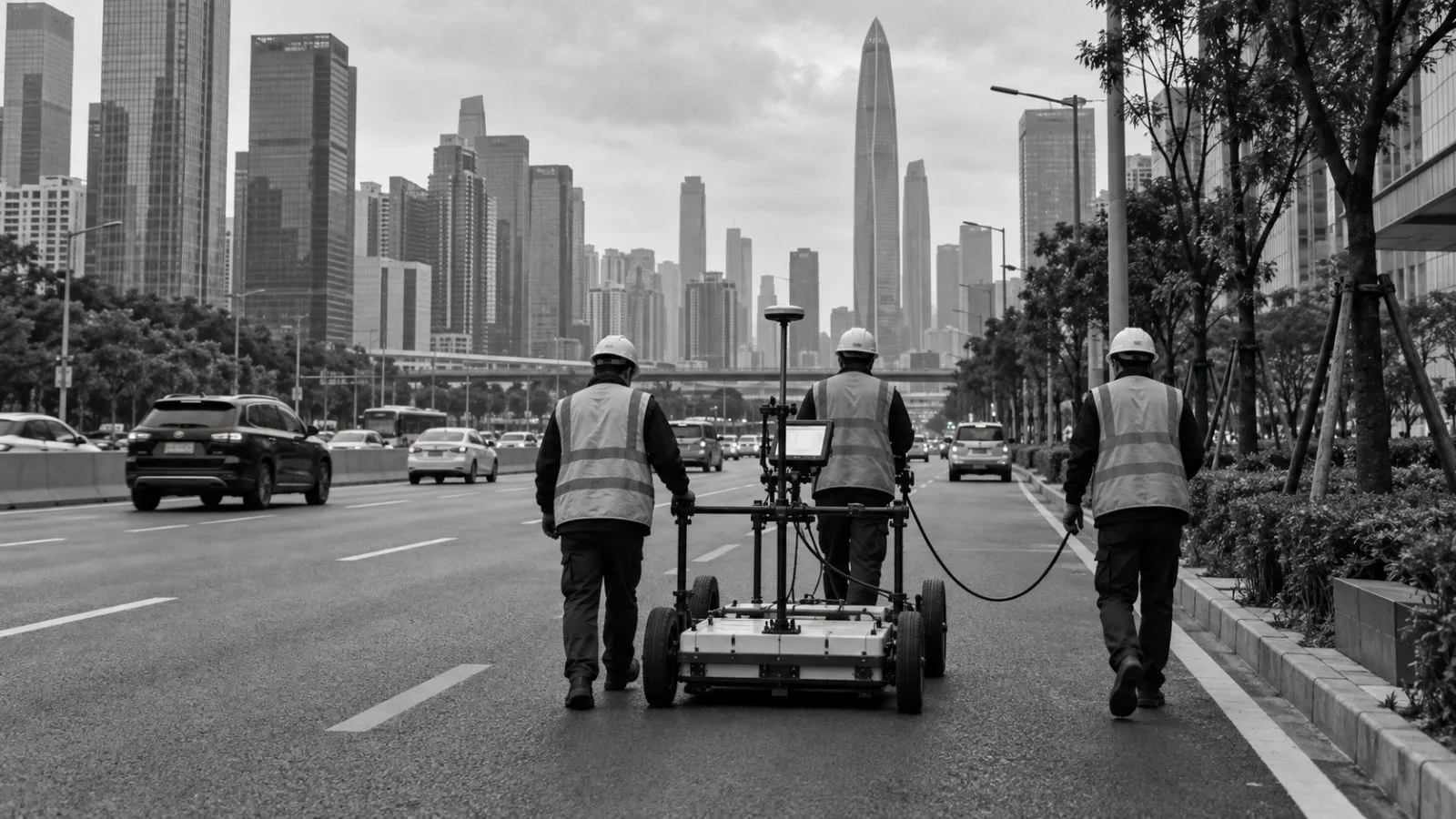
The city’s 2026 safety plan calls for radar inspections of at least 9,769 lane kilometers of roads and pavements before November. That minimum is about 52% above the 2025 minimum target of 6,428 lane kilometers; the comparison is between targets, not completed work.
The plan recorded 33 ground collapses in 2025, down 43.1% from the previous year. It identified damaged drainage pipes and construction-quality problems in underground works as the main causes.
A regulation effective Oct. 1 requires foreign-language versions of specified Chinese public information in listed types of public places, including roads, transport hubs, parks and public medical facilities. Shenzhen’s legislature said in September that more than 100,000 foreign-language signs had been corrected or added during 2026. The regulation requires routine oversight and annual reports on sign use and management.
Shenzhen’s Statistics Bureau counted 2.085 million overnight visits by foreign travelers in 2025, up 70.1% from 2024. The figure gives context for the potential audience for visitor services.
The rebuilt Huanggang Port opened Oct. 12 with 24-hour clearance for passengers and passenger vehicles traveling between Shenzhen and Hong Kong. Eligible travelers can use automated channels to complete both sides’ immigration checks in one queue. Before the opening, Hong Kong’s government projected that overall clearance would take about five minutes, compared with roughly 30 minutes at the previous crossing.
Shenzhen’s government covers the port’s design and construction costs, including those for the Hong Kong area.
Tencent said May 27 that first-time WeChat users who link an international bank card could receive a waiver of the 3% processing fee for 90 consecutive calendar days from their first transaction, on eligible spending of up to RMB 1,000 a day. The company also announced payment guidance in 16 languages.
The Development and Reform Commission of Shenzhen Municipality outlined 21 measures in a March plan covering services for foreign residents, payments, trade procedures and cross-border data. In an interview with CNA, Nankai University APEC Study Centre associate researcher Zhang Jingjia said the test after the meeting would be whether the changes become useful parts of routine city operations.
The road inspection target falls before November, followed by the Nov. 18–19 leaders’ meeting. Reports on sign use and management are due by the end of each January.