Siemens Chief People and Sustainability Officer Judith Wiese warned that replacing routine work with AI could deprive young staff of the experience needed to check its output, dpa reported Oct. 20.
Her concern centers on the tasks through which junior employees learn to spot mistakes. In software development, she said, workers can increasingly use AI agents to write simple as well as more complex code. They still need firsthand practice to judge the results. Wiese said Siemens would continue recruiting and investing in young people.
She said it was too early to determine AI’s effect on employment. Higher productivity might mean fewer employees are needed for the same workload, or it could allow existing teams to do more, she said. Wiese put Siemens’ software engineering workforce at about 30,000, dpa reported. She gave a comparable figure for software developers in a Harvard Business School interview recorded in February.
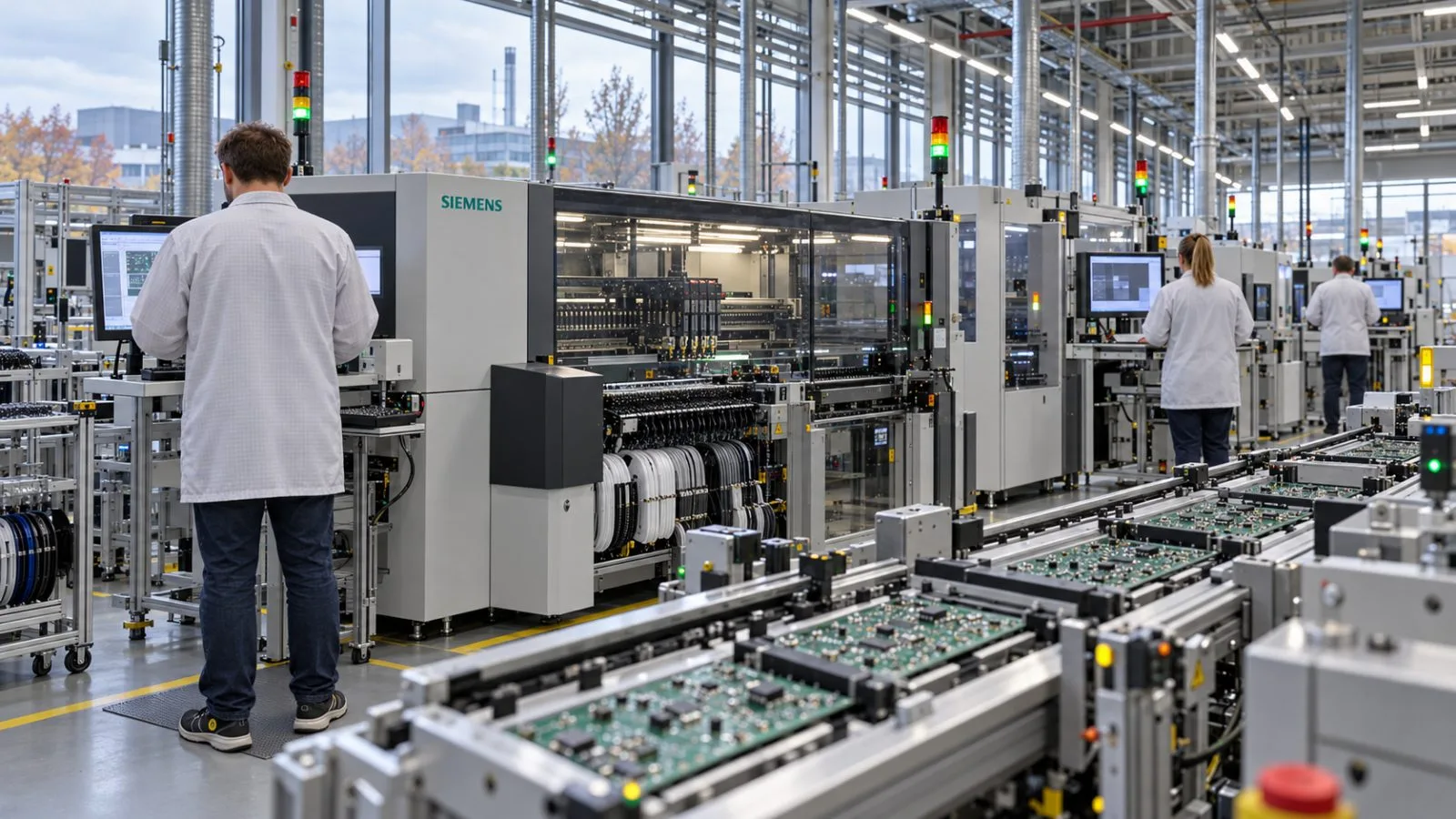
Siemens is testing AI tools developed with NVIDIA at its Erlangen factory. The company said in an Oct. 19 announcement that one application could cut engineering effort by up to 85% when preparing to produce new printed circuit board assemblies. It said AI agents used in production planning could lower costs by up to 20%. Those are potential gains in specific processes, not measured reductions in staffing.
Speaking at Erlangen on Oct. 19, Siemens Managing Board member Cedrik Neike put factory automation generally at 30% to 40% and said AI could raise it to 70% to 80%, Reuters and dpa-AFX reported in EconoTimes’ coverage of his factory automation estimates. The ranges did not describe Erlangen’s current and future automation rates.
Germany is pursuing a separate effort to expand industrial AI use. Two federal ministries signed a declaration of intent with NVIDIA on Oct. 19 to advance AI models for industry. The government identified small and medium-sized manufacturers among the intended beneficiaries. That declaration is separate from Siemens’ manufacturing partnership with NVIDIA, which the companies expanded in January.
Siemens said it plans to add further AI applications at Erlangen in the coming months.