Portable solar systems are covering daily electricity needs and operating shared services in displacement settings, while aid workers told the Associated Press that procurement routines and funding gaps complicate wider use.
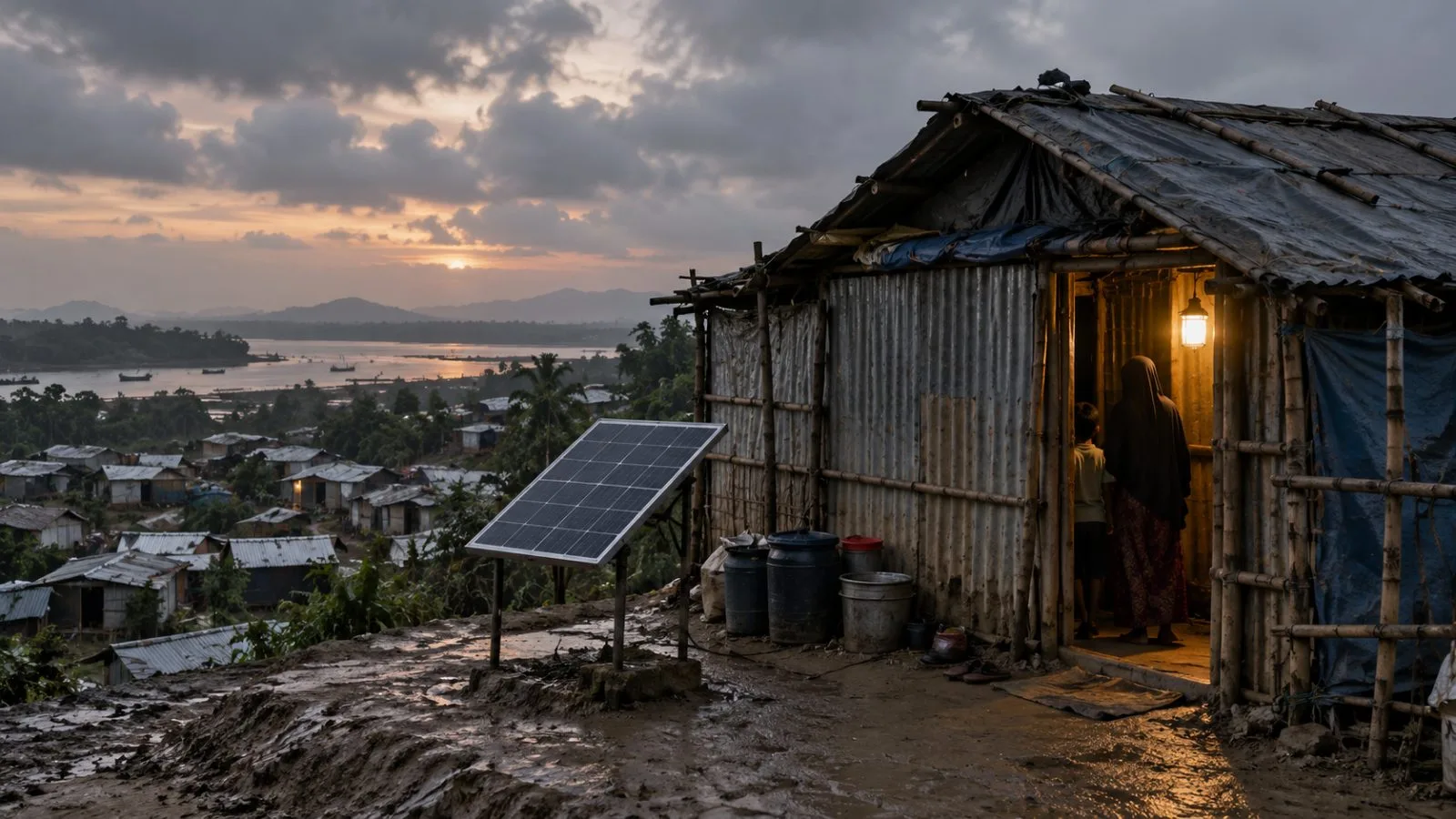
The Associated Press reported that Mohammed Saber, 35, and his family in Teknaf, Bangladesh, now get most of their electricity from a portable kit they received through aid about six years ago. Saber said it helps with daily household needs, including evening activities and staying cool. “It’s improved my family’s life,” he said.
Sarah Rosenberg-Jansen, a senior research fellow at the Stockholm Environment Institute, told AP that solar equipment ranges from rechargeable lights to household systems and electric cookstoves.
The International Organization for Migration (IOM) said a solar-powered water treatment and distribution system at the Renk transit center in South Sudan supplied clean drinking water to 14,745 people during the two-week period covered by its Nov. 27, 2024, update.
In Bangladesh, the United Nations High Commissioner for Refugees (UNHCR) says more than 11,000 solar streetlights have been installed in refugee camps. It also reports solar upgrades at community centers, clinics and schools, and says the lighting improves nighttime safety, especially for women and children.
Hope For Ukraine describes kits for families affected by damaged power infrastructure and outages. One example it published included a portable generator, a 200-watt solar panel and an electric cooktop. In a July/August 2026 update, SolarBuddy said it dispatched 200 JuniorBuddy lights to support rescuers in Nepal and was working with SmartAID on off-grid energy infrastructure.
Aid-sector representatives told AP that established diesel-generator arrangements and the work involved in building solar distribution channels can make a transition difficult. They also cited donor funding cuts that have reduced technical expertise. AP reported that advances in technology and mass manufacturing have lowered solar costs, though aid workers described continuing logistical and funding hurdles to wider deployment.