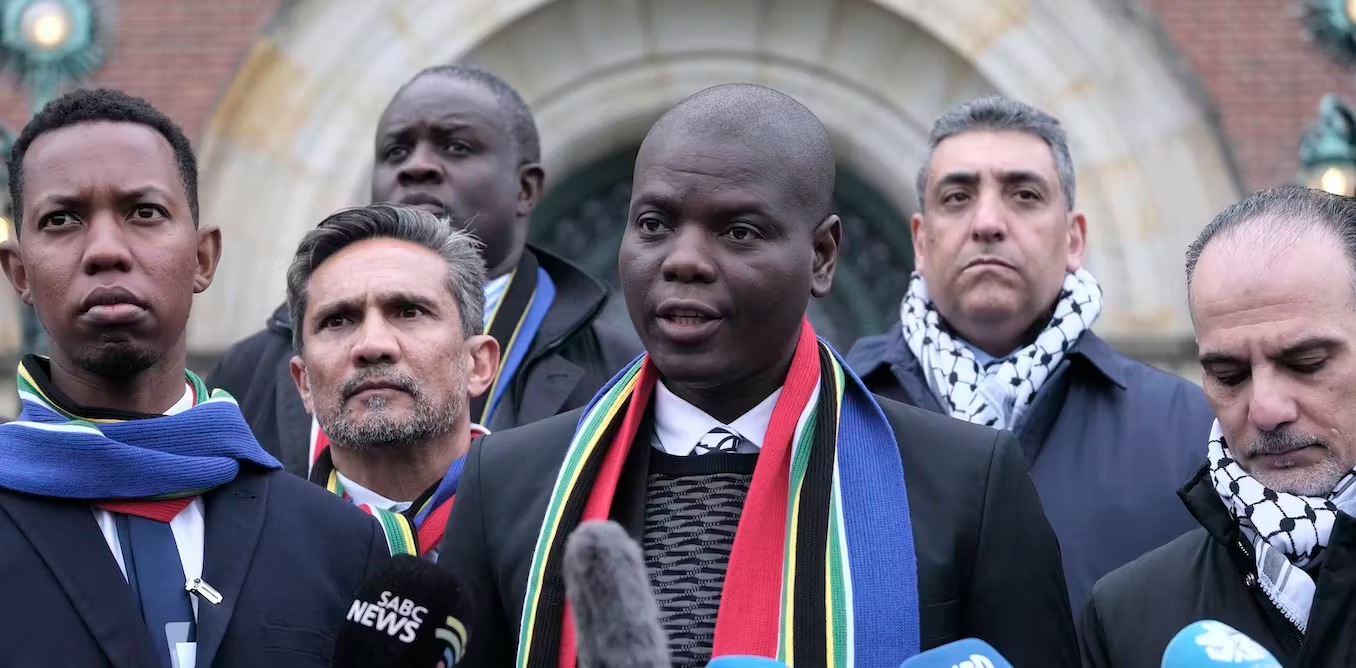
South Africa remains willing to negotiate with the United States over key areas of disagreement, including foreign investment rules, racial equity policies and mining opportunities, Foreign Minister Ronald Lamola said Friday.
Speaking on the sidelines of the United Nations General Assembly, Lamola said Pretoria and Washington had been discussing ways to accommodate new U.S. investors in South Africa’s mining industry. Talks were making progress before U.S. Secretary of State Marco Rubio announced visa restrictions on South Africans on September 15, he said.
The restrictions were introduced amid broader tensions between the two countries over South African policies, including Black employment and ownership requirements, land reform and Pretoria’s genocide case against Israel at the International Court of Justice.
Lamola said South Africa considers the United States an important strategic partner and remains prepared to discuss issues raised by the Trump administration. However, he expressed surprise at the visa measures and said Pretoria wanted to avoid retaliatory action because of the importance of bilateral economic ties.
President Donald Trump’s administration has repeatedly criticized South African policies designed to address racial inequality, arguing that some measures discriminate against the country’s white population.
Lamola also criticized Washington’s refugee resettlement program for white Afrikaners, describing it as race-based and questioning whether participants qualify as refugees. Still, he said South Africa would not prevent citizens from joining the program.
Regarding South Africa’s ICJ case accusing Israel of genocide, Lamola said the legal process should proceed independently and be decided by the court. He described international law as an important mechanism for ensuring that countries of different sizes are treated equally.
Tensions increased further after the U.S. ambassador to South Africa said the September 15 visa restrictions represented only the first step in possible additional measures and suggested that prolonged dialogue had failed.
Lamola rejected that position, arguing that diplomacy requires continued engagement. He said only Washington could determine whether strained U.S.-South Africa relations would ultimately recover, while emphasizing that Pretoria remains open to further negotiations.