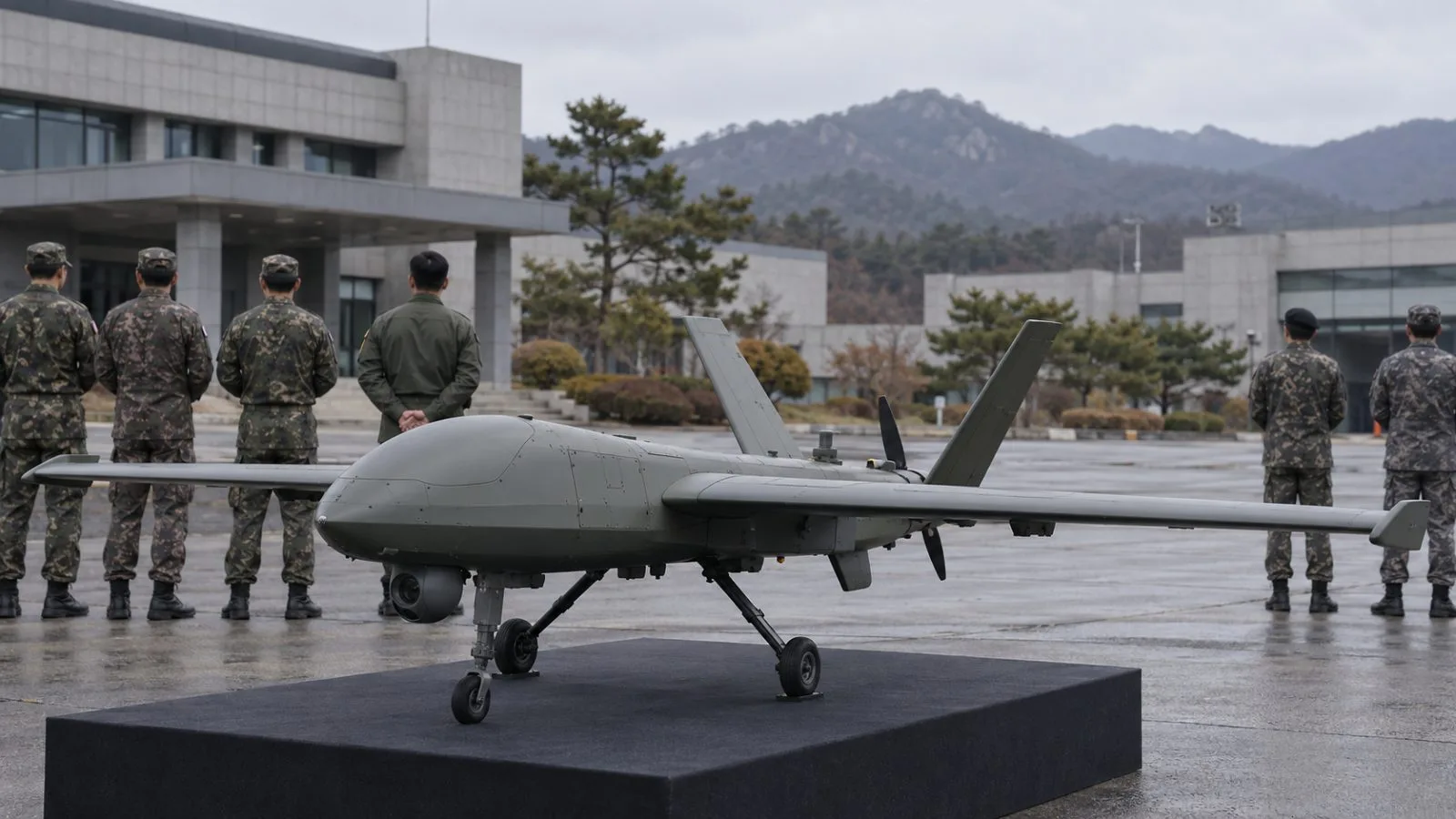
South Korea has launched a Defense Drone Headquarters to set forcewide strategy and speed procurement as the government responds to North Korea’s growing drone capabilities.
The Defense Ministry held the launch ceremony Monday in Pocheon, around 40 kilometers north of the capital. Vice Defense Minister Lee Doo-hee and military officials attended, the ministry said. The headquarters takes the place of the Drone Operations Command, which had primarily conducted drone missions. Its new responsibilities focus on planning and developing systems for use across the armed services.
The military is dividing operational duties among its institutions. Service branches will take on combat and strike roles involving drones and counter-drone systems, while the Joint Chiefs of Staff coordinates operations across the military. The headquarters will work with the state arms agency to speed purchases of drones and equipment designed to counter them.
The ministry said plans call for buying more than 20,000 low-cost, expendable combat drones and accelerating work to deploy K-LUCAS, the Korean Low-Cost Uncrewed Combat Attack System. The domestic program is developing long-range loitering munitions, including suicide drones.
The headquarters follows a broader unmanned-systems policy announced in June to strengthen South Korea’s defense capabilities. The ministry said North Korea’s advancing drone capabilities and related threats are a serious concern. It said assessments of drone power should consider systems for detecting, identifying, tracking and countering aircraft alongside the drones’ performance.
South Korea is also establishing a fast-track certification process for commercial drones and related equipment. The ministry said the process, similar to the U.S. Blue Unmanned Aircraft Systems program, is intended to clear products in advance so the military can buy ready-made systems more quickly than under traditional procurement.
The government is seeking to expand domestic supply of drones and parts, including batteries and motors, with the aim of lowering dependence on China.