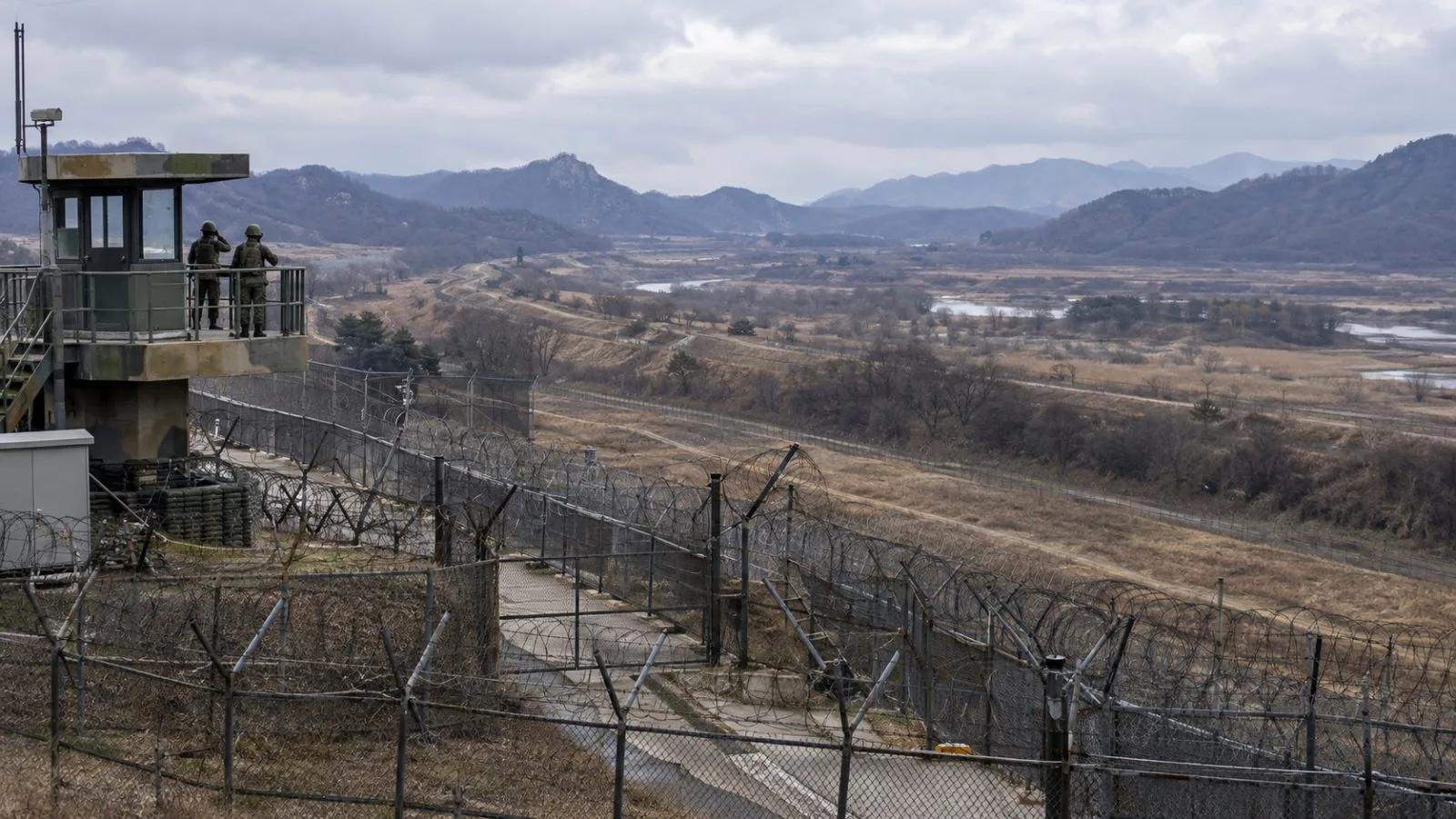
South Korea defended its border broadcasts and warning shots on Oct. 20, saying they were meant to deter North Korean troop crossings as Pyongyang considered placing additional strike assets near the frontier.
Seoul said it had used the measures along the Military Demarcation Line (MDL), which separates the countries within the Demilitarized Zone (DMZ). The broadcasts and shots were intended to discourage crossings and push back North Korean troops who entered the South Korean side of the line.
North Korea called the South’s actions provocative. It claimed South Korean forces had made nearly 1,000 loudspeaker broadcasts and fired numerous warning shots between Oct. 1 and 17. Seoul did not provide its own count.
Kim Yo Jong, sister of North Korean leader Kim Jong-un, said Pyongyang was considering additional tactical strike assets near the border and a return to broadcasts aimed at the South. She argued that South Korea’s measures appeared designed to interfere with North Korean border fortifications.
South Korea’s Joint Chiefs of Staff Chairman Gen. Jin Yong-sung directed troops to answer firmly if Pyongyang cited Seoul’s actions as grounds for aggression. He rejected Pyongyang’s claim that South Korea’s border operations were responsible for the rising tensions. South Korea’s Defense Ministry separately warned of punishment for further provocations.
The dispute follows a September explosion in the DMZ that injured three South Korean soldiers. A joint investigation by South Korea and the United Nations Command attributed the blast to North Korean mines placed south of the border. Pyongyang denied responsibility and rejected Seoul’s demand for an apology.
The two countries have used border messaging before. In 2024, North Korea sent trash-carrying balloons south, calling them retaliation for balloons launched by South Korean activists. South Korea subsequently resumed loudspeaker broadcasts after a six-year pause.
At the Korea Institute for Military Affairs, senior researcher Hong Sung-pyo told AFP that broadcasts and leaflets matter to Pyongyang because they may reveal information its leaders want to keep hidden. South Korea has called for talks, but Kim dismissed an overture from President Lee Jae Myung.