South Korea’s divide in owner-occupied housing values reached its widest point in the available series in 2025, as households in the top asset fifth averaged 290.1 times the bottom fifth’s figure.
The comparison uses the average value of a home that a household owns and lives in. It includes nonowners at zero, so the ratio reflects how many households own their residence as well as the values recorded for those homes. The Korean Statistical Information Service (KOSIS) series dates back to 2017, when the ratio was 145.5.
In 2025, the top fifth averaged 693.41 million won in owner-occupied housing value, up 7.7% from the previous year. The bottom fifth averaged 2.39 million won, down 9.1%. The ratio rose from 244.9 in 2024; it was 215.1 in 2023.
Only 6.6% of households in the bottom asset fifth owned the home they occupied, compared with 82.5% in the top fifth. The measure excludes homes a household owns but does not live in, and counts only the occupied home for households with multiple properties. It is therefore not a comparison of the typical home owned by homeowners in each group.
The figures come from the Ministry of Data and Statistics’ 2025 Survey of Household Finances and Living Conditions. Its asset data are a snapshot dated March 31, 2025, rather than a measure of housing market changes through the end of that year. The rise and fall in the group averages also do not show how the same households’ housing values changed over time.
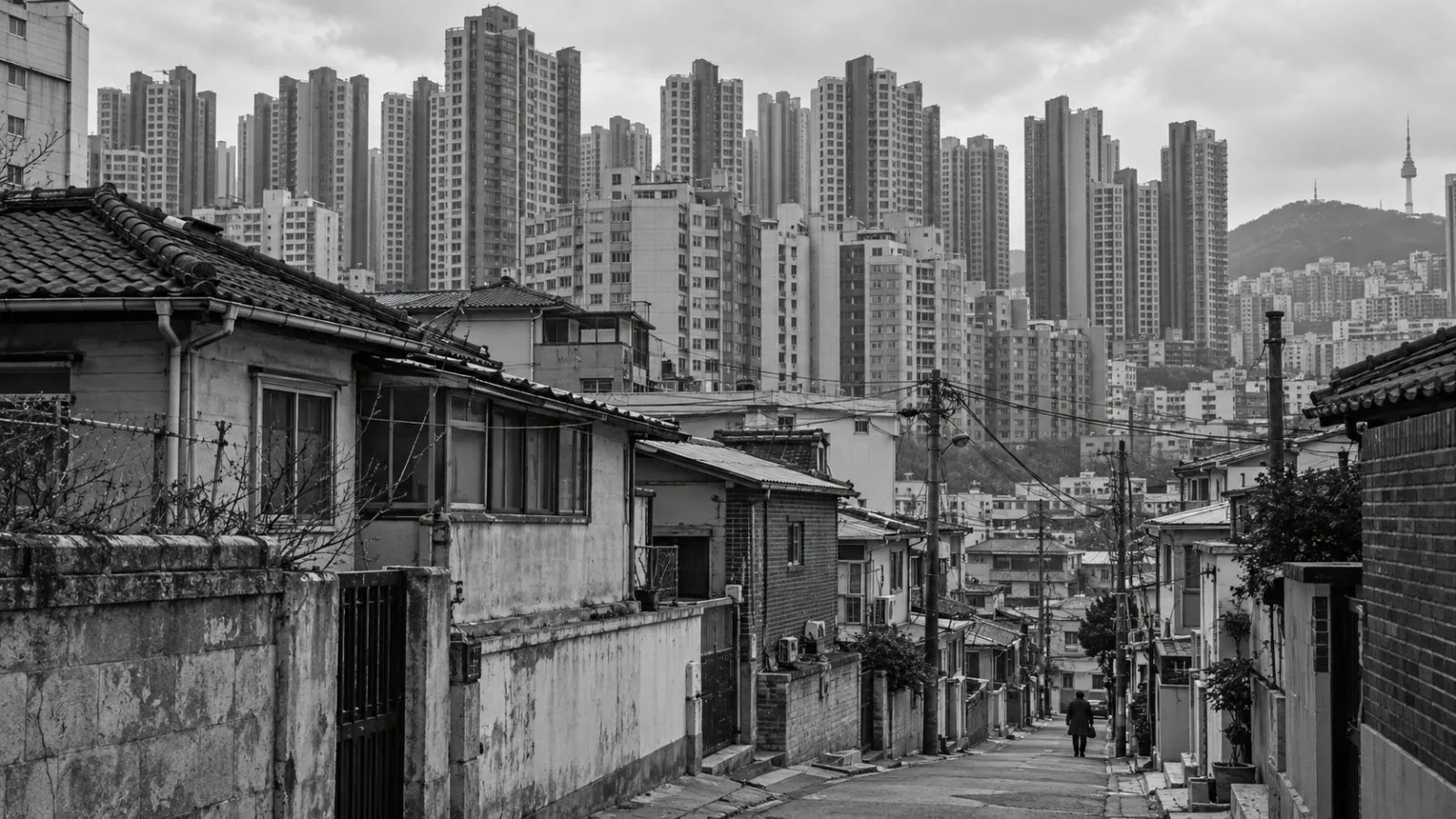
The Korea Herald said Kim Hyun-soo, an architectural engineering professor at Dankook University, linked Seoul’s higher property prices to the widening divide. Kim called for prioritizing homes available for near-term occupancy, saying the focus should be on “securing 100,000 homes that people can move into as early as next year.” The survey figures establish the size of the divide but do not determine its causes.