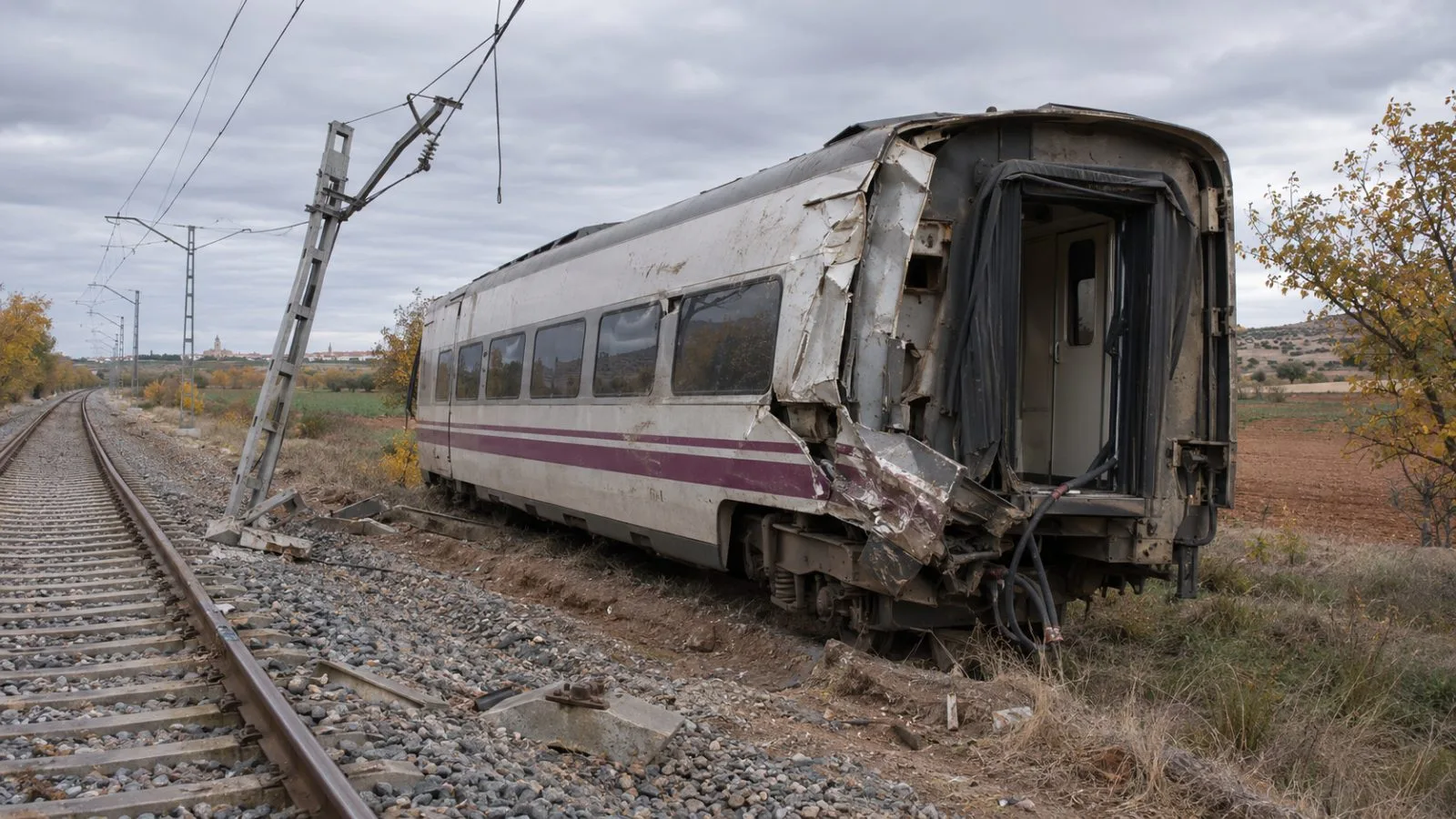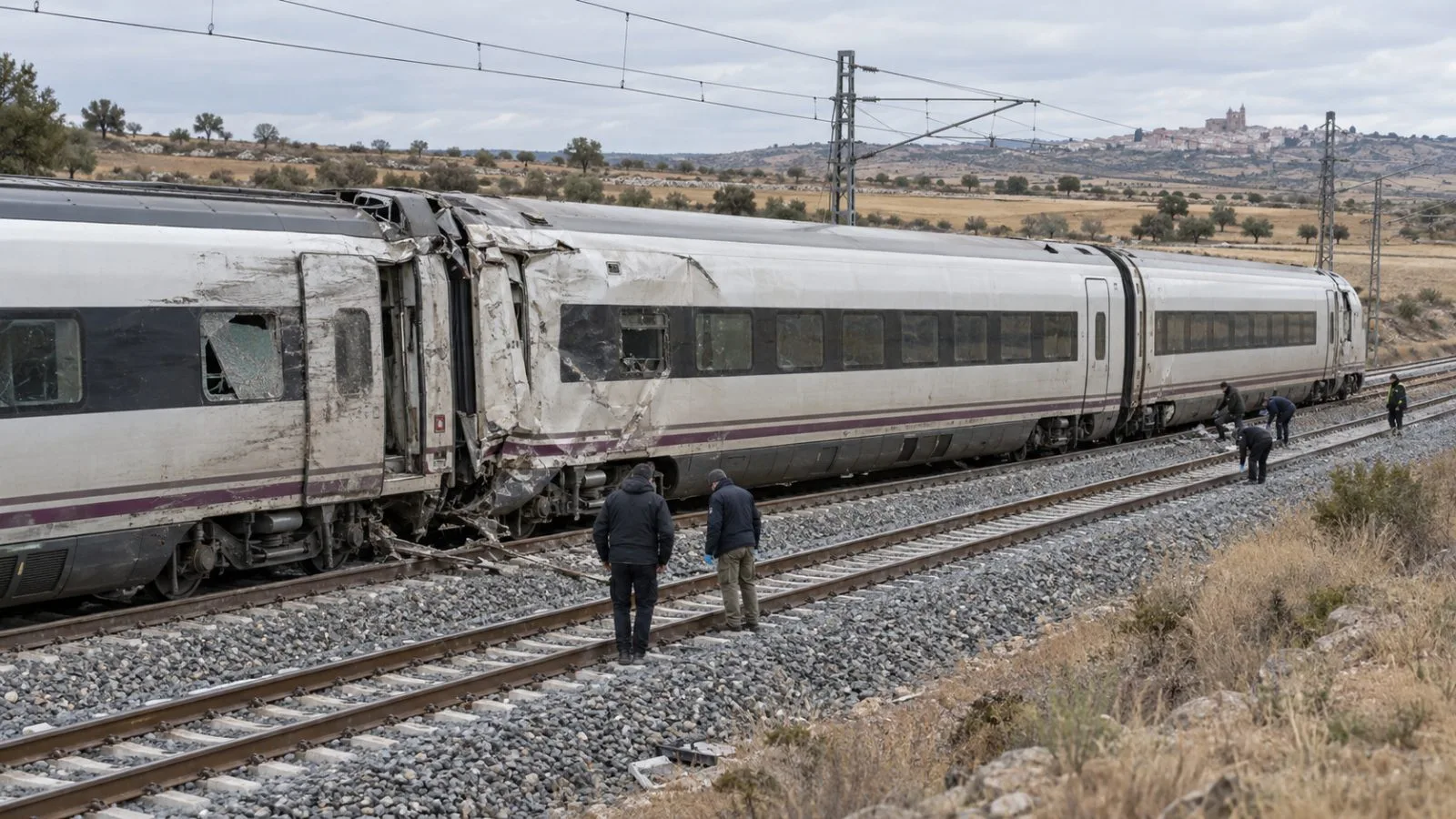
Spain plans to add a second operator check and new monitoring tools to rail control rooms after a collision that killed 69 people intensified scrutiny of safety procedures.
The crash near Urda, about 130 kilometers south of Madrid, involved a train operated by state rail company Renfe and a stationary train run by private operator Iryo, AFP reported. A control center had allowed the Renfe train to continue after an automatic safety system failure brought every train on a 63-kilometer section to a halt, AFP said.
Under Transport Minister Oscar Puente’s plan, a control-room decision made during an automatic safety system outage would need approval from a second operator. The government also plans to change operators’ working conditions, including breaks and fatigue monitoring. New software would flag unusual train movements for control centers, and an AI agent would oversee the system, Puente said.
Puente announced an aid package of €30 million ($33.5 million) for relatives of people killed and those injured. Prime Minister Pedro Sanchez had said authorities and the transport ministry were working to establish what happened. EconoTimes previously covered the government’s initial response.
AFP reported that the crashes have weakened confidence in Spain’s high-speed rail network and overshadowed campaigning for the Nov. 29 general election. Sanchez is trailing in opinion polls, AFP said. The right-wing opposition is demanding Puente’s resignation, while unions have criticized him for appearing to place blame on one control-room operator, AFP reported.
Critics say maintenance investment has not kept pace with passenger growth since Spain opened its rail network to private operators in 2021, AFP reported. A January collision in Andalusia killed 46 people on the Madrid-Seville line, the same route that became Spain’s first high-speed rail line when it opened in 1992, AFP said.
Puente said the government has asked a court to authorize repairs and reopen the affected line. Train drivers’ union Semaf has scheduled strikes at Renfe for Nov. 10 and 12, citing deteriorating working conditions and the use of “degraded systems,” AFP reported.