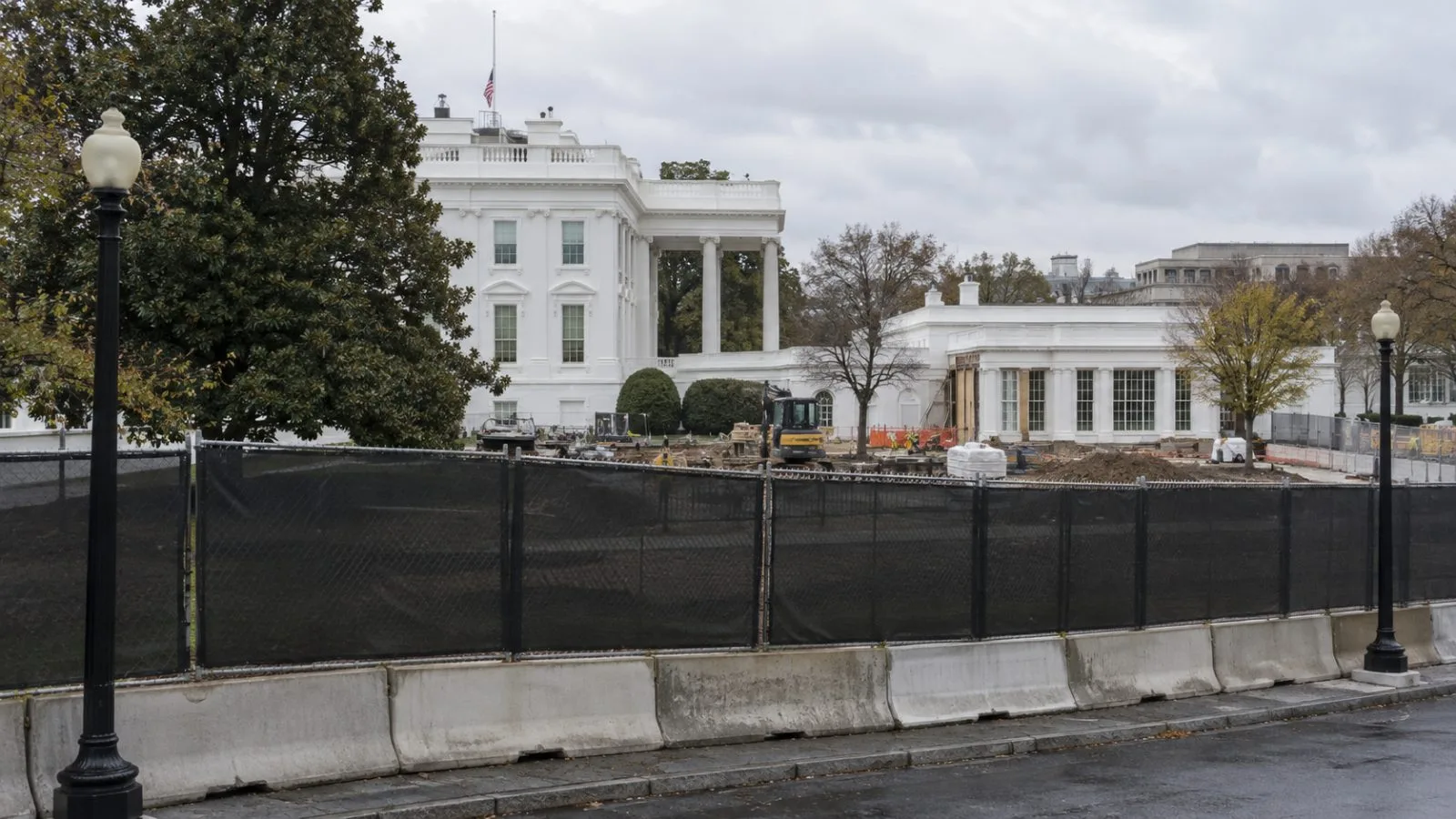
A video shared by Deputy White House Chief of Staff Dan Scavino shows the ballroom frame, according to The Independent and The Daily Beast, as a Supreme Court stay permits above-ground work.
The White House announced the plan on July 31, 2025, describing a ballroom of about 90,000 square feet with seats for 650 people. Its initial cost estimate was about $200 million. The announcement projected construction would begin in September 2025 and finish before the end of President Donald Trump's term. The East Room seats 200, according to the White House. EconoTimes previously covered donor commitments listed for the project.
The later estimates differ in scope. The Washington Post reported that a Clark Construction summary dated March 5, 2026, put the cost of the wider East Wing project at $600 million, including the ballroom and other work. The outlet said the estimate assigned $293 million to private sources and $307 million across government accounts: $155 million for the Secret Service, $149 million for the White House Military Office and $3 million for the Executive Residence. The Post also cited a White House spokesperson's public estimate of about $400 million.
The East Wing's demolition began in October 2025 and ended in December, according to the Supreme Court's account of the case. On Aug. 7, the U.S. Court of Appeals for the District of Columbia Circuit upheld a preliminary injunction barring above-ground construction without congressional authorization. The Supreme Court stayed that injunction on Aug. 31, allowing above-ground construction to proceed as the case continues.
The Supreme Court left the project's legality unresolved. Its ruling said the government was likely to succeed on its argument that the National Trust for Historic Preservation lacked standing to bring the case. The stay is tied to the government's filing of a certiorari petition and the Court's disposition of it, provided the petition is timely.