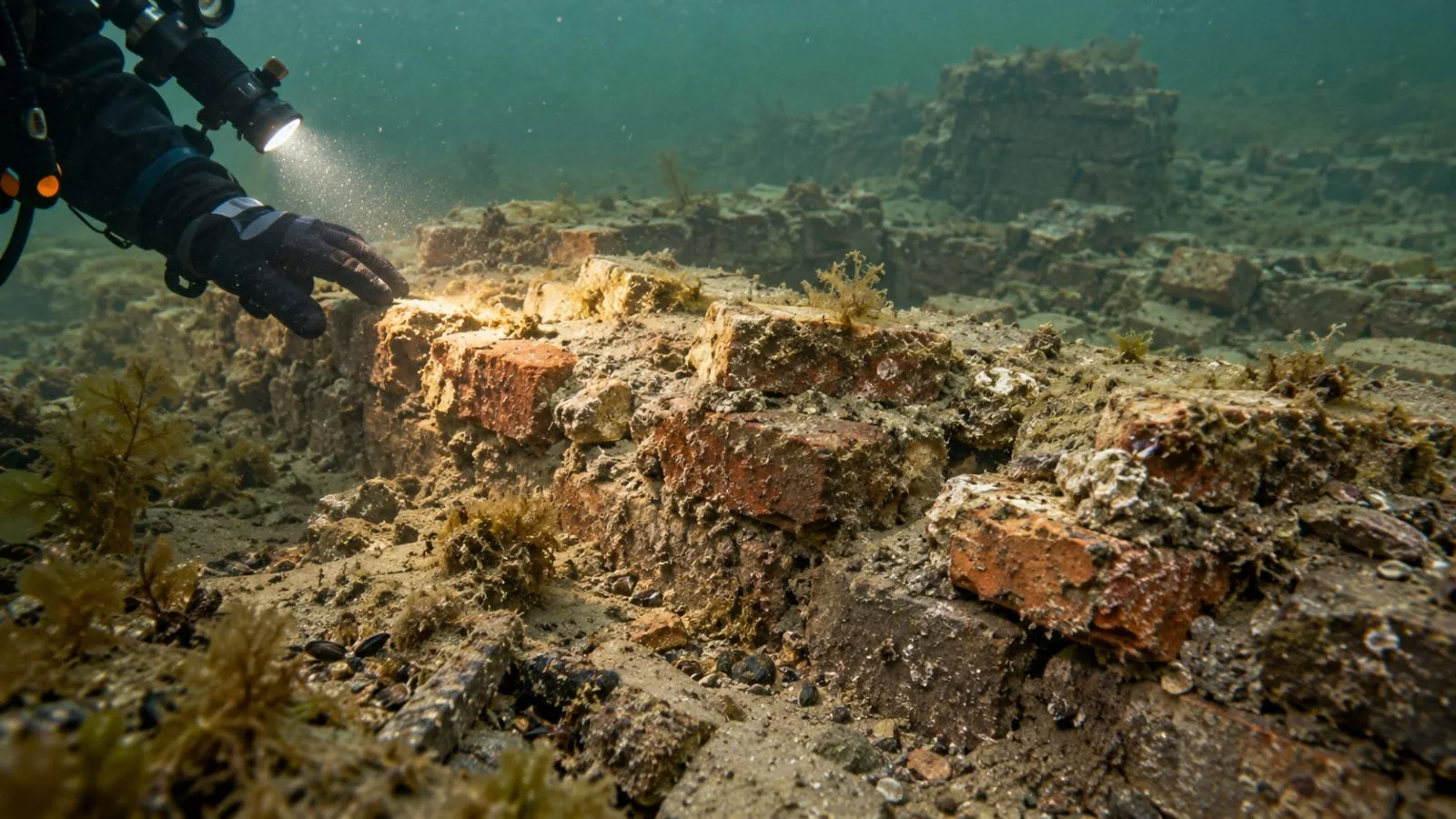
A survey of a 15th-century wreck near Stockholm uncovered masonry that may mark its cooking area, giving archaeologists new evidence about how a large medieval ship was built and used.
Vrak – Museum of Wrecks said the brick and mortar probably came from the galley’s stove or oven. The team made the discovery while examining the wreck’s structure and searching for the galley, the area where a ship prepared food. The work was carried out with Södertörn University from Oct. 19-23.
Known as Vrak 5, the wreck lies in Landfjärden near Häringe in Haninge municipality, south of Stockholm. Vrak dates it to the 1480s and estimates its length at about 35 meters. The museum says it may be the earliest known medieval warship built in either Sweden or Denmark, although the vessel’s country of construction and military role have not been confirmed.
Archaeologists documented a mast made from nine joined sections, held together by heavy ropes. Vrak said its team had previously encountered this type of mast only in historic paintings.
The ship’s hull used carvel construction: planks met edge-to-edge. Vrak says the method let shipbuilders create larger, stronger vessels. The museum also says many researchers associate the spread of the technique with cannons being mounted on ships during the 15th century.
The excavation is part of a wider project on food and living conditions aboard Baltic merchant and warships in late medieval and early modern periods. Vrak has said little is known about how large crews obtained food and drink during long periods at sea.
The museum says an attack by King Hans on Häringe in 1501, amid conflict with Swedish regent Sten Sture the Elder, is one possible explanation for the ship’s loss. Researchers have not established a connection. Vrak plans to examine the clay used in the galley bricks to determine its origin, but has not announced a timetable.