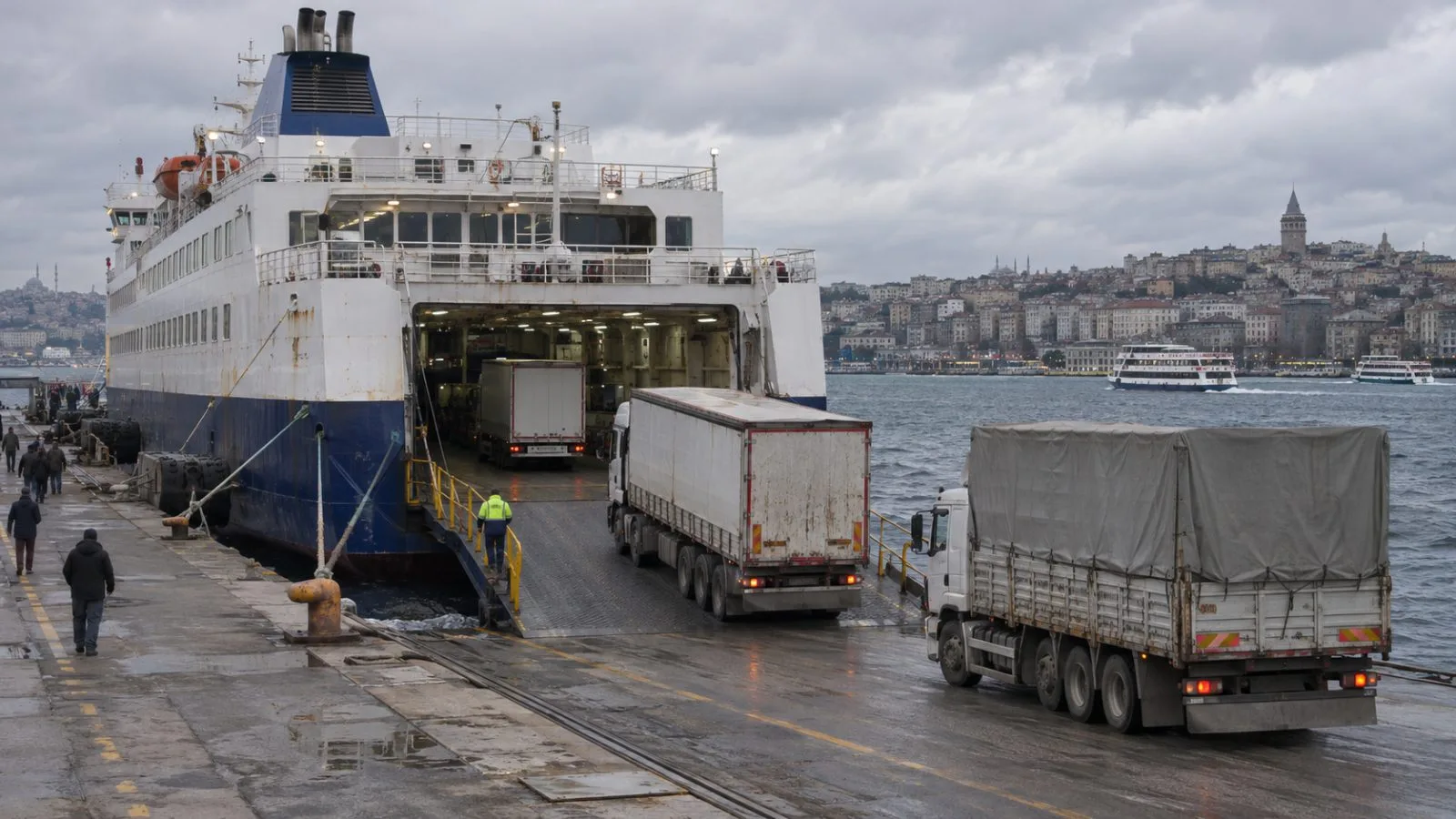
A maritime study in Türkiye projects hybrid-electric ferries could lower greenhouse-gas emissions about 63% by 2050 versus a continued-diesel scenario, while Uzbekistan targets vehicle and industrial pollution by 2030.
An assessment supported by the International Maritime Organization (IMO) examined 67 Ro-Ro and Ro-Pax ferries at 26 ports in the Sea of Marmara. It concluded that battery-electric or hybrid systems could serve every operation it examined. In its preferred mix of propulsion types, annual greenhouse-gas emissions could be about 63% below a continued-diesel scenario by 2050. The IMO estimated the transition could also reduce local air pollution and avoid nearly €492 million in cumulative health and environmental damage costs.
The IMO identified charging infrastructure, upfront investment, coordinated energy planning and domestic regulation as challenges to large-scale deployment.
A decree dated March 25 sets Uzbekistan’s goals of cutting total atmospheric pollutant emissions by 10.5% and vehicle emissions by 10% by 2030. It calls for automatic monitoring and dust-and-gas treatment systems at certain industrial facilities, and aims to raise the share of industrial emissions captured to 32%.
The World Bank’s June 2024 assessment put Tashkent’s population-weighted annual PM2.5 concentration at 38.8 micrograms per cubic meter in 2021, compared with the World Health Organization’s annual guideline of 5 micrograms per cubic meter. The WHO estimates outdoor air pollution was responsible for 4.2 million premature deaths globally in 2019.
The World Bank model attributed about 36% of Tashkent’s annual PM2.5 concentration to windblown dust, about 28% to residential and commercial heating, 16% to transport and roughly 13% to industry. These are modeled contributions to concentration, not shares of emissions. Heating accounted for close to 45% in some winter months, while dust topped half in some summer periods.
In an Oct. 2 update, Uzbekistan’s National Committee on Ecology and Climate Change reported 459 automatic monitoring stations at Category I and II industrial sites, plus 186 upgraded dust-and-gas treatment units at 67 enterprises. It also listed 554 enterprises in Tashkent and said the city’s average PM2.5 concentration was 25% lower from Jan. 1 to Sept. 21 than during the same period in 2025.
The IMO said Türkiye’s Ministry of Transport and Infrastructure is looking to advance a first ferry electrification pilot but gave no launch date. Uzbekistan’s emissions and monitoring goals run through 2030.