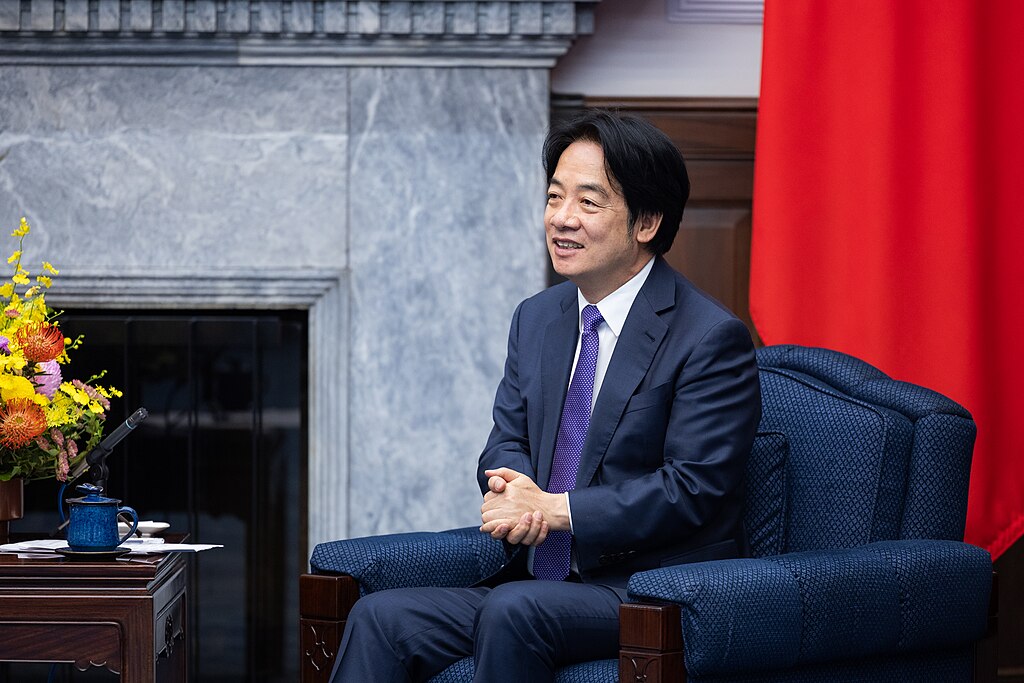
Taiwan is set to introduce a landmark $40 billion supplementary defence budget, signaling a strengthened commitment to defending its sovereignty as tensions with China continue to rise. In an op-ed for the Washington Post, President Lai Ching-te emphasized that the expanded budget will fund significant new U.S. arms acquisitions and enhance the island’s asymmetrical warfare capabilities, a core strategy aimed at deterring potential military action from Beijing.
China, which claims Taiwan as its own territory, has intensified military and political pressure over the last five years. Despite Beijing’s assertive stance, Taiwan has repeatedly rejected China’s claims, reinforcing the need for stronger defence investments. The United States, Taiwan’s most important security partner, has also urged Taipei to increase its defence spending, mirroring Washington’s push for greater burden-sharing among global allies.
Lai noted that the new funding package aims to “insert greater costs and uncertainties into Beijing’s decision-making” regarding the use of force. The president has previously stated that he hopes to raise defence spending to 5% of GDP by 2030, a move aligned with Washington’s expectations for regional security partners.
For 2026, Taiwan’s proposed defence budget will reach T$949.5 billion ($30.25 billion)—equivalent to 3.32% of GDP, surpassing the 3% threshold for the first time since 2009. This increase highlights Taipei’s commitment to strengthening deterrence amid escalating tensions.
Although U.S. law requires Washington to provide Taiwan with the means to defend itself, the current U.S. administration under President Donald Trump has so far approved only one new arms sale: a $330 million package for aircraft and fighter jet parts. Lai expressed appreciation for U.S. support, praising the administration’s focus on global stability through “peace through strength.”
Despite strained relations, Lai reiterated Taiwan’s willingness to engage in dialogue with China—while maintaining that democratic values and freedom are non-negotiable. He is expected to elaborate on the defence package at a press conference alongside Defence Minister Wellington Koo following a high-level security meeting.