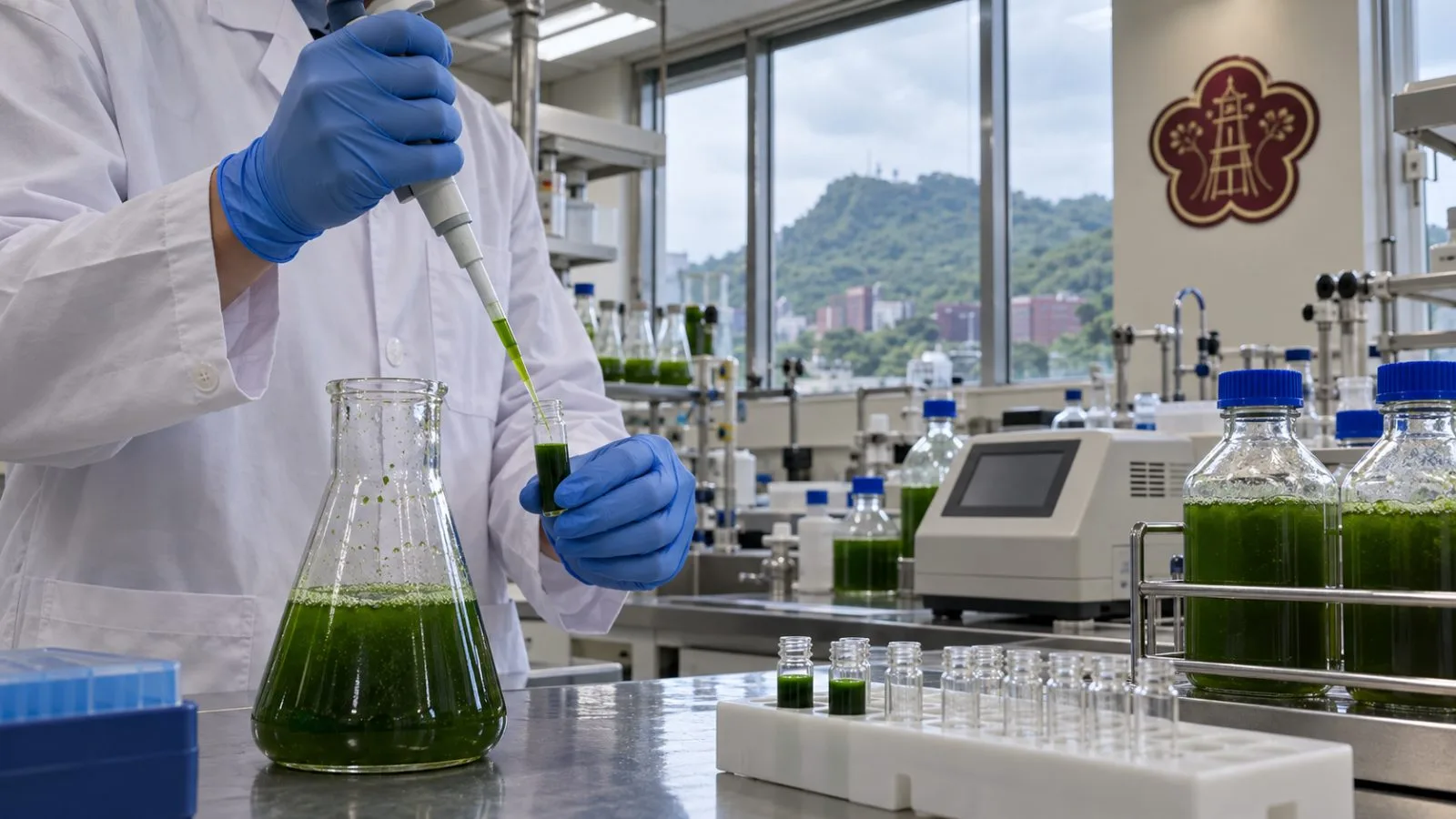
In a laboratory study of Desmodesmus sp. CNW-N, researchers in Taiwan directed more cellular carbon into fermentable carbohydrates and increased ethanol output, a finding that may help efforts to make bioethanol from microalgae.
The team identified two metabolic control points involving alanine aminotransferase (ALT) and acetyl-CoA carboxylase (ACC). Under limited nitrogen, the tested microalga initially stored more starch before accumulating lipids. By changing activity at those control points, the researchers retained more carbohydrates for fermentation.
When the researchers increased ALT expression and inhibited ACC, the resulting biomass contained 75.32% glucose and xylose by dry weight, the study reported. Fermentation yielded 378 grams of ethanol per kilogram of dry biomass. The team tested ethanol production from the treated biomass, rather than relying only on its carbohydrate content.
Fermenting sugars and starches from biomass produces bioethanol. National Sun Yat-sen University said bioethanol can be used in biomanufacturing and can partly substitute for gasoline as a fuel. The experiment addressed how much of the carbon taken up by the alga remained available for that conversion instead of accumulating as lipids.
The paper appeared Oct. 2 in Bioresource Technology. National Sun Yat-sen University announced the findings Monday, Oct. 19, and described the research as an eight-year study.
Lee Tse-min, a professor in the university’s Department of Marine Biotechnology and Resources in Kaohsiung, led the work. The other researchers were Chang Jo-shu, Tunghai University vice president and chair professor in its Department of Chemical and Materials Engineering, and Chen Jen-chih, an associate professor at National Taiwan University’s Institute of Biotechnology.
Lee said microalgae’s rapid growth and ability to use carbon dioxide make them useful subjects for bioenergy and carbon utilization research. The published experiment concerned Desmodesmus sp. CNW-N under specific conditions; it did not establish a commercial-scale production benefit.