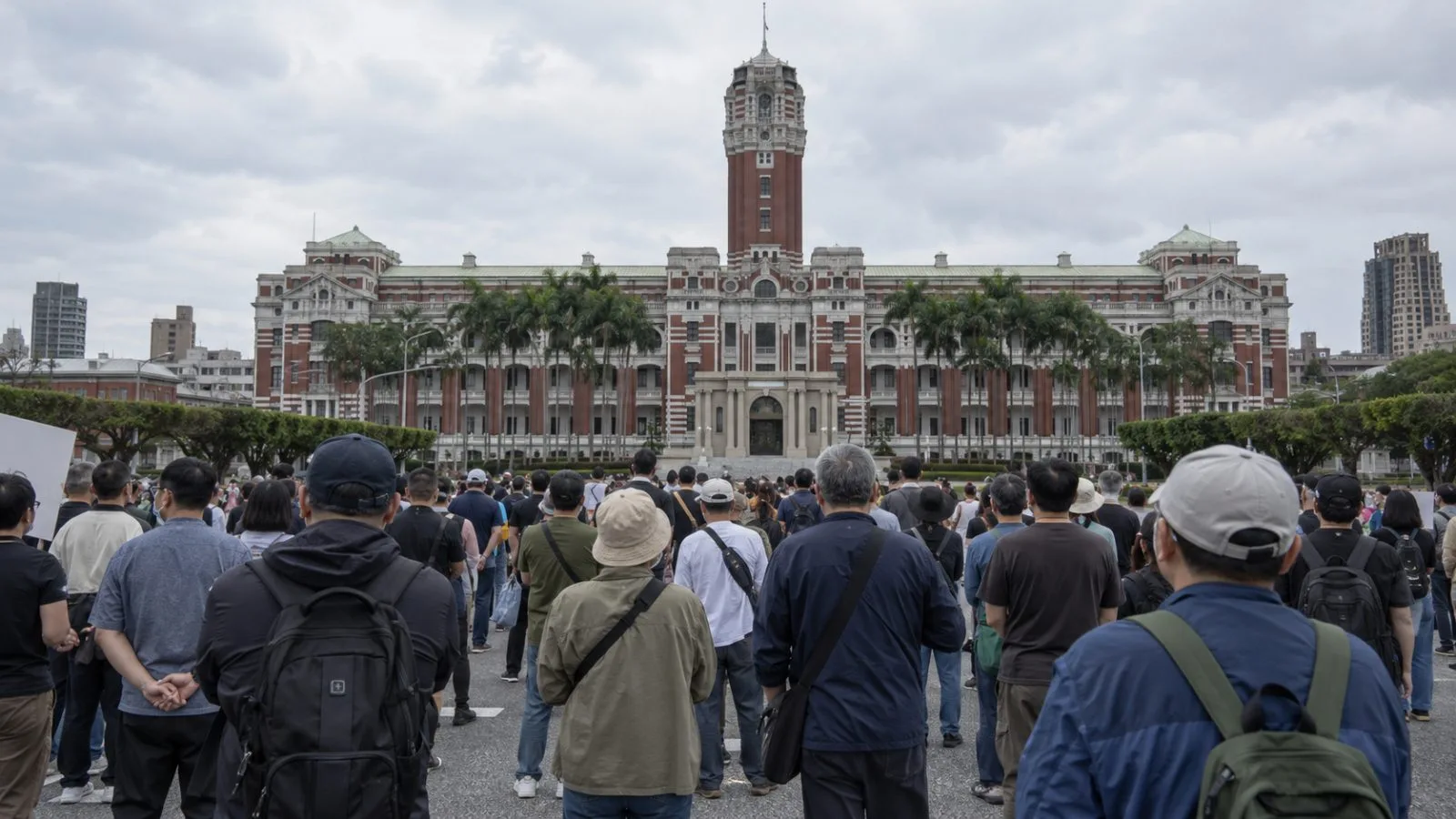
At an Oct. 19 rally outside Taiwan’s Presidential Office, unions sought a 15% minimum employer pension contribution, a change that would increase companies’ obligations and workers’ retirement savings.
Ho Cheng-chia, who chairs the Taiwan Solidarity Front Confederation of Trade Unions, proposed moving from the current 6% minimum to 9% first, then raising it in stages to 15%. The proposal was part of the groups’ broader demands for higher pay and stronger workplace protections.
Taiwan’s Bureau of Labor Insurance says employers must deposit at least 6% of a covered worker’s monthly wages into an individual pension account. Workers may voluntarily contribute up to another 6%. Employers can already pay more than the required minimum; the unions want to raise that floor.
The accounts belong to workers under a system introduced in July 2005. Ho argued that the current required rate is inadequate, CNA reported. A higher minimum would require employers paying the current floor to put more money into workers’ accounts.
The unions also sought clearer rules for sharing company profits with employees. Article 29 of the Labor Standards Act requires allowances or bonuses from remaining net profits when its conditions are met. Ho said workers outside the technology sector should share in companies’ gains.
Other labor actions preceded the rally. Workers at AGC Display Glass Taiwan Inc. and Kuai Kuai Co. had struck, while unions at Chunghwa Telecom and Micron Technology Inc.’s Taoyuan operations had voted to authorize strikes, CNA reported.
At the end of July, the Ministry of Labor counted 7,866,556 pension contributors. That total includes categories beyond workers receiving employer contributions, so it does not establish how many workers would be affected by the unions’ proposal.
The Ministry of Labor said it would assess a higher required employer contribution and seek stakeholders’ views. Taiwan has separately approved an increase in its monthly minimum wage from NT$29,500 to NT$30,900, effective Jan. 1, 2027.