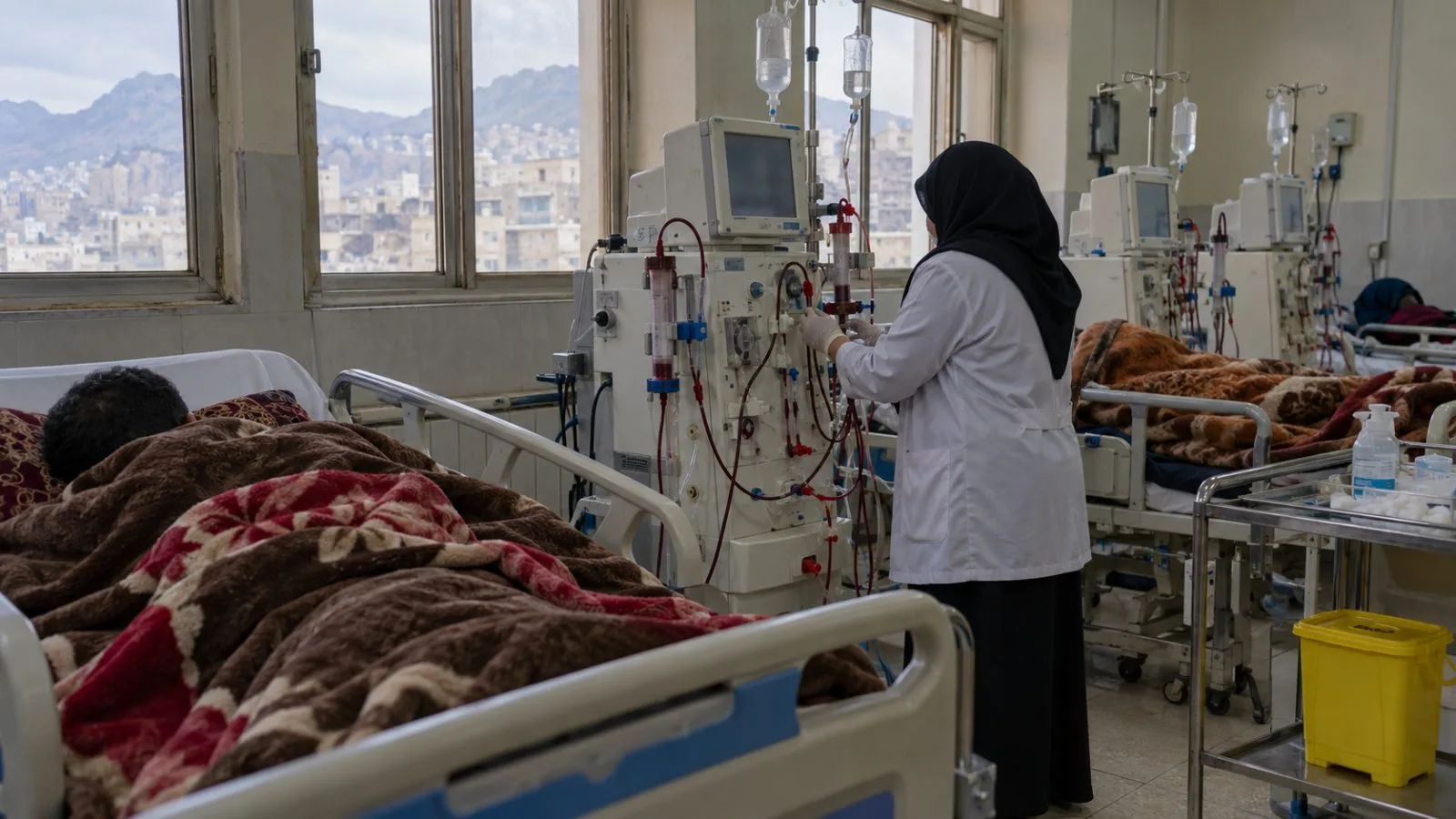
Al Jazeera reported that a Taiz hospital dialysis unit cut treatment time as shortages spread across the city, where the World Health Organization (WHO) counted 42 health facilities reporting acute shortages.
The unit’s director, Dr. Essam Mahyoub Dahan, told Al Jazeera on Oct. 24 that sessions had been reduced from four hours to two and a half. He said the center might stop operating within days. Al Jazeera reported that it regularly treats 270 patients.
In its Oct. 22 update, WHO said hospitals and ambulances in Taiz need more than 156,000 liters of fuel per month. The agency said shortages could disrupt oxygen production, emergency transport and vaccine refrigeration.
More than 1,110 people with kidney failure in Taiz depend on dialysis services, WHO said. It also reported 192 patients in intensive care and 154 newborns in incubators. WHO and health authorities are checking fuel stocks and reviewing the effects on services, the agency said.
Yemen’s Ministry of Public Health and Population said Oct. 10 that medicines, intravenous fluids, medical supplies and fuel at Taiz health facilities were nearing depletion. It said this could put emergency care, surgery, intensive care, dialysis and neonatal services at risk, and blamed Houthi forces for the siege and supply obstruction.
Amnesty International said Houthi forces had cut off the main road between Taiz and Aden in October, threatening civilians’ access to food, water and health care. The organization said road restrictions have recurred since 2015, at times forcing civilians to use dangerous mountain routes. The New Humanitarian reported that the Houthis blamed government-aligned forces for blocking roads, but no primary Houthi statement was cited for that counterclaim.
The Associated Press reported Oct. 24 that fuel shortages were also making hospital and sanitation services harder to maintain. At an Oct. 20 briefing, United Nations Humanitarian Coordinator for Yemen Laurent Bukera said food and fuel still available in Taiz cost more than twice as much as before and that shortages threatened hospital power and oxygen, as EconoTimes reported in its coverage of Taiz’s food and fuel prices.