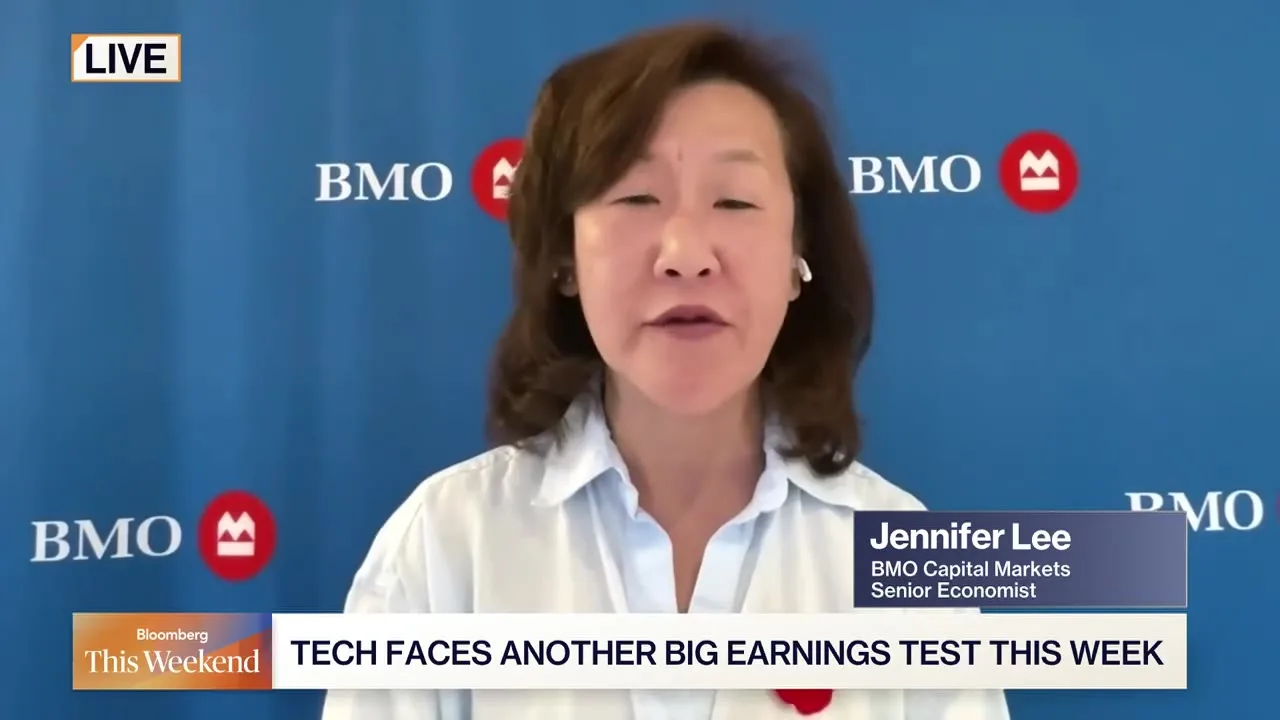
A technology stock selloff is bringing interest rates lower and easing pressure on the Federal Reserve to act despite a still-strong US economy, BMO Capital Markets senior economist Jennifer Lee said.
The pullback could temper demand for money and resources to build artificial intelligence data centers, helping efforts to bring inflation down. Lee spoke on Bloomberg Television's “Tech Selloff Could Ease Pressure on the Fed,” published Nov. 1.
Lee described the economy as strong across the third quarter but said it finished on a weak footing, particularly in household spending. September spending and income figures concerned her, with consumers cutting back broadly except on dining out.
“Never underestimate the US consumer,” Lee said, while adding that growth in wages and salaries was also slowing. She identified the coming week's payroll figures as the main economic release to watch.
Turning to technology earnings, Lee expected Apple, AMD and Qualcomm probably to meet expectations, while saying technology was outside her specialty. She saw greater concern around the largest cloud computing companies and expected uncertainty to continue for a while.
Lee described the Fed's post-meeting press conference as favoring tighter policy, with the central bank emphasizing economic strength and inflation above its target. She saw little concern about employment in the chair's remarks.
She expected the Fed to tighten policy again in December, after receiving more economic information over the following six weeks. She did not specify the size of any increase.
Explaining the link between technology investment and interest rates, Lee said large cloud companies needed to borrow to finance data centers. That financing demand was one factor pushing rates higher.
She also identified elevated energy prices, concerns about government finances and less dependable demand from holders of US government debt. Sustained high energy prices could add to expectations of future inflation.
A retreat in AI-related investments could signal less demand and slower data center construction, making the Fed's task easier. “That would actually help the Fed's job,” Lee said.
AI investment had helped drive the US economy over the past year, while increasing competition for land, skilled workers and materials. Lee said that demand raised prices and drew resources away from other businesses that needed them.
Those strains could keep inflation elevated longer than expected, in her assessment. Slower construction, more regulatory hurdles and investment spreading into other parts of the economy could provide some relief.
On the European Central Bank, Lee said the direction of policy after President Christine Lagarde's departure would depend on her successor. She nevertheless expected the central bank to retain a preference for tighter policy because it still needed to bring inflation down.
Lee did not identify a certain successor or give a timetable for a leadership change.